
Life spiralling in
Revisiting same axis--
Deep understanding
—-
Javanese dragon (nogo, naga, makara, makoro) is described as a magically strong creature. It is a giant snake. It wears a crown adorned with gemstones and hair. At times Javanese dragon is pictured as wearing jewelry like dangling earrings, necklace, ring at the tail.
Not only Javanese mythology has dragon in its mythology; Chinese and European do, too . Although in general Javanese, Chinese and European dragons are all mythologically the same natural roles and functions, each of those three is unique in itself. Javanese dragon has no feet and wears crown and jewelry. Chinese dragon has four feet and long moustache above its mouth. European dragon is more like a giant long-necked lizard with big wings.
The most dragon in Javanese mythology is Antaboga or Sanghyang Antaboga, a meditating (sleeping) giant snake residing beneath the earth.

modified Antaboga, the most wellknown dragon in Javanese mythology — the wing is occasionally off
Antaboga (useful link, I prefer to out this one among many because this does not include too much unnecessary foreign culture): https://id.m.wikipedia.org/wiki/Antaboga
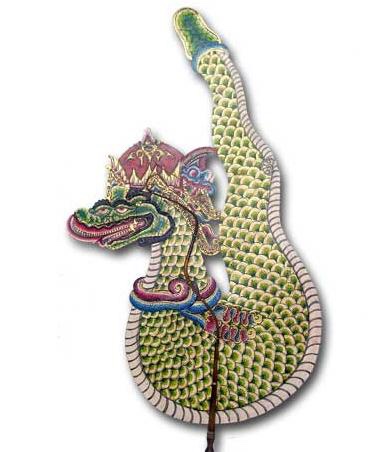
Sanghyang Antaboga, in Javanese leather puppet (wayang) with no wings
In Javanese culture dragon is a symbol or fertility and blessings. It is considered as water creature that is able to optimize the water quality and make the soil fertile. With the fertile soil, agriculture the inland part Java’s most popular life sector has been benefited and blessed with the good quality of water and soil.
Dewi Sri (Javanese goddess of fertility and agriculture) is mythologically alleged to be the incarnation of one of Sanghyang Antaboga’s eggs.
Dragon also signifies protection and patronage. Protection is more about physical security. Patronage is more about mental and spiritual security. Dragon carvings are commonly found at around old building gates, entrances, stair banisters to protect the buildings from those entering.
Sanghyang Antaboga is said to be the protector of the weak and the good. He is crowned as the lord of underworld in Javanese mythology.
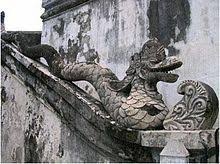
dragon in the stairs flight in Candi Kidal
Talking about dragon….
I just received a new batik sheet from Ibu Tien. The pattern is called Parang Nogo. Parang Nogo is a batik pattern combining parang as the background with nogo (Javanese dragon) as “ceplok” or highlighted/clustered pattern.
Parang as recently discussed is about not giving up, sustainability, agility, noble ideals and loyality. Nogo itself as earlier introduced is about protection, patronage, fertility and blessings.
So Parang Nogo is a pattern that is intended to combine the spirit of all those values into one work of art.
Parang as recently discussed is about not giving up, sustainability, agility, noble ideals and loyality. Nogo itself as earlier introduced is about protection, patronage, fertility and blessings.

Sultan Hamengkubuwono X in Parang Nogo (the Yogyakarta Sultanate cum the Governor of DIY Yogyakarta)
As a “batik larangan” (batik with sacred pattern that can be worn only by royal family for certain occasions/function), Parang Nogo was meant to be worn by king and his family as a reminder to hold and practice the values attached in the Parang Nogo. Their behaviour and attitudes could give assurance to the people that the kingdom was managed and protected by trusted human beings. Yogyakarta king still wears batik Parang Nogo in some occasions; probably to assure the people that things are well managed under his governance.

Parang Nogo – handmade, my collection from Ibu Tien

Makara, the sea dragon with a lion in its mouth in Candi Borobudur
How would you greet the dragon within you? The coiling coloured energies sleeping to be awaken–
Salaam.
 rike jokanan
You must be logged in to post a comment.