Seems that the “Kiai Semar” piggy bank in my instastory has drawn hidden attention. My friend sent me a picture of ancient piggy bank saying “Are you still saving in celengan, don’t you have a bank account? Why so traditional?”
Arrgh! Should I tell people I save in the bank? It is something common to save in the bank because I need debit card to do all my financial thingy every now and then. How can I shop without debit card? And they think my debit card will just get impregnated with money without me feeding it? I am saving in the bank, my dear.
When said by a close friend in a normal situation, it feels ok. When said by a distant friend who has a rather unpleasant history, it feels rather ouch!
Anyway celengan (Javanese) is apiggy bank, a traditional container to save money.
Whatdoes celengan literally mean? Celengan is a Javanese word formed by celeng and -an. Celeng means boar or wild boar, –an is a suffix to form a word to be a Noun. Celeng itself is a Noun, celengan is a Noun to change the word celeng into another Noun with slightly different meaning. While celeng is wild boar, celengan means toy wild boar or a container in a wild boar form.
Why wild boar or celeng? As we know boar or wild boar is a family of pig. Maybe because pig is a symbol of luck, prosperity, wealth so people hope that by saving in a container formed like a wild boar they can be lucky and wealthy. I don’t think it is an original Javanese culture as Javanese didn’t originally raise it in the neighborhood. They got wild boar by hunting — remember the word “wild”. This might come from a culture where pig was domesticated and so became close to human beings’ daily activities.
By the time piggy bank is not in a form of pig or wild boar anymore. It can be in a form of chicken, frog, jar, etc including the Kiai Semar (a wayang character) that I bought in Kasongan, Yogyakarta. And the material can be from plastic, wood; while the original is terracotta.
Why am I ranting so long?
Sometimes liking it or not, I feel one word from one person can ruin my day in silence. It doesn’t matter, life is just like that. Why making that person so important that I get hurt by just random words from one? Forget it.
Thanks, celengan for making me even more relaxed after digging in the Japanese cuisine.
Weekend is here.
Please bless me with good time. Amen.
Have a good weekend!
ancient terracotta piggy bankfor me
i wish to have a big one filled with gold — and some people will say “are you a gold digger?”
damn! if i am a gold digger, i won’t be here, i will have been in Japan married to the only son of a president of a company 😎
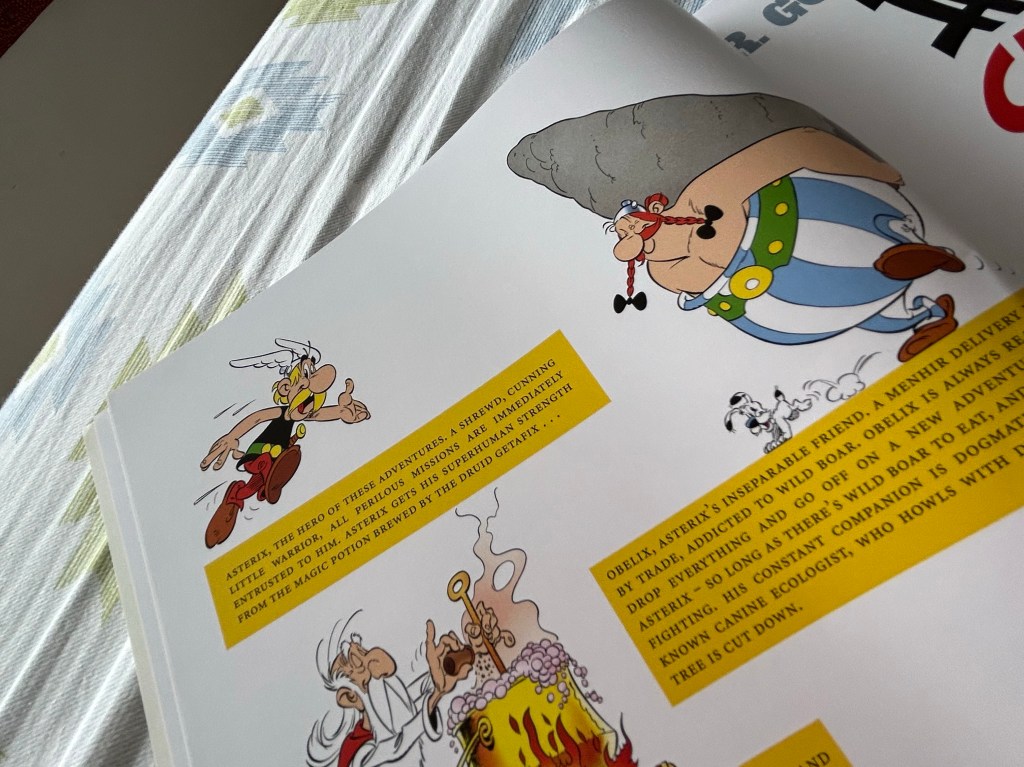
Used to read the Indonesian version of Asterix comics, I become curious of the English one. So I bought one in Surabaya airport and almost completed reading it during flight.
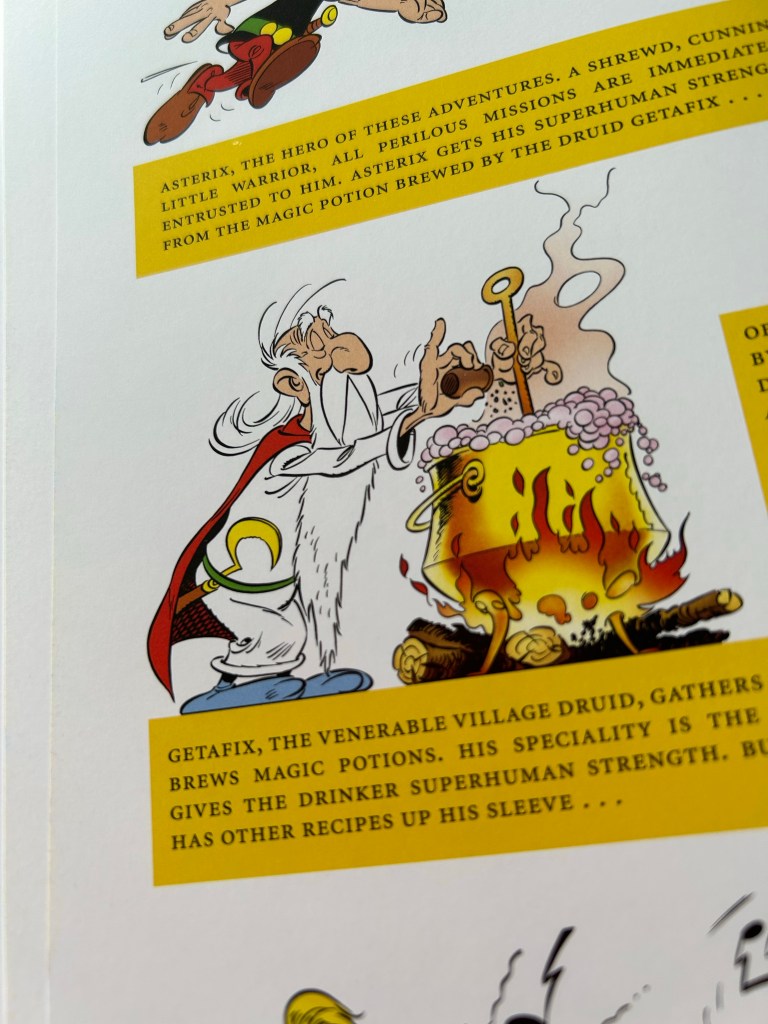
The story is of course the same but interestingly the names attributed to some characters are different. Maybe it is to match with how the names of characters with certain personality traits are described in local language that suits more to the “locally logical thought”. It is almost the same case with “adapted names” in other translated comics (Disney comics, Tintin, etc). I don’t know, am just guessing.
Re-reading this comic has given me so much space to feel that I am not more than a human being that can feel so stressed with just a tip of taste of sadness and need a very light touch of humour to trigger laughter. 😊
Thanks, Grandpa Goscinny and Grandpa Uderzo. 💝
while Asterix and Obelix bear the same names, Obelix’ dog is Dogmatix in the English version — Idefix in Indonesian
the beloved druid who is Panoramix in Indonesian version — Getafix in the English
the beloved bard Assurancetourix in the Indonesian version — Cacofonix in the English
Vitalstatistix is the English version’s name of the chief of the tribe — Abraracourcix in the Indonesian
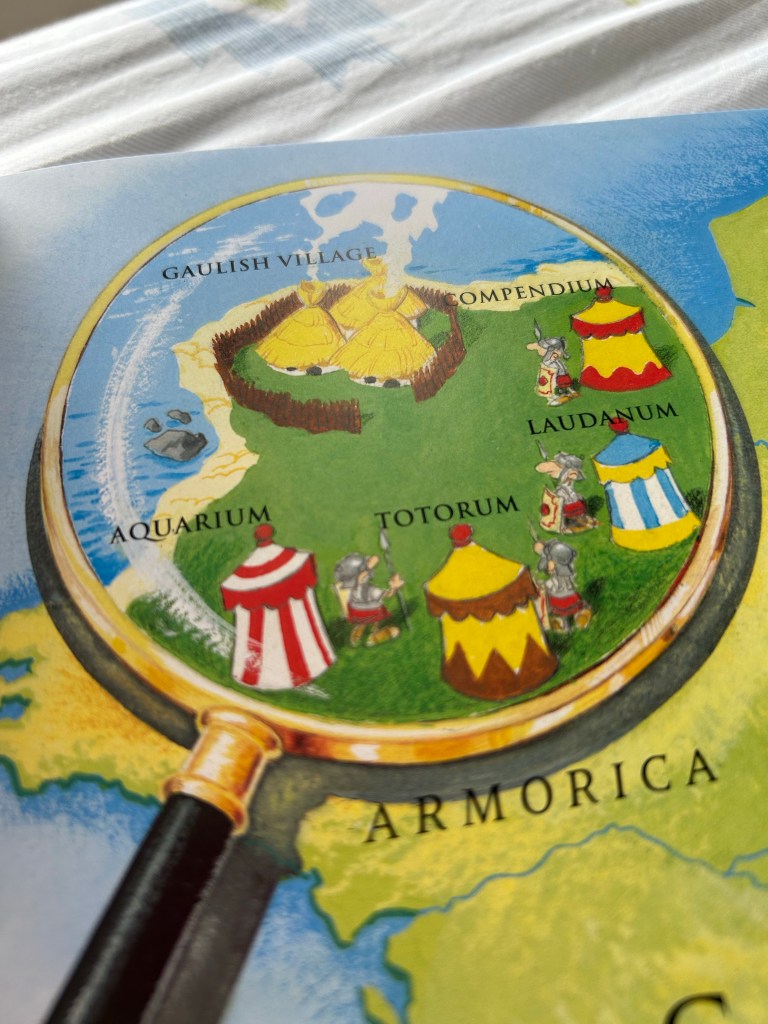
that village 😁 — Desa Galia in the Indonesian version




 rike jokanan
You must be logged in to post a comment.