Gringsing Bharatayudha (batik)

This battle's, dear heart
Will win you with condition:
You have the courage.

Whatsapp gave me a surprise that my batik Gringsing Bharatayudha is ready to ship; by plan it should be by November this year.

This time I don’t want it to be shipped, I’d like to collect it by myself so I can say thank you directly to the makers.

Gringsing is my favourite aside from batik nitik, kawung and parang. Gringsing reminds me how I was taken care of when I was a girl and sick — my mother would wrap me in a sheet of batik gringsing, my father would chant his mantra (I can remember what it was and will disclose it at the right time some day.) and my siblings would sleep with me in my bedroom until I was recuperated. Gringsing bears a sweet memory about my family in early period.

Bharatayudha is something familiar in our family. Our parents wanted us to be “true Javanese” who knew “the root” as a middle way because our parents held different religions; so Javanese tradition would not make them play tug of war of who would follow whom and it would not harm any of us to learn local wisdom. They bought R. A. Kosasih’s wayang comic books and other funny wayang stories of Punakawan (please allow me talk about it later). Another series that also built some of us was series of S. H. Mintarja’s “Api Di Bukit Menoreh”. We enjoyed it and shared it to other friends — we lost some books as some friends did not responsibly return the books after reading.

Long story short I grew up with Javanese and wayang wisdom before finally I decided to hold one religion as a legal requirement in our country — Indonesian must display their religion in the ID card. 🙃 I am thankful to be raised by parents of different faiths — they have taught us to respect others regardless….

Last year Ibu Tien showed me a white sheet with Gringsing Bharatayudha pattern then several months later the half done. I could not resist its charm.

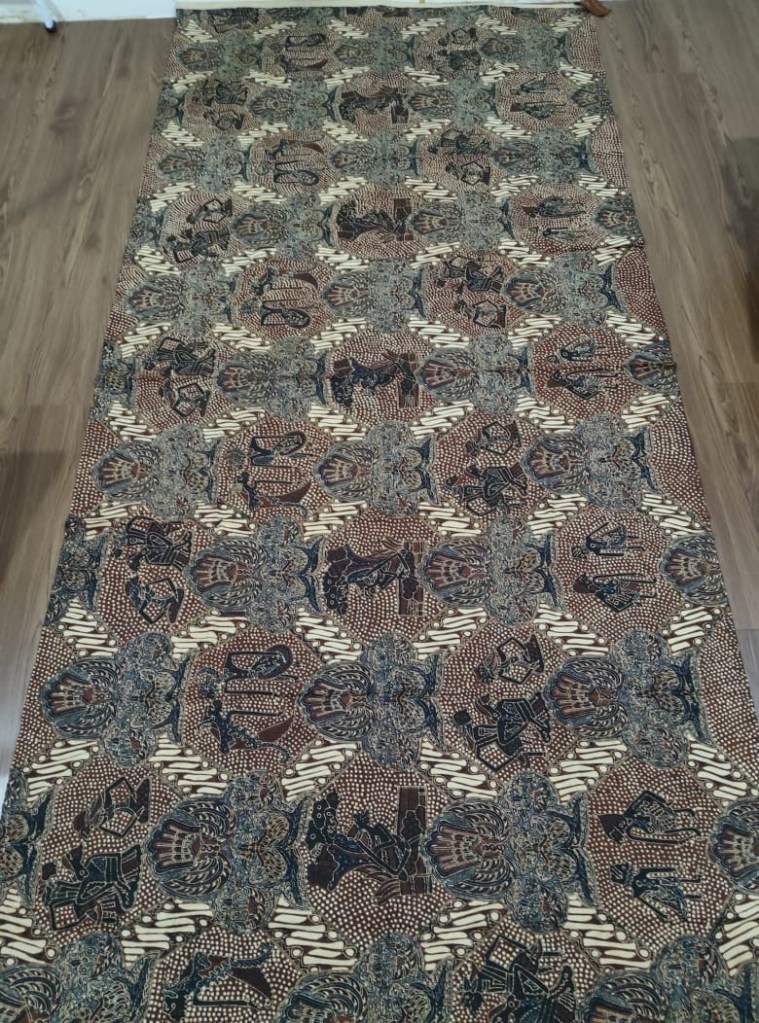
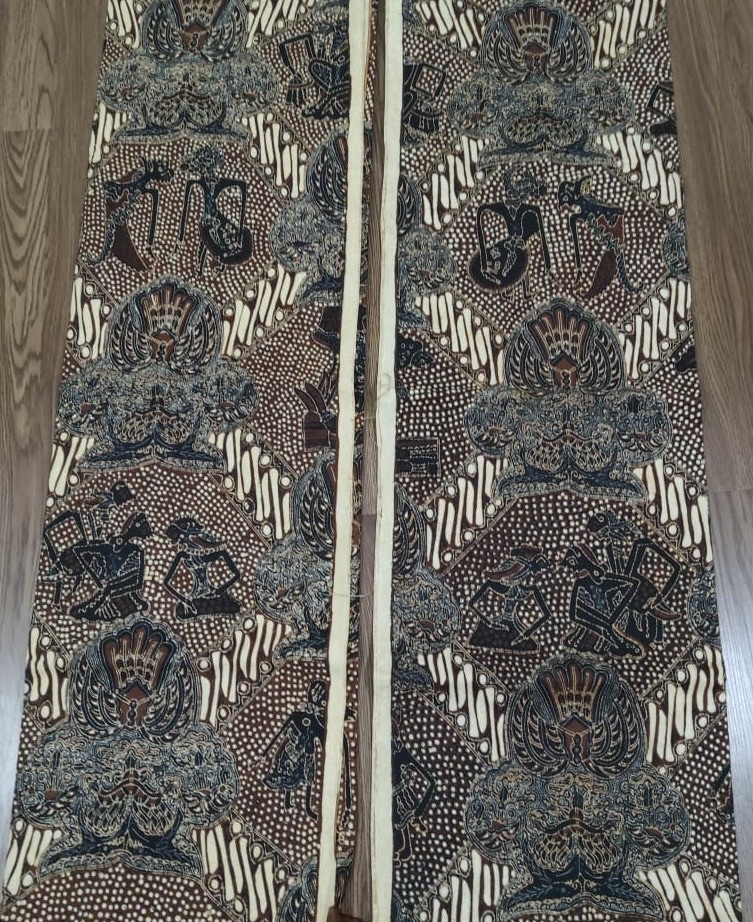
There are two scenes in the batik Gringsing Bharatayudha:

1. Bhatara Kresna the King of Dwaraka on the chariot: He is the coachman of Arjuna who is fighting against Adhipati Karna whose coachman is Prabu Salya the King of Madra. Arjuna and Karna are actually brothers from one mother (Dewi Kunthi) of different fathers whose each upbringing has brought them to different partiality. Arjuna for sure is in the side of Pandhawa, Karna decides to side with Kurawa who has provided life care and social status.

Bhatara Kresna, the King of Dwaraka (the most intelligent character in wayang, the master mind of all wars in his time) used to be my idol when I was a kid before I changed my mind to idolize Semar Badranaya (one humble deity who is assigned to accompany and guide Pandhawa)

2. Bima and Dursasana: Bima is the 2nd of 5 knights of Pandhawa the antagonist of wayang world; Dursasana is the 2nd of 100 Kurawa children the protagonist. In this scene Bima is executing Dursasana to death. This symbolises ending a preserved anger through revenge. Years back Bima swears to kill Dursasana and lets his sister in law Drupadi wash her hair using Dursasana blood — by then Dursasana sexually harasses Drupadi in public when Drupadi’s husband (Yudhistira) loses on a gamble table.

Not a few consider that the Bharatayudha (the civil war between Pandhawa and Kurawa) is not really a politically-triggered war; it is allegedly the result of the wounded pride of Pandhawa and the allies after Kurawa (Dursasana as the main perpetrator under the instruction of Duryudana the King and other Kurawa brothers’ cheering support) harasses Drupadi in the gamble court.

See. Woman can be the cause of war if not treated well— treated well can mean educated well, respected, nurtured, protected, etc. Drupadi is so broken hearted due to the fact that the Pandhawa knights donot do anything to stop the shameful act of harassment and she shouts pledging to wash her hair with Dursasana’s blood — that is when Pandhawa knights get so embarassed and promises to make Kurawa pays some day.

How could a group of knights be so retardedly ignorant? From one side it is integrity, following what’s agreed (the agreement is if Yudhistira loses in the last round of gamble, he has to give up Drupadi), in the other it is cowardice.

Sometimes being good is not an option when there is underpriviledge being abused or harassed. But it is predestined: there shall be evil to bring out good and good to bring out evil — cycle of life.

Fun fact about Bharatayudha: many don’t know that after death Pandhawa representing good side are still sent to hell for punishment, Kurawa considered representing evil are given chance to stay in heaven for some time. Indeed it is not our chosen side that brings us to heaven; it is our good deed does.

What a wisdom on one sheet of batik!
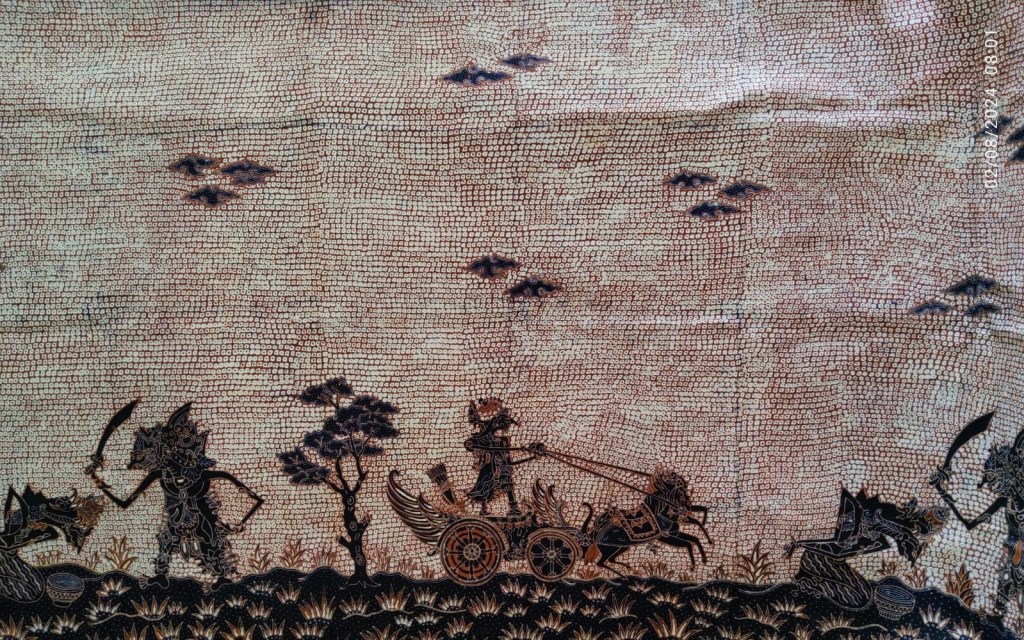
looks like a violence yet it is simply a depiction of a scene in Bharatayudha so please excuse the “looking like” violence

By the way honestly I prefer circle gringsing than square ones. Yet I know Ibu Tien’s team consists of those simbah-simbah and budhe-budhe (senior citizens) whose physical strength is not anymore at prime time so making square gringsing is easier than circle one. I will usually lend them my generous excuse: some of my batik sheets are not evenly dipped and even some are not fully drawn yet I still paid them full price. However, on some batik patterns like kawung and parang I will not let Mbak Izzah miss her grip in managing the work.

Weekend cannot be sweeter with this surprise.

I miss Jogja…. 💕
Ciptoning (batik)

A hermit walks in
To a cave in a market.
His night's never dark,
Day's never noisy. He's still
When he moves or talks. Centered--

Today is about another batik prepared by Mbak Izzah for shipment from Jogjakarta to Singapore.

Batik Ciptoning

Ciptoning is a Javanese word composed of two: cipta or cipto and ning.

Cipta or cipto means thought, imagination, creativity.

Also….

It means to create or to manifest.

And….

The ning, ening, bening, wening means clear as of water, clear as of mind, quiet, serene.

So ciptoning can mean clarify the thought and imagination or creativity….

Or creating or manifesting in serenity or in clear mind or in quiet mind.

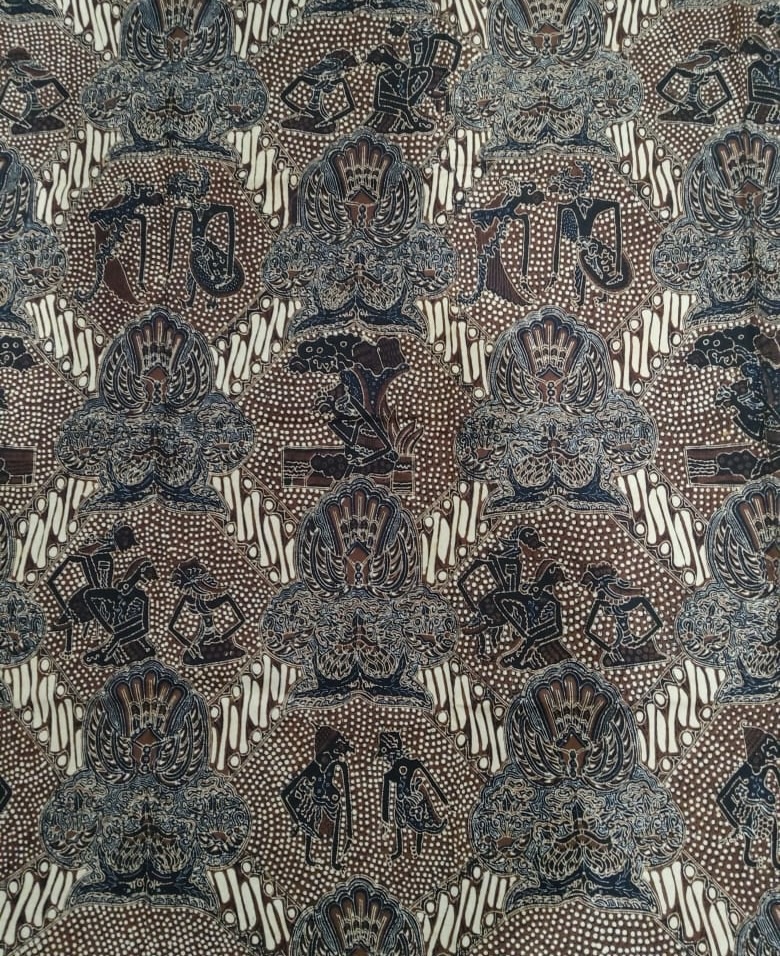
This batik pattern consists of ceplok (clusters) of geometry patterns formed by series of parang, wayang, gurdha (garuda) or wings pattern, bird and some isen-isen (repeated small dots or checks or lines to fill the space among all primary and secondary patterns).

I did talk about parang, gurdha and isen-isen in previous postings. Hope they still can be looked up, or else they should be googled. 😉

There are two wayang characters in the centers of the ceplok who are Begawan Abiyasa and Arjuna; one is the spiritual teacher, the other is the pupil. This is the scene when Begawan Abiyasa teaches Arjuna on how to complete a retreat. Once Begawan Abiyasa completes his task, he disappears and Arjuna has to start everything by himself. Yes, teacher will vanish when student is ready to jump alone — not needed anymore.

What does Begawan Abiyasa teach Arjuna to do?

A common retreat in Javanese tradition is a semedi or samadhi. The samadhi is usually conducted in a quiet, serene place and it is done by calming the mind, composing the body posture and focusing on nothing but the purpose of the retreat– can be anything including something, everything even nothing. That is what Begawan Abiyasa teaches him to do.

In wayang world a special retreat like this is normally done before a knight goes to a battle against raksasa or gandharwa that are representing evil energy of the world. Arjuna as a famous knight of his ability to survive a long retreat, his nature of complete human quality (including but not limited to naughtiness and ambition) and his high skills of warship; is assigned to spend from time to time for a retreat more often than his siblings; while Begawan Abiyasa is a maestro of spirituality in wayang world and so is trusted to guide a knight to face his impurity.

When doing a retreat, Arjuna uses a different name as he doesn’t want people to know that a royal family member is among the commoners doing a retreat. And that doing a retreat is a secret activity, he doesn’t want to be disturbed by commoners who want to take selfie with him. 😃

He is named Begawan Ciptoning.

Begawan can mean some: hermit, escatic, retreatant, recluse, solitaire, anchoret. In some way it can also mean maestro.

Ciptoning is to describe what Arjuna is doing during that period of hermitage. He is composing himself physically and mentally in serenity in order to achieve purity in his thought, imagination and creativity. He contemplates in silence among the crowd within himself, fighting against all distractions to survive the retreat and to finally get a clarity on how to manifest the everything or something or nothing that becomes his purpose of retreat.

Begawan Ciptoning will only end the retreat when The Undescribable blesses him with what is needed to go back to the “real world”, “to fight against the evil energy”.

When he is done with the retreat the begawan turns its meaning and value from hermit into maestro!

😳

Long story short please, Rike!

Batik Ciptoning is a special batik for those respected spiritually in Javanese early tradition. It was worn by those achieving certain levels of hermitage or having the quality of a spiritual maestro and so can provide guidance to others “lost” in the “search of meaning of life”. Those people shall go through repeated cycles like what Begawan Ciptoning has gone through with the guidance of Begawan Abiyasa.

It is now though worn by anyone who loves the pattern or one who prays that s/he is able to reach an enlightment in her/his own journey of life.

Gosh! My writing is broken pieces. Many to write but my thumbs need a retreat….

💕

my pieces of batik Ciptoning ready for delivery ♥️

Traded Wisdom

You sell some wisdom
That unwraps with mere breathing
Dimensions and faith.

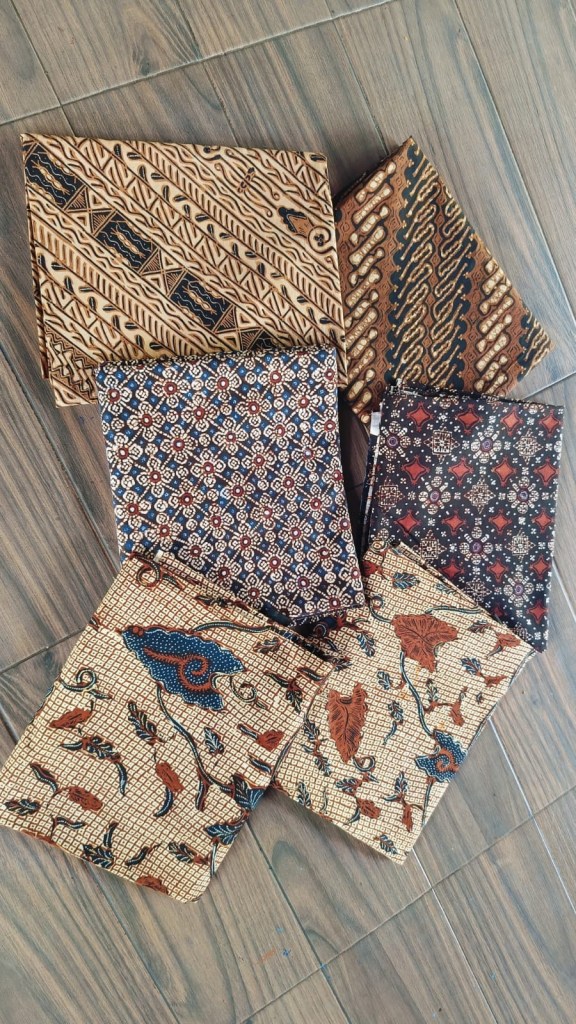
6 sheets of handmade batik are currently flying to my home; they are wisdom scribed on white cotton by some humble Javanese women who are willingly dedicating life as tradition protectors

matur nuwun 💕

Batik Gringsing

Time travels with you
To where good memories sit,
Waiting to rejoice.

———————————————————-

When I was a girl, I got sick very often. Yet what I remember the most isn’t the pain but is how my family would take care of me. Of course they medically treated me either at home or hospitalised, but there was a unique way I can never forget what my mother, father and siblings did extra.

My father would chant Javanese mantra that would calm me down. My mother would wrap me with a sheet of batik cloth before putting the next thicker blanket. And of course siblings especially sisters would sleep with me the whole night.

What Javanese mantra chanted by father? Oh can’t remember! What batik, I definitely remember it and now own it for the same need; covering myself with batik gringsing when sick.

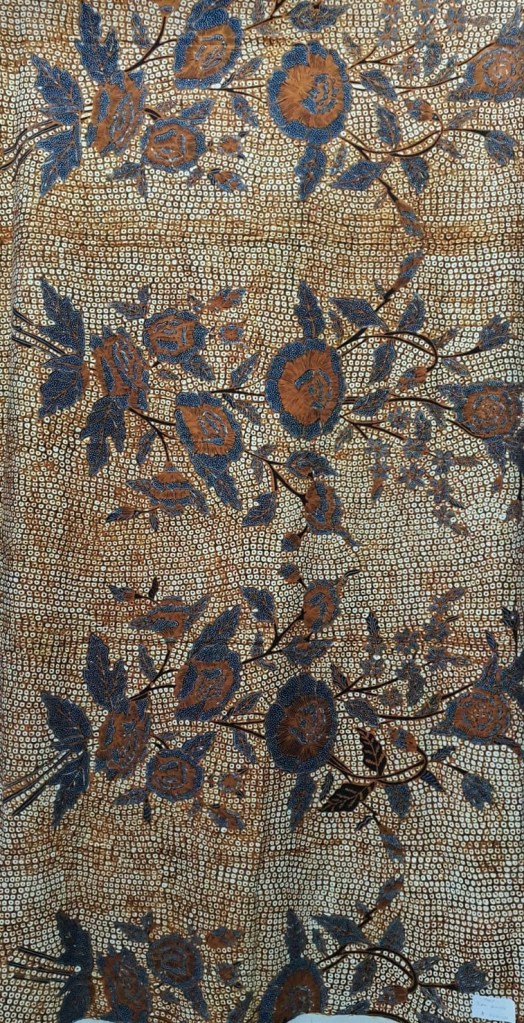
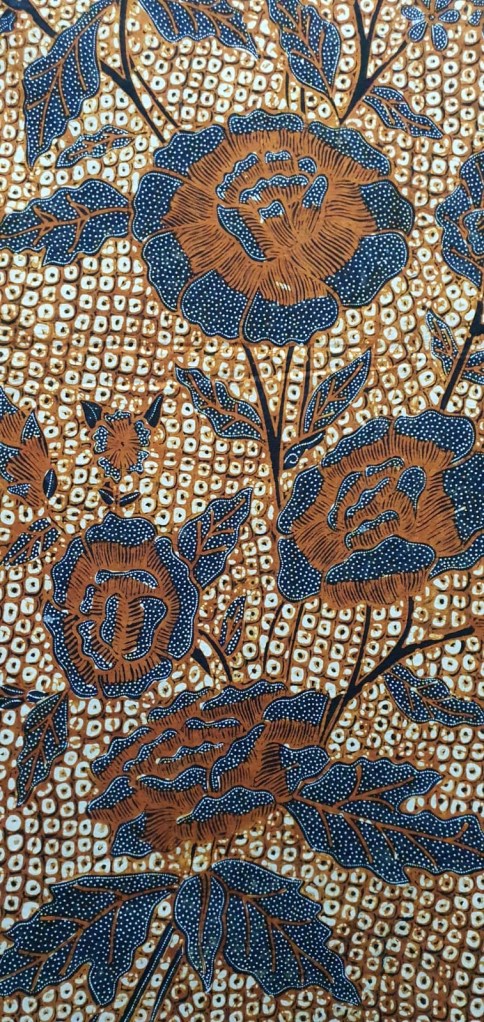
1.2mx2.3m batik cloth with gringsing background pattern of flower bouquets

Gringsing is one of the oldest batik background patterns in Java. It is thousands of tiny square with a dot in the center symbolising “sedulur papat kalima pancer” (literally means 4 siblings and 1 core as the fifth) the cosmic balance of human reality in Javanese wisdom. And through the philosophy it is believed that when a Javanese human is sick, s/he is cosmically imbalanced and needs to be balanced. Physically s/he is medically treated, metaphysically s/he is cured with gringsing the balance symbol.

Gringsing is an acronym of gring or gering (sick, not well, ill) and sing (not); gringsing means not sick anymore. Oh! That simple! Made by hand! Oh! Not that simple!

What a blessed human being!

wrapping body when catching fever doesn’t replace paracetamol, it’s to recall the memory of how my family well treated me when I was sick 🥰
detail of gringsing: a tiny squarish scale with a dot in the center – sedulur 4 ka-5 pancer

Dark, Fragrant Beauty

A bunch of roses,
Send this prayer as a gift
To those remembered
Through air, land, water, fire in
Dark, fragrant beauty. Amen.

I pray with flowers in a glass vase every week: reciting beautiful verses to those I’ve loved and remembered especially the ancestors, whispering unsaid love to those faraway, wishing they be happy everyday. Some people consider it ancient practice and not applicable or acceptable as modern but I feel more connected to my own self by doing it. So making it a habit

I love the dark mood of today’s flowers combined with my “sogan handmade batik”. It painted a shade of dark beauty with special fragrance and colour.

May all beings be happy.