
Why we live and what for we live are different from one person to another, that’s normal. And its normality is cascaded to the next levels of why and what for of smaller aspects of life. In mine it’s including but not limited to why and what for I conserve batik as part of the Javanese culture, the culture in which I’m primarily raised and nurtured.
The word conserve might be too humongous for me personally; what I’m doing is simply preserving the batik that I’ve collected as part of adoration to how the batik has come to its existence. Yet if my preserving humble collection of all the batik from the simbah, budhe and mbak (how I address the batik artisans) can be defined as part of conservation in individual level, I’m glad and honored.
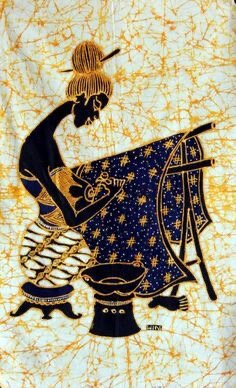
a piece of batik of a batik maker
I’m nobody— just a human being consistently putting meanings to life, even in her lowest point of life. Batik has been one tool that helps tap part of me to wake up, through its patterns and motifs. As I mentioned in one of my blogs earlier, Javanese is people of wisdom or people of culture or people of meaning. They insert lessons and meanings through symbols they expose to the world in this case through patterns and motifs of batik they’ve designed either the ones traditional or modern.
I did feel like loving batik as part of my culture. Yet from time to time I’ve contemplated whether I’m truly loving batik because of its being a culture value or culture element. Am I a Javanese, the people of symbols, the people of wisdom, the people of culture and meaning? Or, am I simply a human being who adores batik because of batik itself. And yes I’ve found reasons sentimentally pushing me to observe then love batik. They might sound more like excuses instead of reasons though, yet I love to claim them as genuine motivation for me to keep batik alive within.

batik Nitik
My mother’s mother was a mother who had to raise 4 children, send them all to schools (school was popular for high class society by then, for a widow like her sending children to schools was uniquely rare), my grandmother didn’t want her children to live poor like her.
My mother loved to tell us how she would go with her mother to the rice field to work in harvest time; and to go to her mother’s niece’s house where she would fetch white sheets of cotton to be made batik when rice field labor was rest before harvest time. Since then batik had been a sweet spot within me to always connect to a grandmother that I never meet. I’ve always felt a calm tone of honor (if not pride) to be the offspring of a tough dignified lady like her. Mother said her mother would make many batik patterns or motifs: kawung, parang, wahyu tumurun, cuwiri, yet mostly truntum. It might be 1st excuse why I fell in love with batik.
2nd excuse? I remember a pretty lady would visit my mother and offer some handmade batik. Her eyes were glowing when explaining the meaning or wisdom of the batik patterns and motifs, moving her fingers on the smooth fabric. I always wanted to be like her.
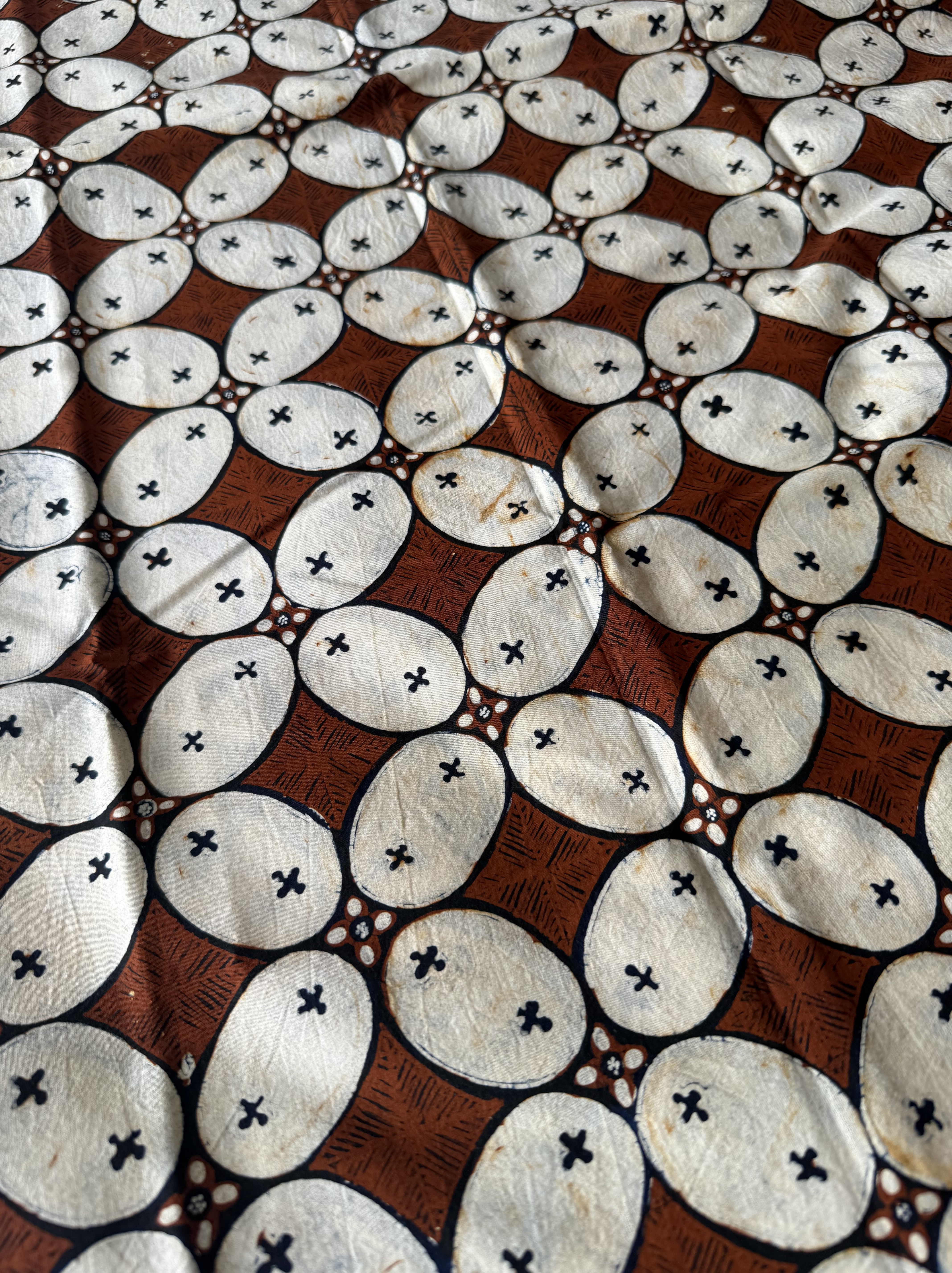
batik Kawung
Next…. 3rd excuse.
I was a student of batik class in Jakarta Textile Museum back then. Our batik teacher was a pretty lady named Mbak Ari. She liked to tease me because I would only make small patches of batik either with flower, bird or my favorite verses from the Quran humbly coloured. Yet I knew she liked me around as I would stay the longest in the museum every weekend while everyone else left; I would only go home when she told me “Closing time….”. Yes, I trained myself to face my patience through full day of batik making at that time.
One fine day Paras magazine came to cover news about batik to the museum, Mbak Ari requested me to be the batik maker model. Tada! My photo was in the magazine. What a shame! Yet I was happy to help. There was only one reason why I was appointed to be “the model”: I was the only one female mature student that day, others were all young learners.
Another day I prepared batik sidomukti on a 2.5-meter primisima cotton, saying to Mbak Ari that I would someday wear the batik I made with my own hand on my wedding day. She said “Too long! You get married even before this poor batik is completed. Go soon!” Funny, I’ve never finished the batik and the drawn white sheet is even no where to find. Making another one?

batik Grompol
4th excuse.
I don’t buy expensive batik. Of all my collection the most expensive is SGD1000 per sheet. And I decided not to buy that level anymore; max I’d take with no bargain is SGD200 per sheet for the price of batik, with additional tip I’ll specifically give to the primary batik makers who have done the primary patterns/motifs or do the most processes (note that one sheet of batik can be finished by a group of batik makers who will draw the patterns, put the wax on primary patterns/motifs, put the wax to form secondary patterns (isen-isen), colour the batik, clean the wax from the fabric to see the final colours– we can only know when we buy from direct source, otherwise, we can’t trace back such information and to me that makes the batik value just a anonymous work of art: beautiful but having no history of itself. (Someday I’d like to blog about “anonymous beauty in Javanese art especially batik).
I promised to myself that buying batik shall be only to the artisans in their places of origin, not to the high-class stores that hang price tags as high as gold can be. I want my collection to source from simbah or budhe or mbak who make batik to keep their kitchen and light on. Thank you, dear batik artisans.
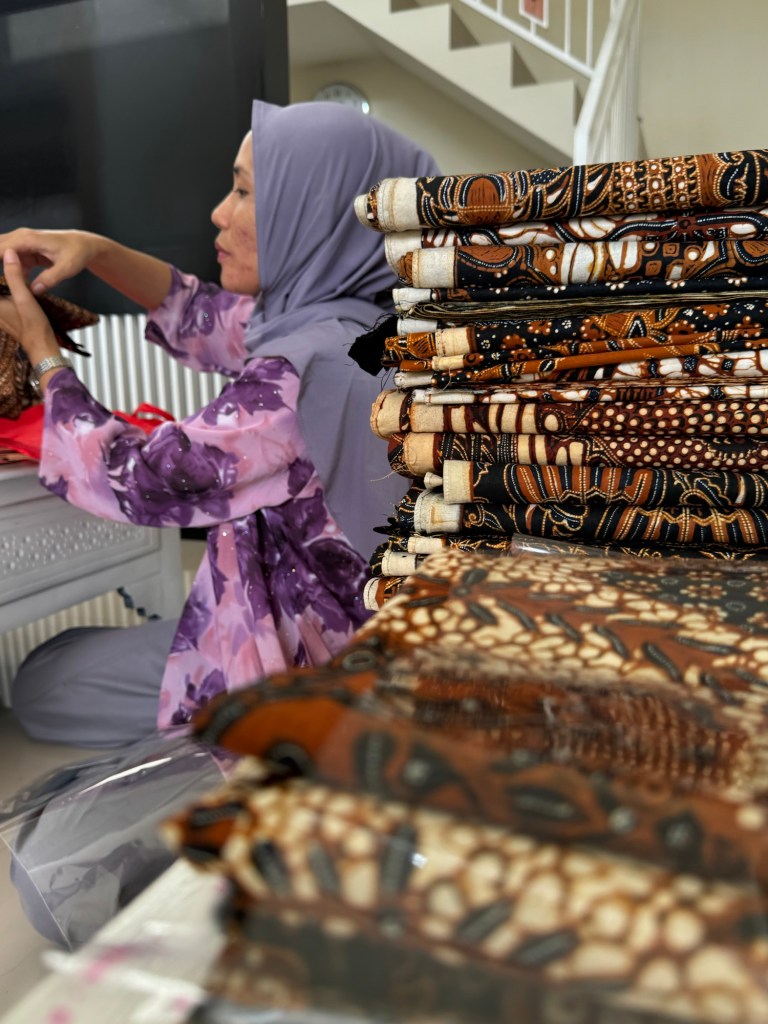
Then what for are all the batik I’ve stacked in the cupboard? There is always discussion about what I’ll be doing with my batik. Selling them? Giving them away? Probably. Yet before it happens, I want to make myself a batik curator. Whoa! Curator?
It’s not the curator in the level of those curating collected items in museums. Being a curator, I’d love to curate the batik in my humble collection by studying whatever dots, lines, curves, nooks and colors then give additional meanings to the ones traditionally existing and culturally standardized. Personal meanings will hopefully glue batik even stronger on to my life. I wish to sit with some friends to spread batik sheets and study the wisdom together.

batik Parang Klithik
Seems like I love batik not really because of its being an element or value of Javanese culture. It is more about how batik personally sits on my soul. Taking culture as the primary aspect might not work to me; I might lose grip when I’m culturally crossed over.
Happy National Batik’s Day! (tomorrow, Oct 2)
Dear fellow Indonesians, let’s wear batik. You don’t have to wear handmade batik (drawn or stamped). You can wear machine stamped or printed ones as long as the batik is made in Indonesia. Please kindly note that we need to work hand in hand in this difficult situation to survive. Buy our neighbors’ products including but not limited to batik.
Dear those cross cultures, if you read this; please google “batik”, “handmade batik”, “sogan batik”, “Indonesia batik”, “imogiri batik”, etc about batik. Who knows someday life will pull you all and me together in a spot where batik is the center of discussion? Heaven knows.
Note: Simbah: grandmother; Budhe: Aunty; Mbak: Older Sister

batik Gringsing Pisan Bali




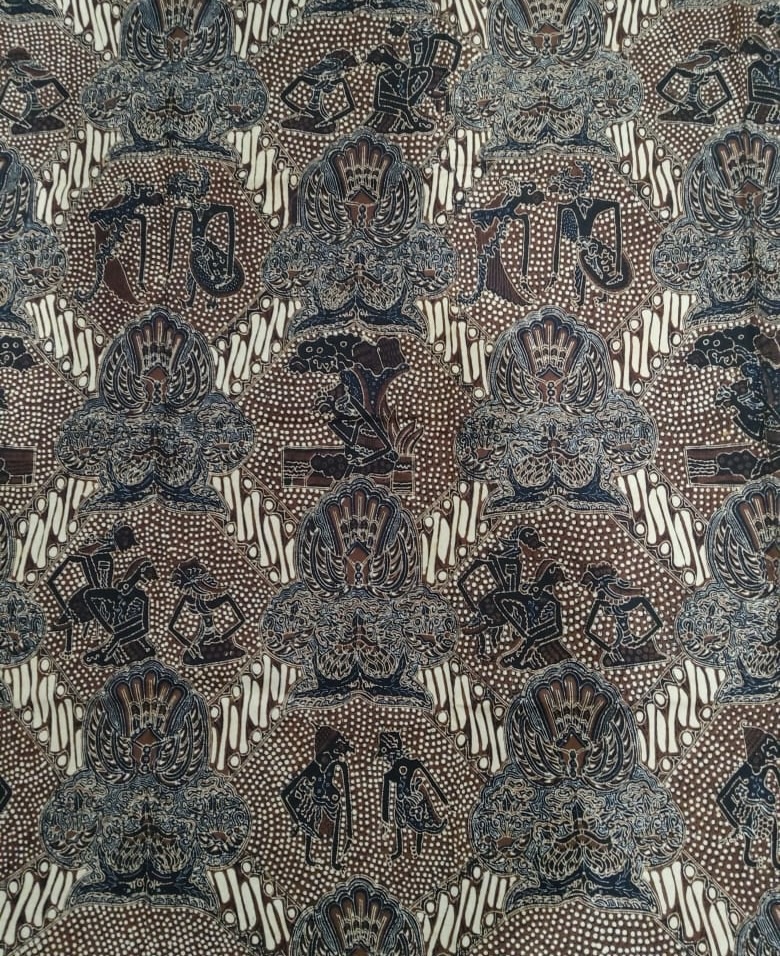
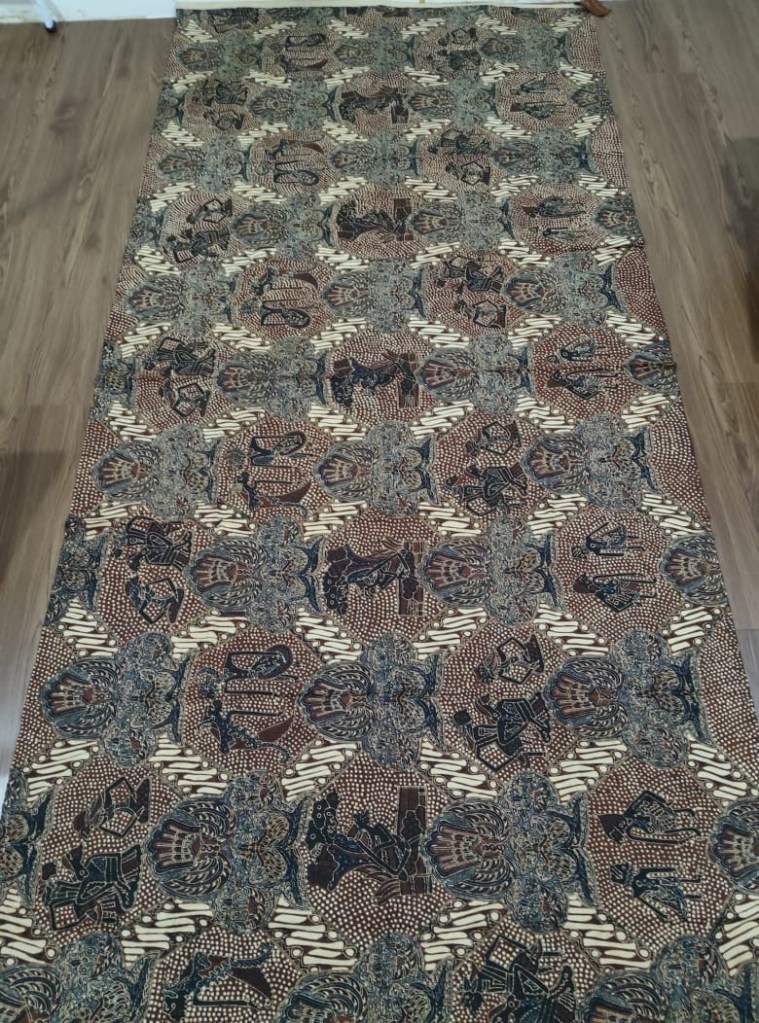
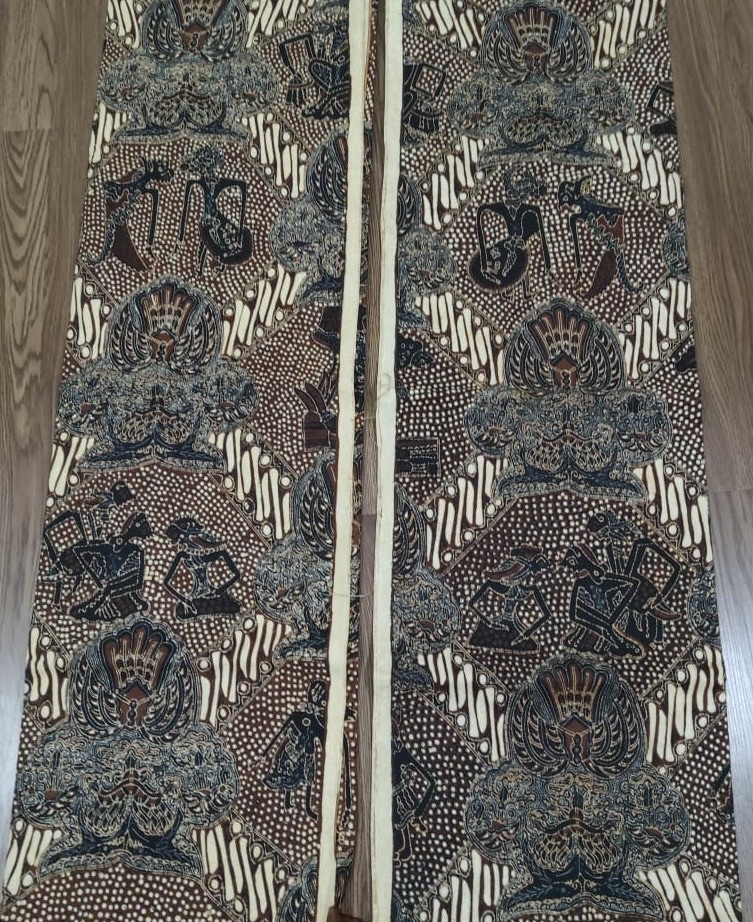

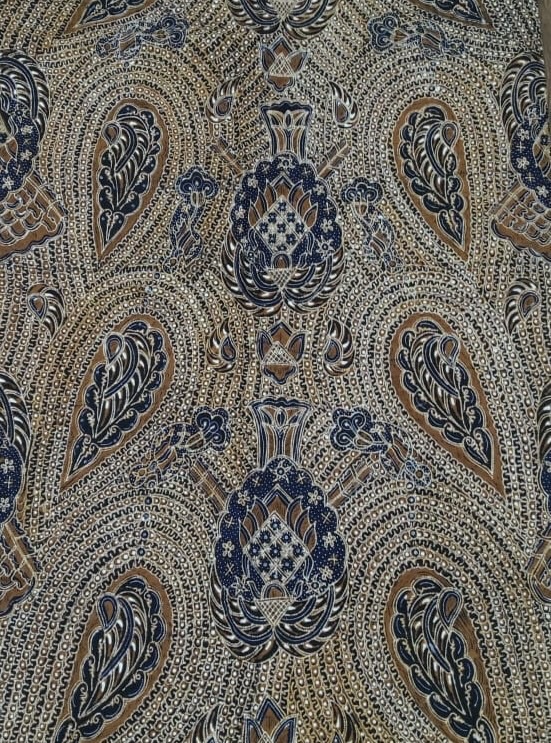
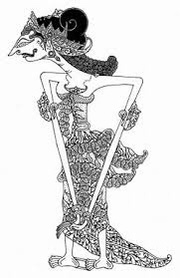






 rike jokanan

You must be logged in to post a comment.