Diagonally
Between axes: x and y.
Dynamic and free—
——
Batik Parang Rusak
As one of the oldest patterns in Java island, “batik parang” is loaded with wisdom of life. Designed by one VVIP in Mataram, Panembahan Senopati, it is not surprising that this pattern is considered special and sacred.
Parang was previously a “larangan” pattern meaning that this pattern was allowed to wear only by royal family in certain occasion/function. Nowadays it is worn by anyone loving it; yet in Java island almost no one will wear it for wedding functions — most Javanese believe that wearing batik parang will bring negative impact and disputes among the family of the bride’s and groom’s and/or bring inharmonious life to the marriage.
The word “parang” was adopted from the word “pereng” that means the slope or the cliff of a mountain/hillside or the steep of a shore so that is why it is diagonally structured. The word “lereng” is also used to name this batik to show the same meaning with “pereng”.
Basic shape of “parang” pattern is an “S” connecting to one another with an angle of 45 degree. This signifies unbroken wavy lines. They are silently moving like waves that are able to move anything at certain level of the ocean surface. The waves will move as long as there are winds. The winds will not stop as long as there are movement of pressures in the air. And the pressures will sustain as long as there are celestial bodies especially the sun interacting with the earth. Forever — until death do us apart.
Some people say “parang” also means “perang” or war in Englihs but I am not into that discussion. Linguistically “parang” should never be “perang” in Javanese. It just happened to be historically told that this “batik parang” was worn by soldiers returning from war (“perang” in Javanese) to show the king that they won. So, it doesn’t suit my logic to call “parang” as “perang”.
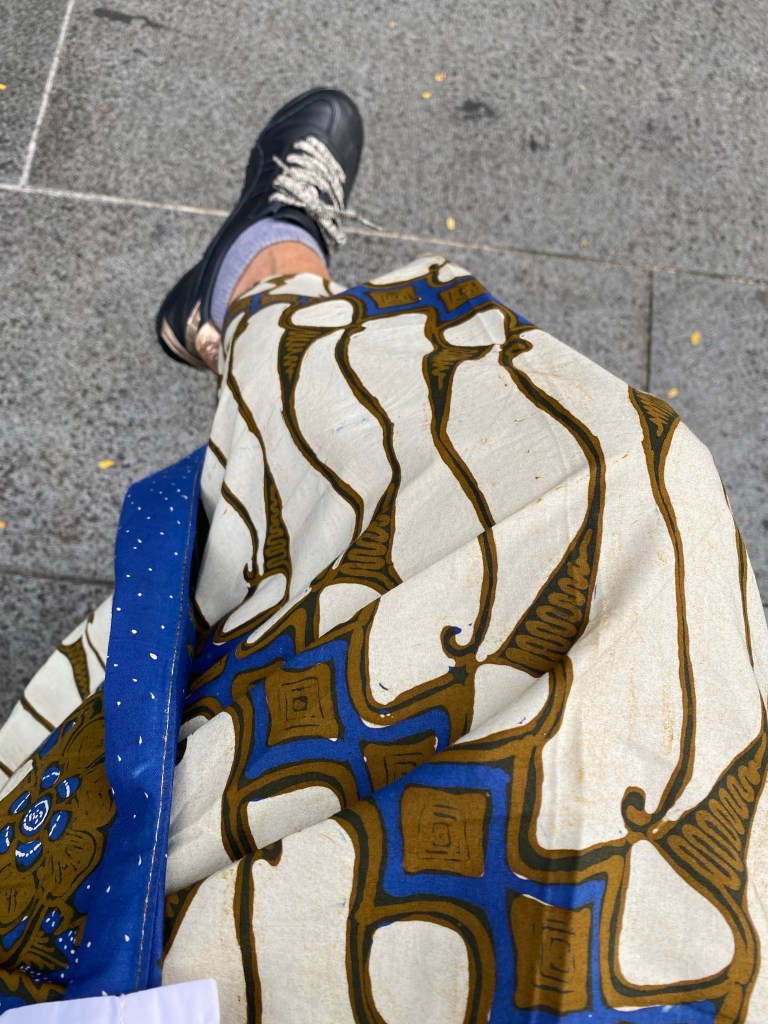
Parang Barong handmade, my collection from “Barong Gung”, an original brand from Tulungagung
From all symbols I agree above, I’ve learnt lessons from “batik parang”.
Here it is.
1. Don’t give up
Like waves in the ocean, we should not stop. Just feel the winds and move. FInd your wind and move unstoppably! Live like moving waves, playfully and flexibly responding to the different pressure of air. Push the ships to destination shore. Let the pressure be an activating force, not a demotivating factor.
2. Sustain
Connecting S — it is unbroken S’ surfing on the waves. Good behaviours and attitude generated from objective contemplation and reflection should sustain. It takes a good management system to sustain good practices in an institution including life.
Let’s make a management system more human-based. 🙂
There should be values adopted by a human being — no value, no valuable life.
Values in life (useful link): https://liveboldandbloom.com/11/self-improvement/values-in-life
From the values there is born a boundary. If I value friendship, I will make sure I act as a fair friend to everyone around me. What is fair: take and give (might not be 50/50 but I won’t be happy if it is imbalanced 70/30 and above, and never about material needs sharing).
From the boundary there will be discerning of pros and cons. If I set a boundary, I am listing a do’s and don’ts based on the pros and cons around my boundary. From the do’s and don’ts, there shall be born priorisation of action. You can do this but not that. You can do this first, that later.
From the prioritation of actions there shall be a materialization of consistent decision to choose preferred actions. And….
… The preferred actions are to be observed and surveilled. Who observes or surveils? And how?
Who: Ourselves, our family, our friends, our community, our environment, angels, god and godess, universe, ultimate creator.
How: through re-evaluation of values — this it tricky as it can be as easy as making immediate decision of the day or as complicated as trial and error the whole life
Then go back to setting boundary, etc, etc…. A cycle of self love 💕
Management system (useful link): https://www.iso.org/management-system-standards.html
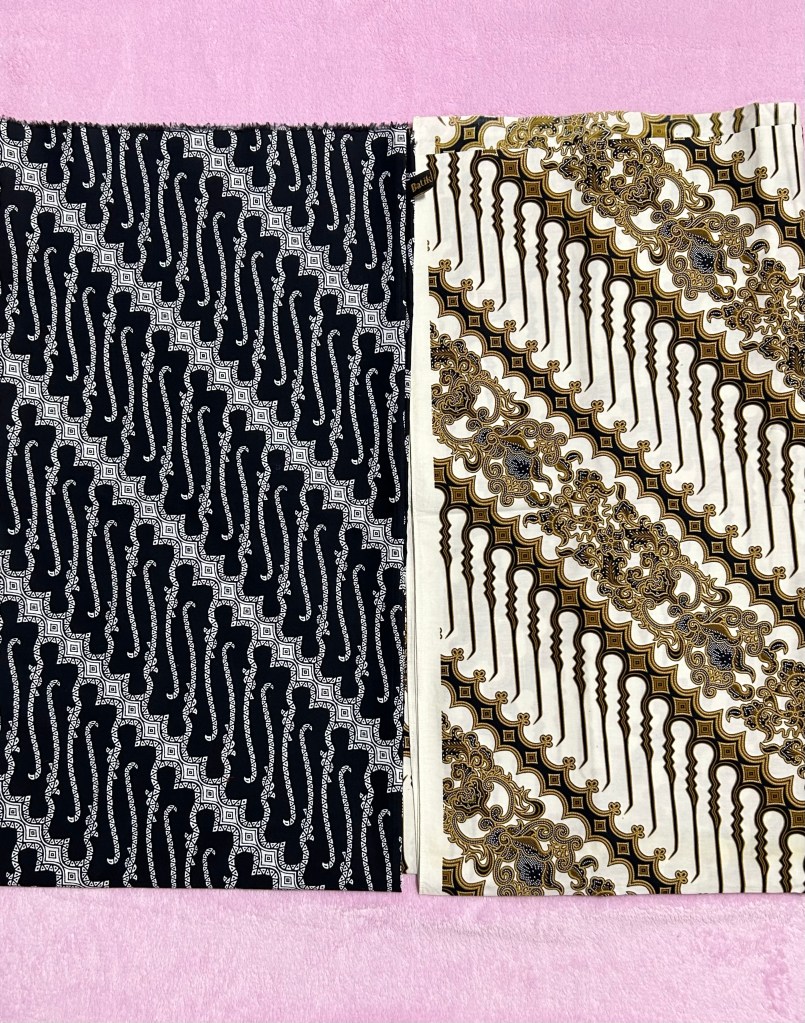
2 pieces of collection from Batik Keris — it is a printed batik, not handmade (black: modern Batik Parang; white: Batik Parang Sekar Jati)
3. Agility, Noble Ideals & Loyality
Agility: Only when I am agile, I can surf the waves of life. My life is not others’ life so the waves are not the same. Your waves might be taller than mine but they might not make you higher quality than me if you don’t develop agility to surf your life; as a result my life seems easier and nicer although I have to deal with more beasts below my wave while you have nothing under yours. And of course vice versa– 💕
Noble Ideals: Only those having values can believe with noble ideals. And having noble ideals make human beings believe that whatever situation life gives them, there are always meanings to deploy. And it is meanings in life that make human beings live with no regret although they know that their role in this vast universe is just a tiny teeny weeny mini (almost unseen) dot.
Loyalty: Only if I am loyal to my values, I can sustain life. The life I run might not be the most dreamt one; yet it is the best-suited one for me with all the pluses and minuses.
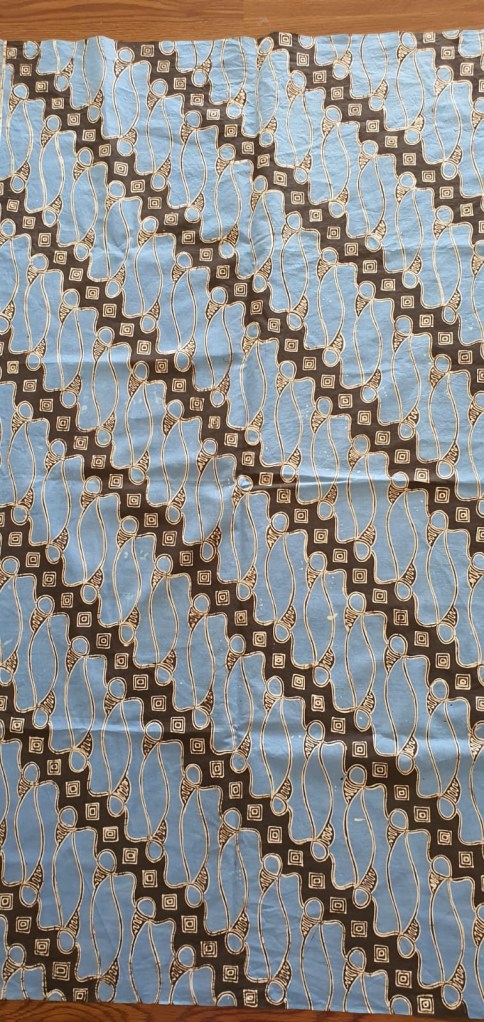
my collection of handmade Batik Parang coloured in natural colouring agents from Mbak Izzah, the daughter in law of Ibu Tien the best batik artisan from Imogiri
Care to try wearing “batik parang”? 💕
Salam.



 rike jokanan
You must be logged in to post a comment.