You sell some wisdom
That unwraps with mere breathing
Dimensions and faith.
—
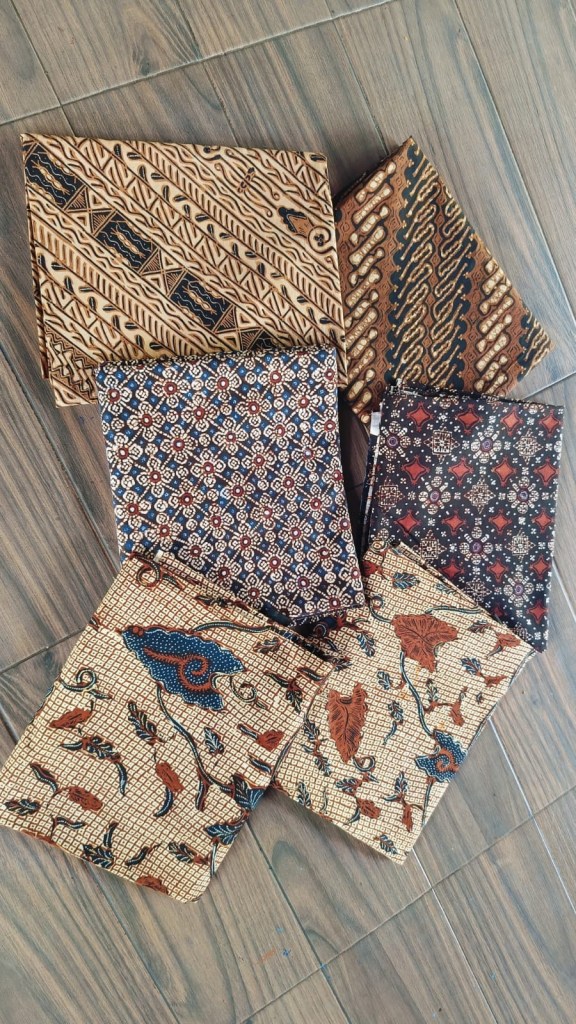
6 sheets of handmade batik are currently flying to my home; they are wisdom scribed on white cotton by some humble Javanese women who are willingly dedicating life as tradition protectors
Living is breathing.
A quest of in and out air
To define meaning
—
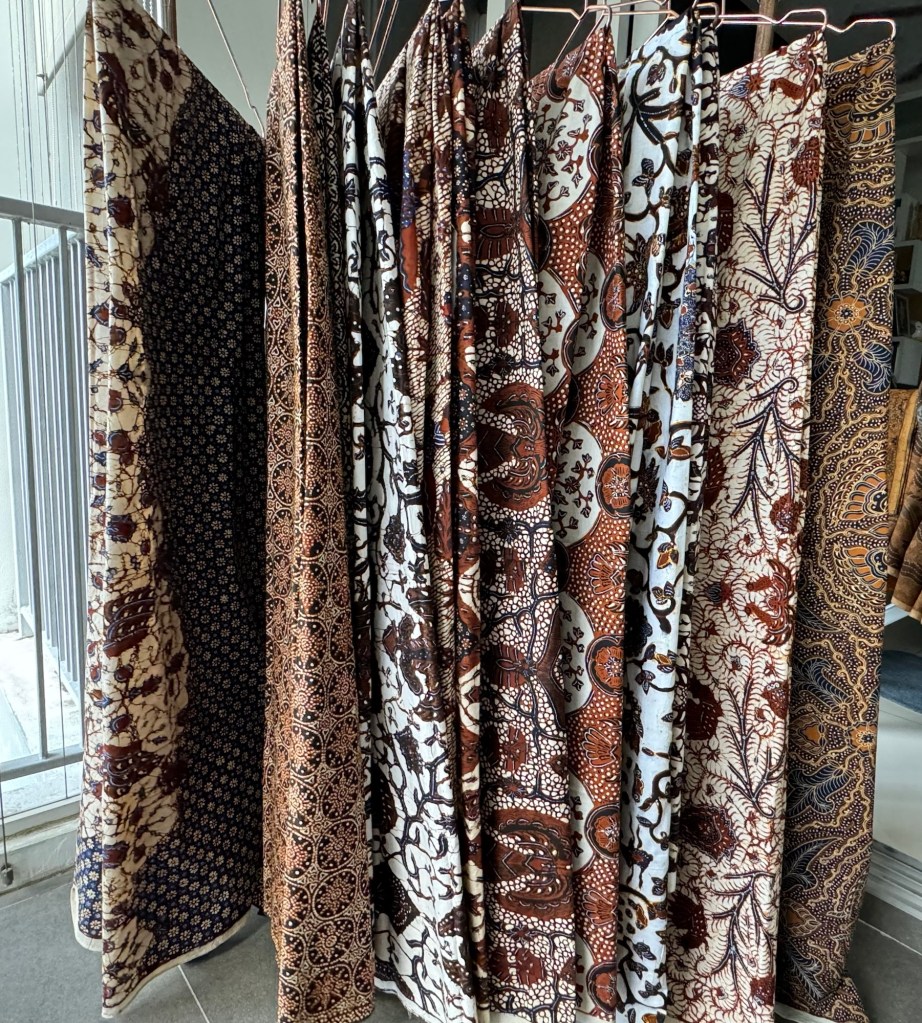
breathing day for some of my beautiful batik, the Javanese exhibition of wisdom
One of treatments to handmade batik is letting them breath or in Javanese language we call it “angin-angin” that is literally “wind-wind” — hanging batik clothes in fresh air, not directly under the sun to let them be in contact with air to decrease the humidity.
Clear sky, Beloved,
Calm blue where clouds swim, birds fly
Under the warm sun—
—
Javanese live their life with meaning and that makes them “effortlessly” survive even in the hardest time. They pin meaning to everything they experience. I believe Javanese are naturally philosophers whose communal humble life is richly loaded with wisdom; unfortunately fading away by the time.
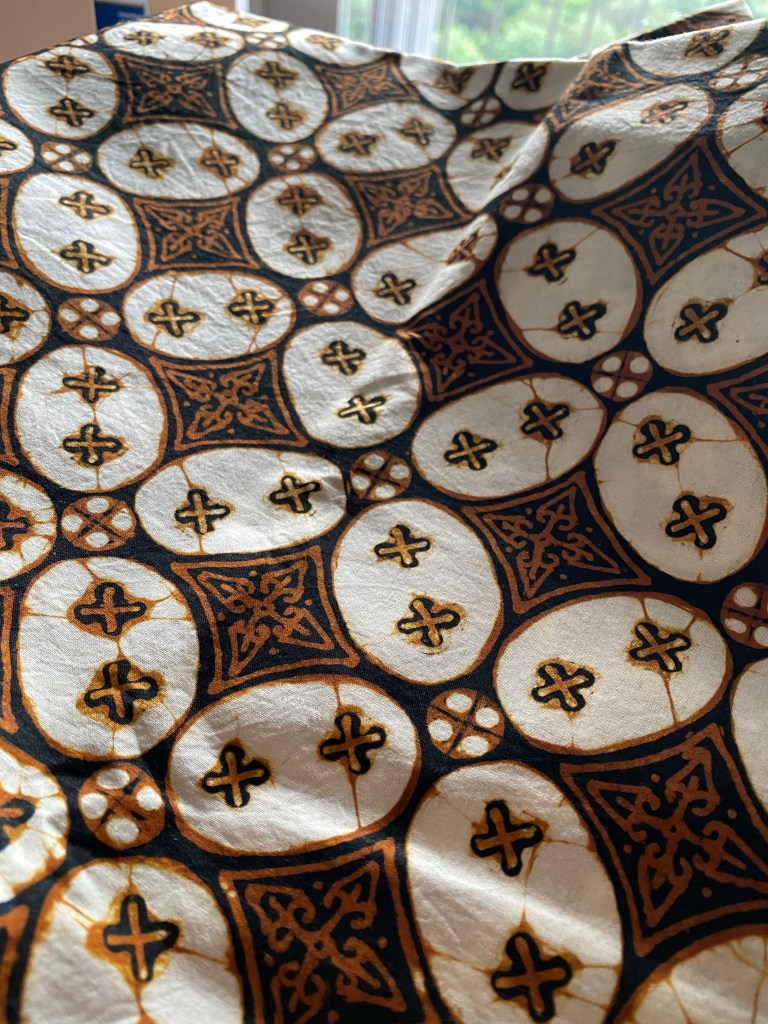
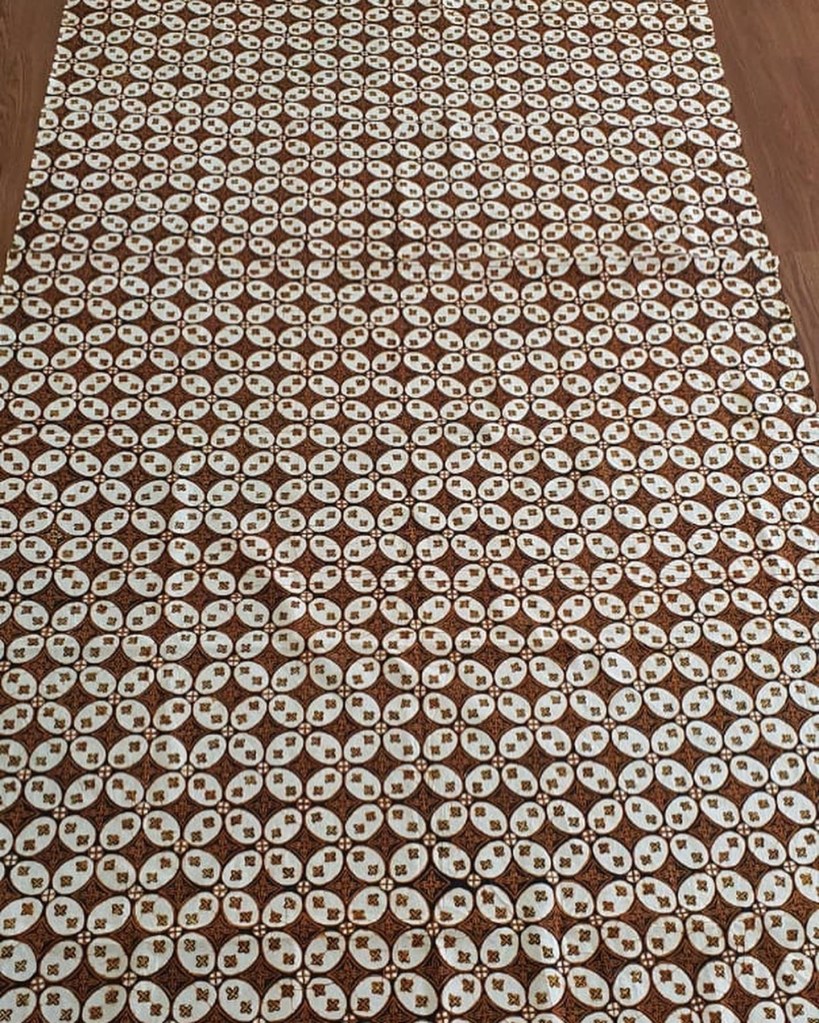
Meanings easily recognised by most Javanese are those pinned to batik method and patterns. Historically batik patterns were works of art composed by either scholars from padepokan (ashram in Sanskrit) or the royals (king, queen, prince, princess or royal artists). In fact, there were few batik patterns created by commoners such as batik nitik and batik kawung. Kawung is one of the oldest original patterns of Javanese batik which has existed since 12th century. Nitik was born younger, approximately in 19th century.
Fun fact about Javanese king: aside from courses of political knowledge, leadership, palace management etc, long time before his coronation a Javanese crown prince must completely compose 3 works of art and publicly present them to the board of senior royals then announced the art pieces to people in the kingdom. Those three are batik pattern whose batik is handmade by him, tembang/kidung (sacred Javanese song) sung by him; and bedhaya dance trained to the dancers by him (a solemn Javanese dance performed by a group of dancers).
While batik nitik was initially created as secret codes by commoners to circulate among them classified information kept hidden from unjust aristocrats at that time or from the enemies (some historians said though this pattern was composed by the royals); kawung was allegedly created by a mother to dress her son who was instructed by the king to join his exclusive team due to his outstanding skill of espionage and balanced state of mind (again the historians said this pattern was composed by the royals). The said mother made a sheet of kawung pattern for him before he left as a prayer that her son could keep his current quality even after he later lived among (socially, politically, professionally) higher rank people.
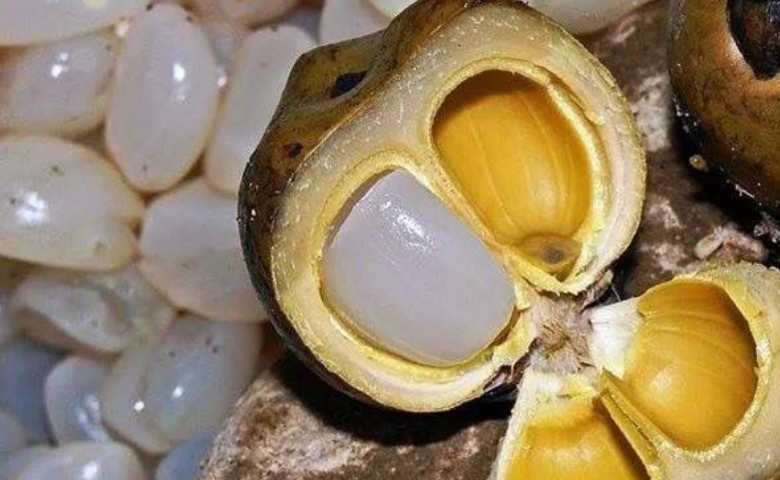
kawung aka kolang-kaling, two seeds, four half-chambers (from Pinterest)
Kawung is the Javanese word of sugar palm (kolang-kaling). The symmetrical four half chambers in a fruit are used to symbolise balanced state among physical, mental, intellectual and spiritual. The clear colour of the seed is borrowed to symbolise clarity: of conscious mind, of conscious decisions, of intension, of purpose and of actions.
People also relate the word kawung to suwung that can mean emptiness: in this matter suwung is more about self alignment, absence of sense-driven wanting. A person in this suwung state in positive interpretation means someone who is already free from his/her craving for worldly interests, s/he is able to calmly and consciously prioritise among physical, mental, intellectual and spiritual proportions with no doubt or confusion. S/he is in high level of awareness of a “perfect” human being.
In Java region that kind of person is not necessarily a saint or a priest or a bikhu(ni) or a nun; s/he might be a farmer, a batik maker, a herbal seller, a taxi driver, an employee, a housewife, a leader etc, just whoever is willing to self align through what they do everyday regardless their professions. Not a few of them were “bad” people hearing the inner calling, deciding to quit their wrong doings and living “new” life.
At younger age, I met more of that type around us in my hometown. Now fewer and fewer people are interested to achieve that level because life pace is now becoming faster with the “tsunami of information” and life needs are “forcing” people to be constantly in alert mode with the high competition to “survive certain life style”.
Not much I can do this time. I try to breath more slowly, pay attention on shift of emotions through body reaction (my body will never betray me) then acknowledge the emotion whatever it is. Time flies like a wind sometimes like a storm, I choose to ride it, not to get dragged by it. Not easy but doable.
How light this head is after ranting!
batik kawung beton crafted by Mbak Arifah (25 yo), a mute-deaf female who never goes to school but is able to write and read – thank you, Mbak Arifahprimissima cotton, 250*106cm, two sided
Fun fact about the honourable batik makers:
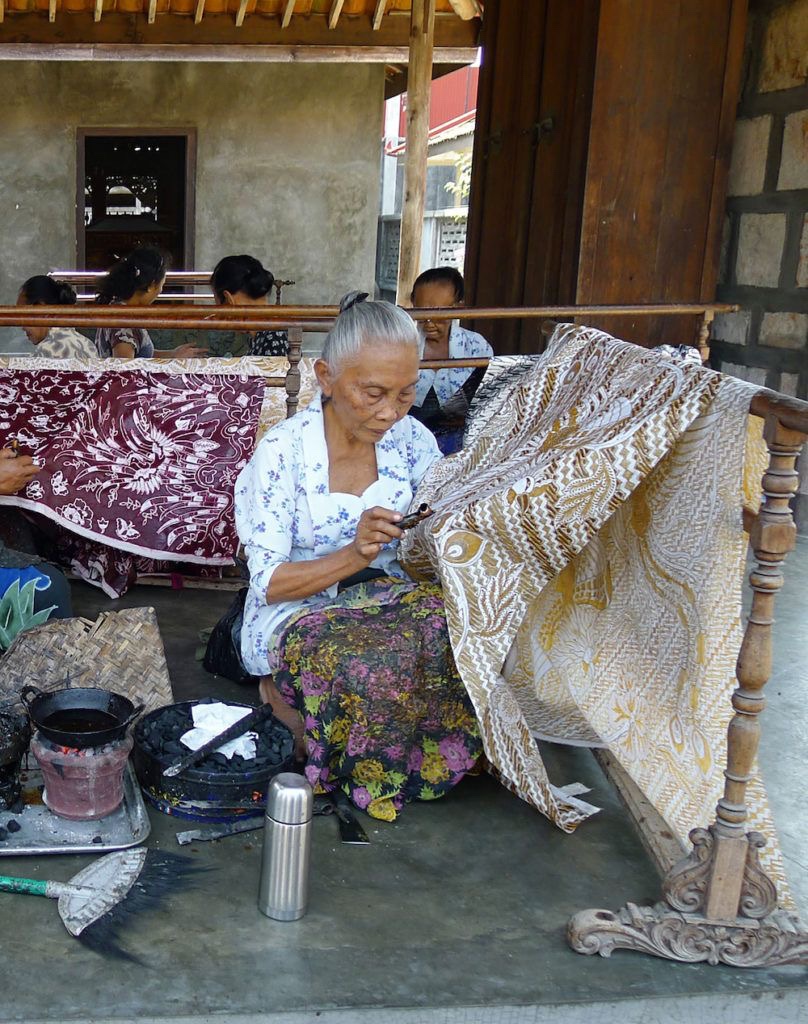
- Once a batik maker pulls the “canting” filled with hot wax on a sheet of fabric, it will start developing lines or dots as the hot wax gets dry fast and block the fabric. That is why they work very carefully to avoid unplanned error. Correcting unplanned error is more tedious in batik making process compared to drawing the patterns with canting. Zero accident policy applies.
- Batik making is a highly contemplative activity (almost) like meditation. That is what makes many of batik makers especially those senior and/or with high quality artisanal works have good self alignment.
- Some batik makers don’t need to draw the planned pattern with pencil on the fabric. They are the highly skilled, the artist, the master of what they are doing.
- It takes approximately 5 months to complete a piece of two sided hand-made batik of 210-250cm long. Those batik makers also do household chores in between their batik making activities as they mostly don’t earn good money. If you buy hand made batik, please give extra dollars to share some comfort.
- Majority of batik makers are female. Very few of them are young.
at workshop (from Pinterest)at home (from Pinterest)
Time travels with you
To where good memories sit,
Waiting to rejoice.
———————————————————-
When I was a girl, I got sick very often. Yet what I remember the most isn’t the pain but is how my family would take care of me. Of course they medically treated me either at home or hospitalised, but there was a unique way I can never forget what my mother, father and siblings did extra.
My father would chant Javanese mantra that would calm me down. My mother would wrap me with a sheet of batik cloth before putting the next thicker blanket. And of course siblings especially sisters would sleep with me the whole night.
What Javanese mantra chanted by father? Oh can’t remember! What batik, I definitely remember it and now own it for the same need; covering myself with batik gringsing when sick.
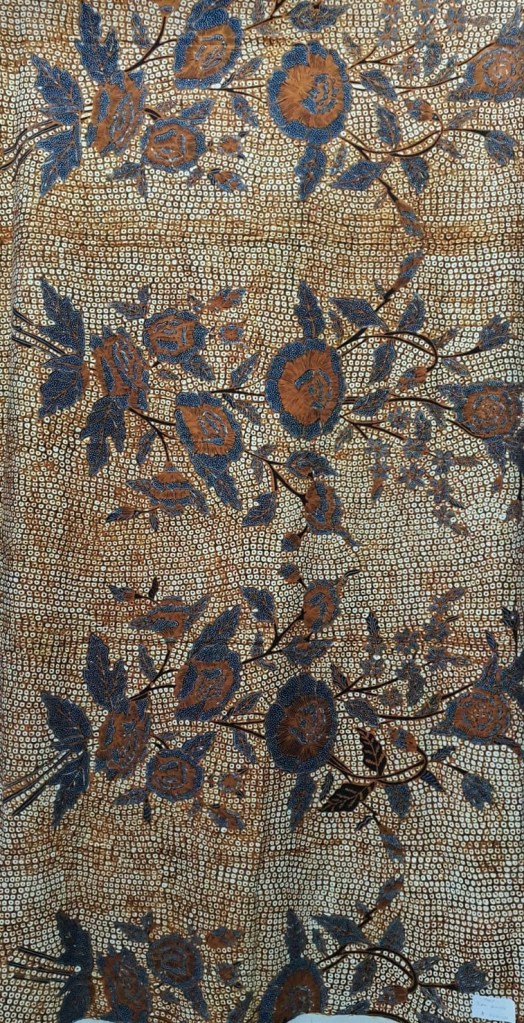
1.2mx2.3m batik cloth with gringsing background pattern of flower bouquets
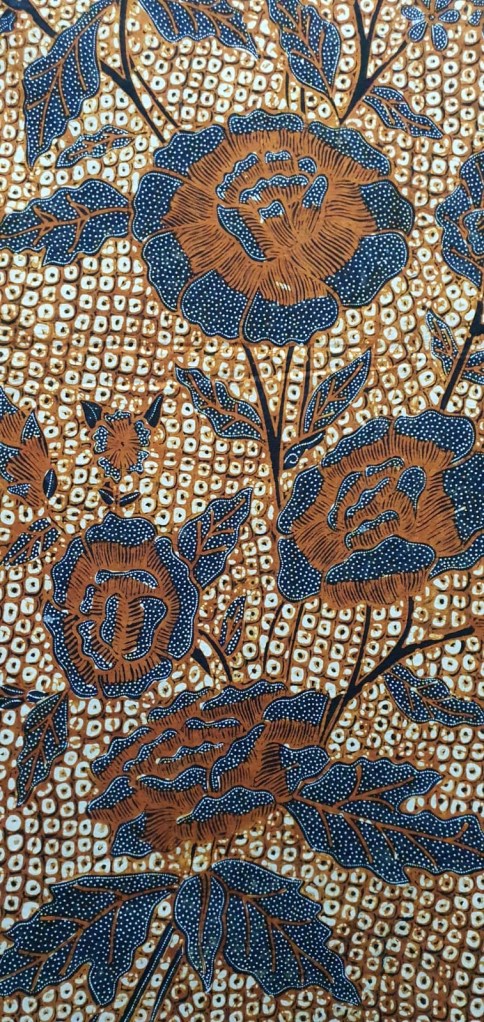
Gringsing is one of the oldest batik background patterns in Java. It is thousands of tiny square with a dot in the center symbolising “sedulur papat kalima pancer” (literally means 4 siblings and 1 core as the fifth) the cosmic balance of human reality in Javanese wisdom. And through the philosophy it is believed that when a Javanese human is sick, s/he is cosmically imbalanced and needs to be balanced. Physically s/he is medically treated, metaphysically s/he is cured with gringsing the balance symbol.
Gringsing is an acronym of gring or gering (sick, not well, ill) and sing (not); gringsing means not sick anymore. Oh! That simple! Made by hand! Oh! Not that simple!
What a blessed human being!
wrapping body when catching fever doesn’t replace paracetamol, it’s to recall the memory of how my family well treated me when I was sick 🥰detail of gringsing: a tiny squarish scale with a dot in the center – sedulur 4 ka-5 pancer



 rike jokanan
You must be logged in to post a comment.