Life Is Poetry

Life is poetry
Singing songs to a quiet heart
To be pretty noise.

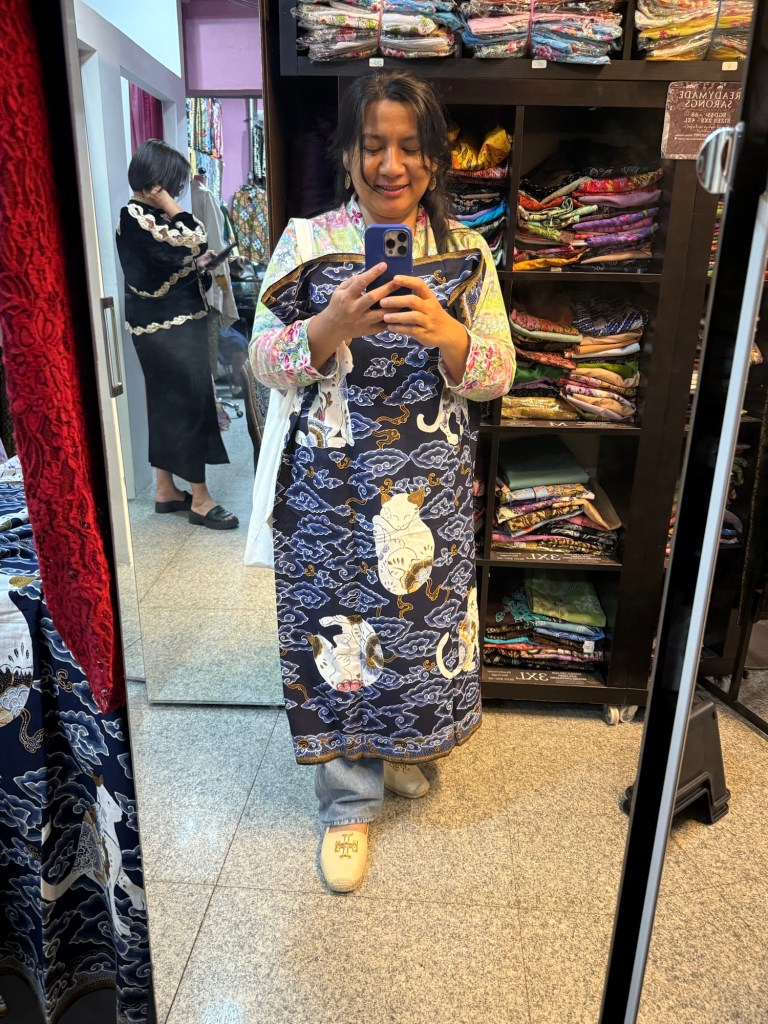
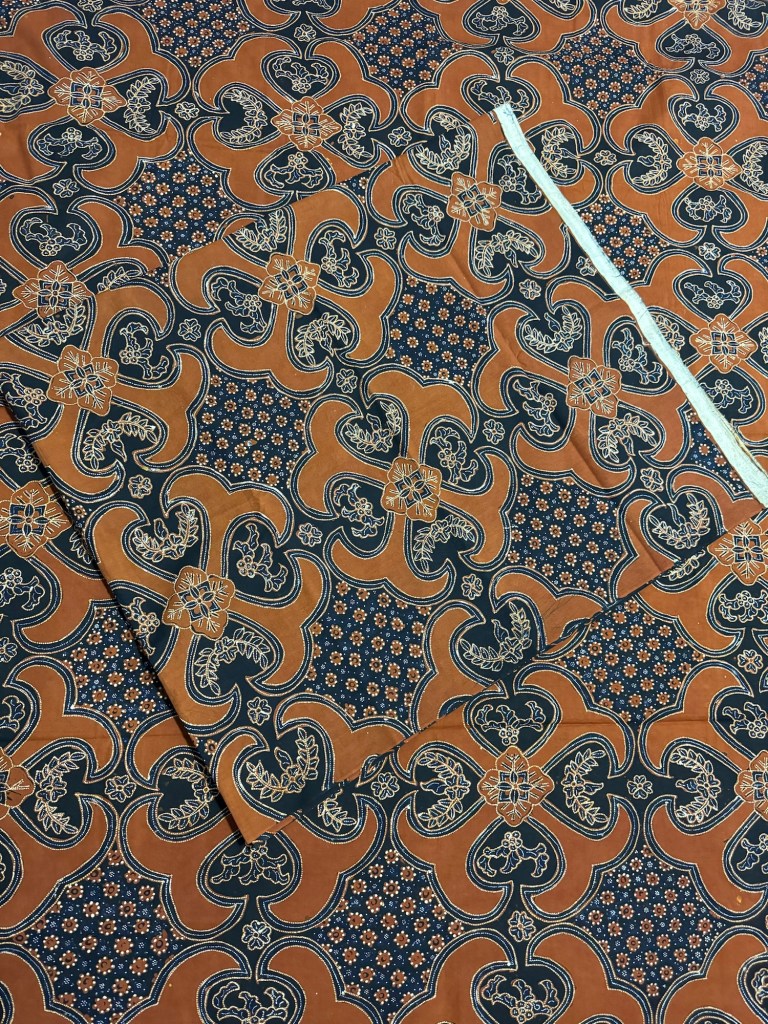
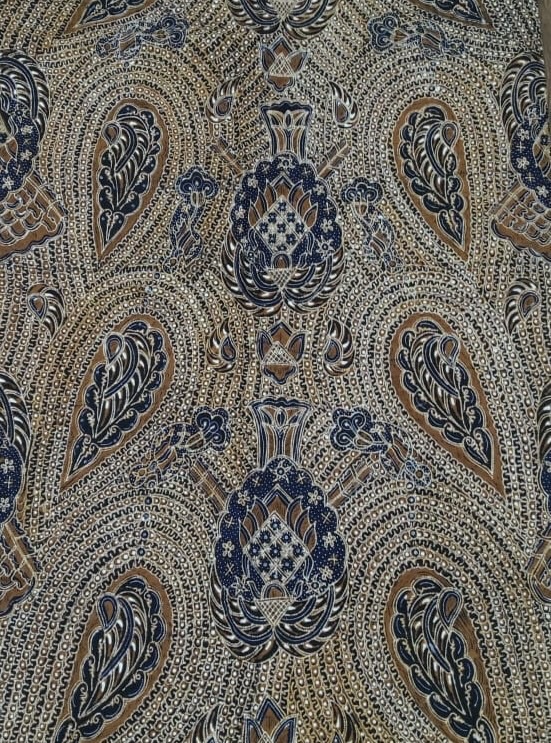
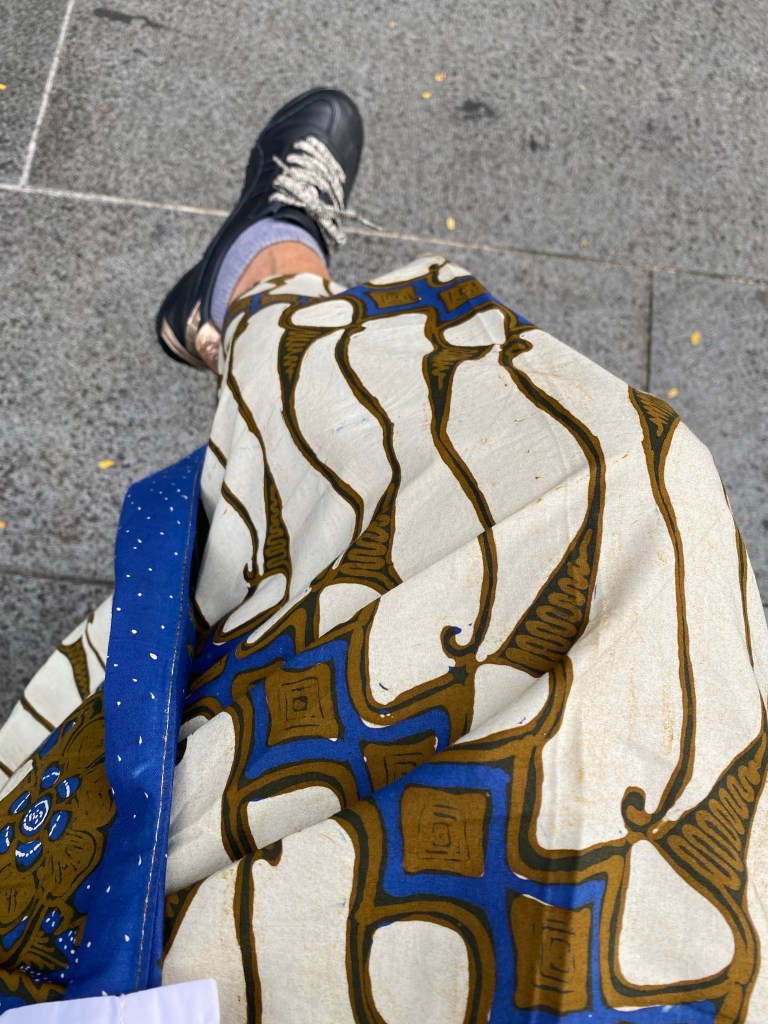
me trying on the “Booty on mega mendungbatik

National Batik’s Day

Why we live and what for we live are different from one person to another, that’s normal. And its normality is cascaded to the next levels of why and what for of smaller aspects of life. In mine it’s including but not limited to why and what for I conserve batik as part of the Javanese culture, the culture in which I’m primarily raised and nurtured.

The word conserve might be too humongous for me personally; what I’m doing is simply preserving the batik that I’ve collected as part of adoration to how the batik has come to its existence. Yet if my preserving humble collection of all the batik from the simbah, budhe and mbak (how I address the batik artisans) can be defined as part of conservation in individual level, I’m glad and honored.

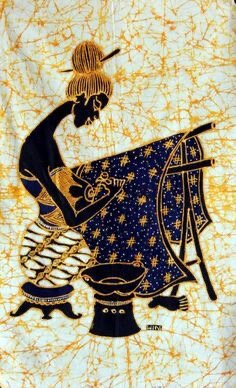
a piece of batik of a batik maker

I’m nobody— just a human being consistently putting meanings to life, even in her lowest point of life. Batik has been one tool that helps tap part of me to wake up, through its patterns and motifs. As I mentioned in one of my blogs earlier, Javanese is people of wisdom or people of culture or people of meaning. They insert lessons and meanings through symbols they expose to the world in this case through patterns and motifs of batik they’ve designed either the ones traditional or modern.

I did feel like loving batik as part of my culture. Yet from time to time I’ve contemplated whether I’m truly loving batik because of its being a culture value or culture element. Am I a Javanese, the people of symbols, the people of wisdom, the people of culture and meaning? Or, am I simply a human being who adores batik because of batik itself. And yes I’ve found reasons sentimentally pushing me to observe then love batik. They might sound more like excuses instead of reasons though, yet I love to claim them as genuine motivation for me to keep batik alive within.

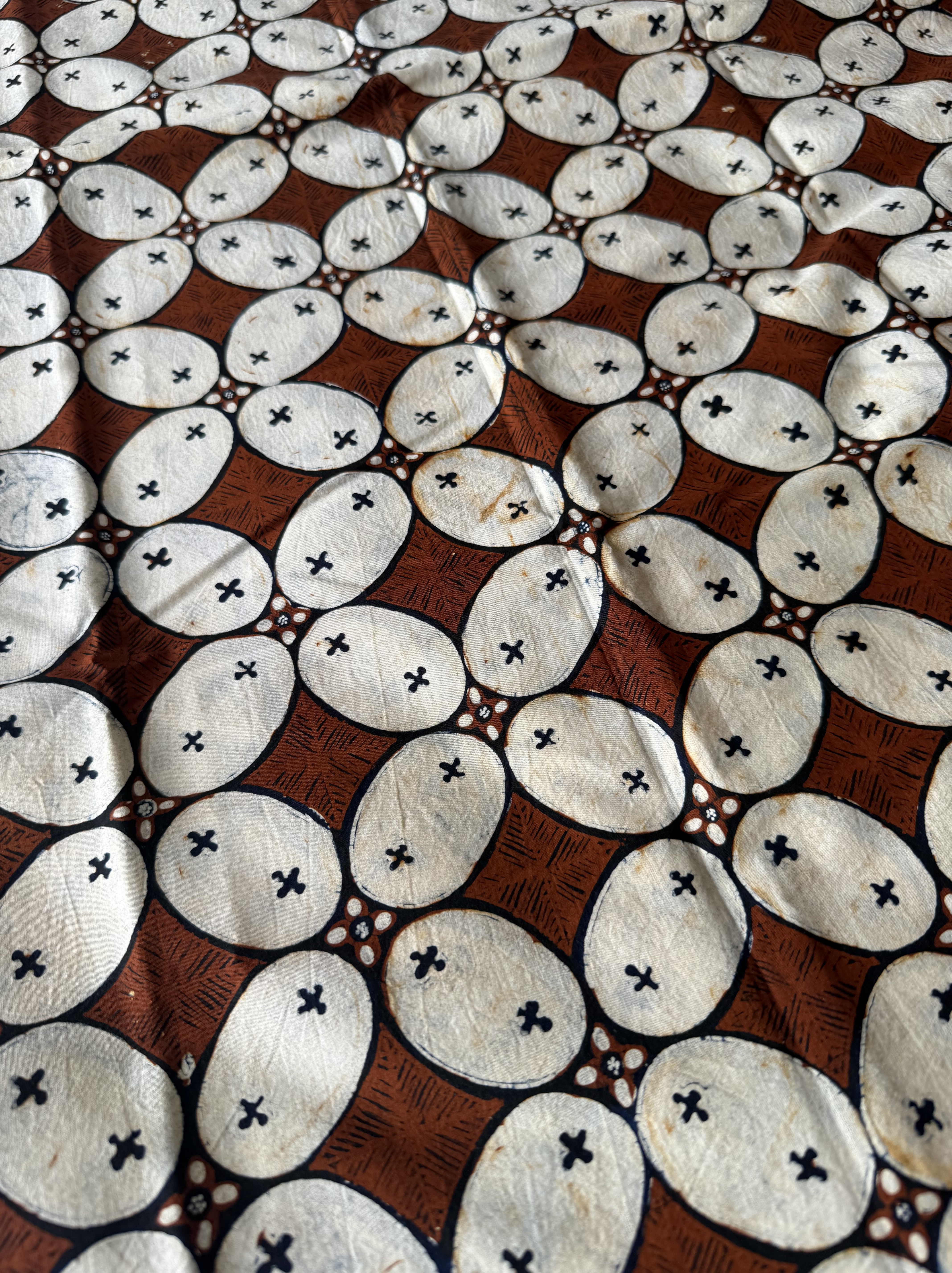
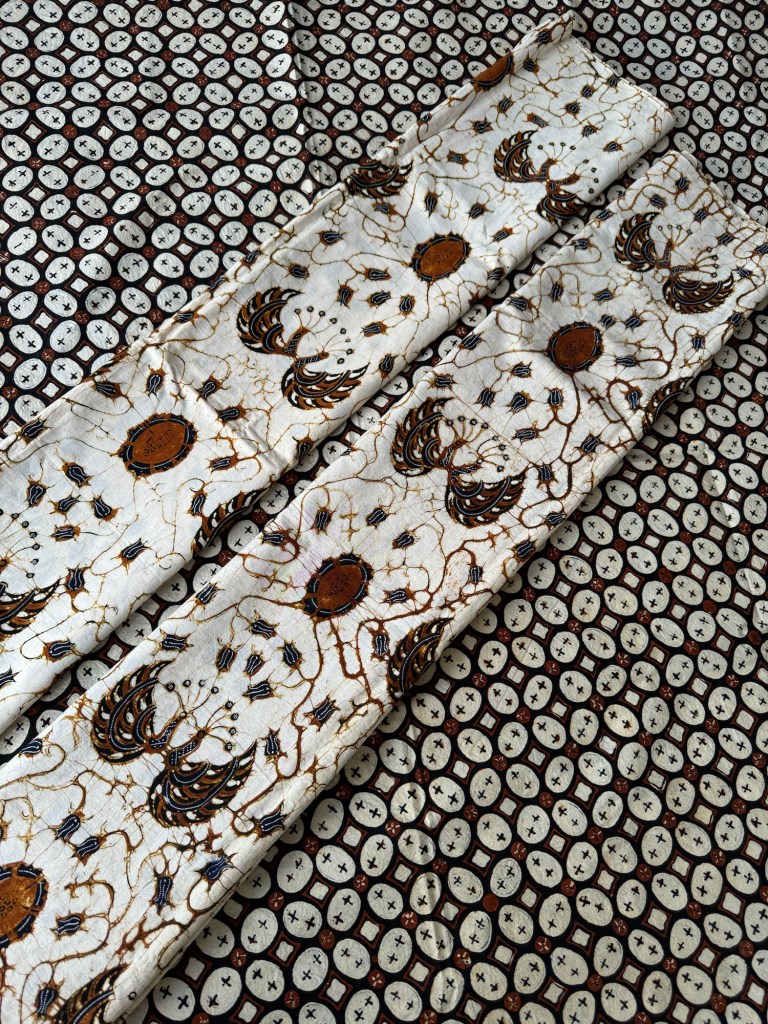
batik Nitik

My mother’s mother was a mother who had to raise 4 children, send them all to schools (school was popular for high class society by then, for a widow like her sending children to schools was uniquely rare), my grandmother didn’t want her children to live poor like her.

My mother loved to tell us how she would go with her mother to the rice field to work in harvest time; and to go to her mother’s niece’s house where she would fetch white sheets of cotton to be made batik when rice field labor was rest before harvest time. Since then batik had been a sweet spot within me to always connect to a grandmother that I never meet. I’ve always felt a calm tone of honor (if not pride) to be the offspring of a tough dignified lady like her. Mother said her mother would make many batik patterns or motifs: kawung, parang, wahyu tumurun, cuwiri, yet mostly truntum. It might be 1st excuse why I fell in love with batik.

2nd excuse? I remember a pretty lady would visit my mother and offer some handmade batik. Her eyes were glowing when explaining the meaning or wisdom of the batik patterns and motifs, moving her fingers on the smooth fabric. I always wanted to be like her.

batik Kawung

Next…. 3rd excuse.

I was a student of batik class in Jakarta Textile Museum back then. Our batik teacher was a pretty lady named Mbak Ari. She liked to tease me because I would only make small patches of batik either with flower, bird or my favorite verses from the Quran humbly coloured. Yet I knew she liked me around as I would stay the longest in the museum every weekend while everyone else left; I would only go home when she told me “Closing time….”. Yes, I trained myself to face my patience through full day of batik making at that time.

One fine day Paras magazine came to cover news about batik to the museum, Mbak Ari requested me to be the batik maker model. Tada! My photo was in the magazine. What a shame! Yet I was happy to help. There was only one reason why I was appointed to be “the model”: I was the only one female mature student that day, others were all young learners.

Another day I prepared batik sidomukti on a 2.5-meter primisima cotton, saying to Mbak Ari that I would someday wear the batik I made with my own hand on my wedding day. She said “Too long! You get married even before this poor batik is completed. Go soon!” Funny, I’ve never finished the batik and the drawn white sheet is even no where to find. Making another one?

batik Grompol

4th excuse.

I don’t buy expensive batik. Of all my collection the most expensive is SGD1000 per sheet. And I decided not to buy that level anymore; max I’d take with no bargain is SGD200 per sheet for the price of batik, with additional tip I’ll specifically give to the primary batik makers who have done the primary patterns/motifs or do the most processes (note that one sheet of batik can be finished by a group of batik makers who will draw the patterns, put the wax on primary patterns/motifs, put the wax to form secondary patterns (isen-isen), colour the batik, clean the wax from the fabric to see the final colours– we can only know when we buy from direct source, otherwise, we can’t trace back such information and to me that makes the batik value just a anonymous work of art: beautiful but having no history of itself. (Someday I’d like to blog about “anonymous beauty in Javanese art especially batik).

I promised to myself that buying batik shall be only to the artisans in their places of origin, not to the high-class stores that hang price tags as high as gold can be. I want my collection to source from simbah or budhe or mbak who make batik to keep their kitchen and light on. Thank you, dear batik artisans.

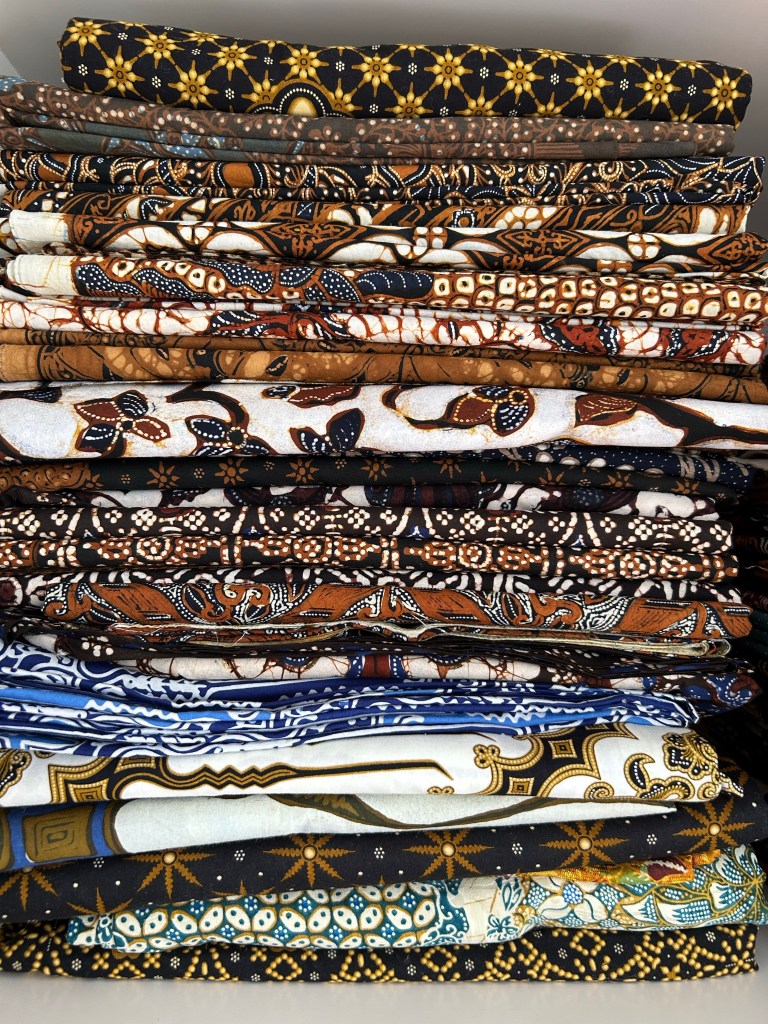
Then what for are all the batik I’ve stacked in the cupboard? There is always discussion about what I’ll be doing with my batik. Selling them? Giving them away? Probably. Yet before it happens, I want to make myself a batik curator. Whoa! Curator?

It’s not the curator in the level of those curating collected items in museums. Being a curator, I’d love to curate the batik in my humble collection by studying whatever dots, lines, curves, nooks and colors then give additional meanings to the ones traditionally existing and culturally standardized. Personal meanings will hopefully glue batik even stronger on to my life. I wish to sit with some friends to spread batik sheets and study the wisdom together.

batik Parang Klithik

Seems like I love batik not really because of its being an element or value of Javanese culture. It is more about how batik personally sits on my soul. Taking culture as the primary aspect might not work to me; I might lose grip when I’m culturally crossed over.

Happy National Batik’s Day! (tomorrow, Oct 2)

Dear fellow Indonesians, let’s wear batik. You don’t have to wear handmade batik (drawn or stamped). You can wear machine stamped or printed ones as long as the batik is made in Indonesia. Please kindly note that we need to work hand in hand in this difficult situation to survive. Buy our neighbors’ products including but not limited to batik. 

Dear those cross cultures, if you read this; please google “batik”, “handmade batik”, “sogan batik”, “Indonesia batik”, “imogiri batik”, etc about batik. Who knows someday life will pull you all and me together in a spot where batik is the center of discussion? Heaven knows.

Note: Simbah: grandmother; Budhe: Aunty; Mbak: Older Sister

batik Gringsing Pisan Bali

Bokor Kencana (batik)

Bokor Kencana is a Javanese phrase formed from the words “bokor” and “kencana”. “Bokor” means jar commonly made from metal. “Kencana” or “kencono” means gold, golden. So, “bokor kencana” is golden jar.

While many associate “bokor” with a jar to contain flowers and water in Javanese ceremonies, it is also mentioned in one of Javanese traditional songs  (Tembang Mocopat) called “Asmarandana” in which “bokor kencana” is used to describe golden jars carried by the deities whose task is to distribute blessings at the  later time of night (midnight to time before dawn).

batik Bokor Kencana from Ibu Tien’s team

To me the “bokor kencana” in Asmarandana song is suitable to describe this Javanese batik pattern.

Javanese people (traditional ones) love to stay awake late at night until early morning because they believe those who give up most of their sleep portion will receive extraordinary blessings especially higher spitituality, wisdom and charisma. Is it true? No one knows if it is truly. A belief is a belief; let the believers prove it. Giving little to no judgement is better.

a full length of Bokor Kencana taken picture by Mbak Izzah

Additionally I read somewhere that this batik pattern is allegedly the one designated to all ranks of Javanese people without exception since its first composition; not only for royal but also for laypeople. Everyone can wear it.

It obviously underlines that this batik pattern is a symbol that everyone can reach higher spiritual/wisdom/charisma level regardless the position in the society as long as they are willing to give up some part of their comfort.

What a relief! At least in this particular area other than time life is fair!

😊

Asmaradhana

Aja turu sore kaki
Ana dewa nglanglang jagad
Nyangking bokor kencanane
Isine dunga tetulak
Sandang kalawan pangan
Yoiku bagianipun
Wong melek, sabar, narima

English translation
Don't sleep early
There are deities wander around the universe
Carrying their golden jars
In which protection prayers are contained,
Also clothing and food *)
Apportioned for
Those awake (sleeping less), patient, acceptant

*) clothing and food is a symbol of basic welfare in Javanese culture. First basic is clothing followed by food then house. Sandang (clothing) comes before food in traditional Javanese culture as sandang means dignity and self esteem. Traditional Javanese prefer suffering from hunger to suffering from shame. Traditional Javanese will not eat your free food if you give the food by showing arrogance or superiority, not because they want to be more than you, they just want basic respect as fellow human beings. This value has shifted in modern era where dignity is defined differently– people prefer eating for free although they have to give up their self esteem. This applies not only to real food but also to modern consummerism

The Master

The Master, Beloved
Shows me how beauty is made
And destroyed. That's life.

Ibu Tien is a senior batik artisan who has been my main source of my Yogyakartan classical batik collection. As a Javanese I never want to even sit at the same level with a master; I will sit at least one level lower from them at least when being in a frame. 💕 She is about 15 years older than me. Other then her Mbak Izzah, Ibu Tien’s daughter in law is another master of Yogyakartan classical batik

Mbak Izzah preparing my package; this stack was not one-time haul, many of them are those started 2 years ago — yes, one sheet of batik can be processed up to two years, mine was because some colouring process was done in another city (Solo) and some batik makers had to pause the batik process to go to rice field (taking care and harvesting rice)

Wukir Sari, Imogiri, Oct 25, 2024

Mbak Fitri is a master of “batik nitik” who becomes my main facilitator for “batik nitik” collection. She is the one introducing me to the senior batik artisans who dedicate themselves to this tradition. I sat down on the floor and made her sit at the chair although she strongly refused; my respect to this master although younger than me. 💕

Mbak Fitri’s artisans at the studio

Bangun Jiwo, Kasihan, Oct 26, 2024

Batik Ceplok Godheg

Happy National Batik Day, dear Indonesia.

Godheg means sideburns in Javanese. Why is this batik named godheg, we can just assume that this is meant to highlight the value of sideburns when this batik pattern was composed.

Mbak Izzah could not give me exact answer when I asked her the meaning behind this batik. So like usual my wild creativity run to every nook and cranny of my imagination.

I remember my father liked to have nicely trimmed but rather thick sideburns. He said a man with sideburns looked handsome and masculine. He then said “Ini Bapak ganteng ya, Rike.” (Your father is handsome, Rike). I was mute not agreeing or disagreeing with his statement — admittedly my understanding about sexuality grew a bit later compared to my cheerful peer. Our mother always laughed teasingly when he gave himself compliments. We children just laughed as solidarity to those adult in love. 🤪

So honestly taking my father’s words (before further research) I claimed that batik Godheg was brought into existence by heaven knows which bloody Javanese man to celebrate the masculinity of the man wearing it.

By then Javanese men of high social and/or economic ranks who were definitely able to afford this batik would wear this pattern (Godheg) to attend functions or parties where they could show personification of masculinity in his class.

a pair of batik Godheg from Ibu Tien

matur nuwun, Ibu Tien — see you on either Oct 25 or 26, 2024 insya Allah

Browsing, I found one interesting article about sideburns in Javanese culture. It says that sideburns symbolise masculinity in traditional Javanese. Please allow me to include some excerpt below.


Jambang: Simbol Maskulinitas dalam Budaya Jawa

by: Lagan

Jambang, a traditional Javanese facial hair style, has long been a symbol of masculinity in Javanese culture. This unique style, which involves growing a mustache and beard, is not merely a fashion statement but a reflection of the wearer's character, social status, and spiritual beliefs. This article will delve into the significance of Jambang as a symbol of masculinity in Javanese culture.

The Historical Significance of Jambang

Jambang has a rich history in Javanese culture. It is believed to have originated from the ancient Javanese kingdoms, where it was worn by kings, nobles, and warriors as a symbol of power and authority. The style was also associated with wisdom and maturity, as it was typically worn by older men who had achieved a certain level of social status. The presence of Jambang was considered a sign of a man's ability to lead and protect his family and community.

Jambang and Javanese Masculinity

In Javanese culture, masculinity is not solely defined by physical strength or aggression. Instead, it encompasses a range of qualities such as wisdom, patience, self-control, and spiritual strength. Jambang, with its association with maturity and wisdom, perfectly embodies this nuanced understanding of masculinity. Men who wear Jambang are seen as embodying the ideal Javanese man, who is not only physically strong but also emotionally and spiritually mature.
The Spiritual Significance of Jambang

Beyond its social and cultural implications, Jambang also holds spiritual significance in Javanese culture. It is believed that the facial hair serves as a medium for spiritual energy, connecting the wearer to the divine. Some Javanese men even believe that growing a Jambang can enhance their spiritual practices, helping them to achieve a deeper level of meditation and connection with the divine.
Jambang in Modern Javanese Culture

Despite the influence of Western culture and modern fashion trends, Jambang continues to hold a special place in Javanese culture. Many Javanese men still choose to grow a Jambang as a way of connecting with their cultural heritage and expressing their masculinity. The style has also gained popularity among younger generations, who see it as a unique and stylish way to express their individuality and cultural identity.
In conclusion, Jambang is more than just a facial hair style in Javanese culture. It is a powerful symbol of masculinity, embodying the qualities of wisdom, maturity, and spiritual strength that are highly valued in Javanese men. Despite the changes in fashion and cultural trends, the significance of Jambang remains deeply rooted in Javanese culture, continuing to shape the way masculinity is understood and expressed.

Usedul link: https://www.questionai.id/amp/essays-e7pHAwYIR69/jambang-simbol-maskulinitas-dalam-budaya-jawa

I can't deny my instinct SOMETIMES can catch something on point. Please excuse my frankness; simply fulfilling a need to self appreciation. 😎

Back to batik Godheg….

It is a ceplok (cluster) batik in which the same pattern is repeated to form clusters that fill the whole sheet.

handsome batik indeed!

There are 4 pairs or godheg (sideburns) in each cluster and another inner and the center with also 4 parts as the elements.

Why 4?

4 is papat or sekawan or catur in Javanese, which symbolises creativity, intelligence, victory or even gold.

What’s more luxurious for Javanese men who traditionally artistic, cultural, silently dominant and (who is not) proud to be rich who can take care of the family decently. No wonder this batik use a lot of number 4 as its detail.

Do the numbers of dots in the isen (additional ornaments to fill in the blank spots among primary pattern on the sheet) also bear meaning?

Ahem! This is where imagination should be let be free.

Number 1 or siji, sawiji, esa, eka, ika, atunggal, tunggal, setunggal, symbolises unity, priority, the start, the world, the sun, the moon, country or kingdom, the king (leader), etc connotatively related to one existing. If ancient Javanese learn that there are two moons for certain period of time, they might omit the moon from the list.

Number 6 is nem, enem, enem, sad that symbolises emphaty and sympathy, humbleness, wise and wisdom, highly educated or scholar, etc.

Number 8 is wolu, asta, manggala that symbolises benevolence, honored, high rank, etc. Dragon in Javanese culture is also connoted to number 8 – why? Heaven knows!

If I may challenge all Javanese men who still consider themselves handsome Javanese, please kindly refer to these numbers to project their perfection and to evaluate their existence. 🤩

Do I truly mean with all my description of number of dots in the batik? Don’t quote me, I am speculating about most of what I say about the meaning behind batik patterns. All those symbols are taken from responsible sources of Javanese tradition though; so the number symbols are legit.

Or probably to quote Mbak Izzah’s random words when she thinks my questions are too intimidating: “Maybe the batik maker wanted to put 5 dots and no other intention, Mbak Rike.”

🤪

Once again….

Happy National Batik, Indonesia❣️

Time for me to take a rest…. I will rise earlier to go across the strait to Johor at 5am tomorrow.

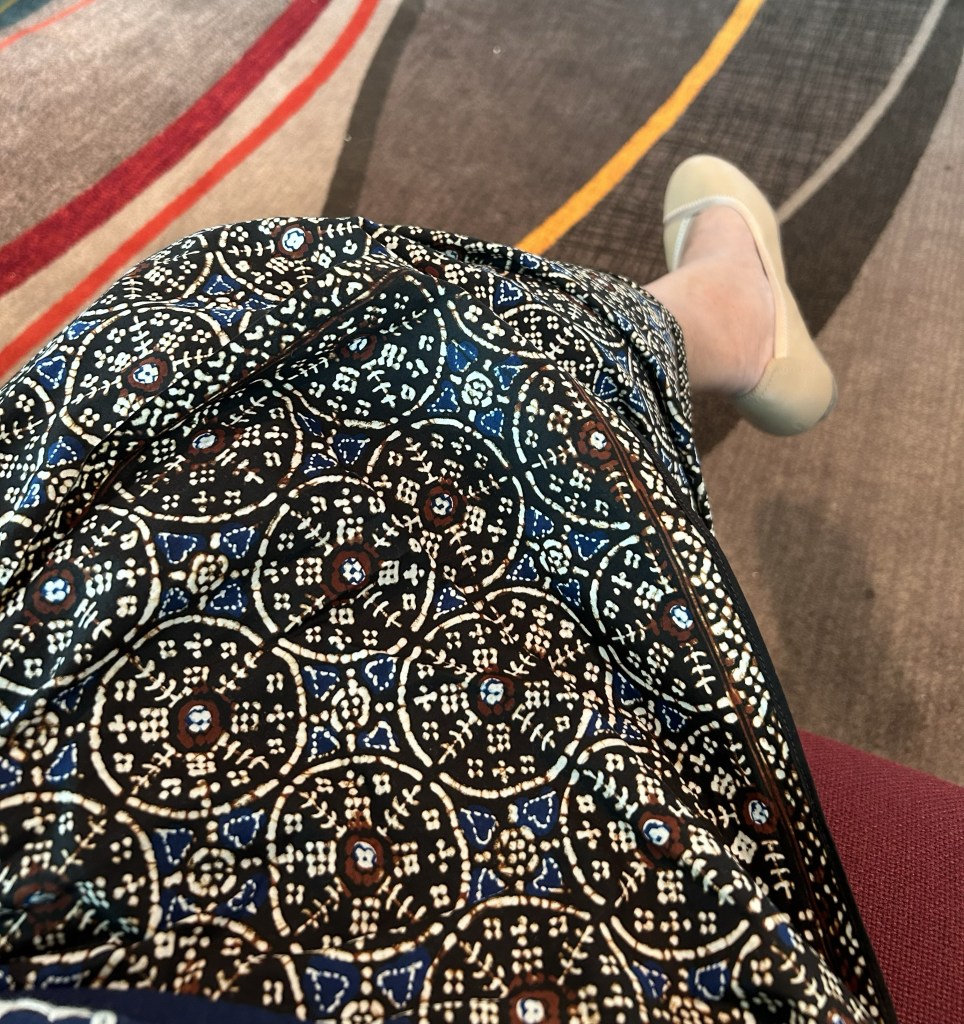
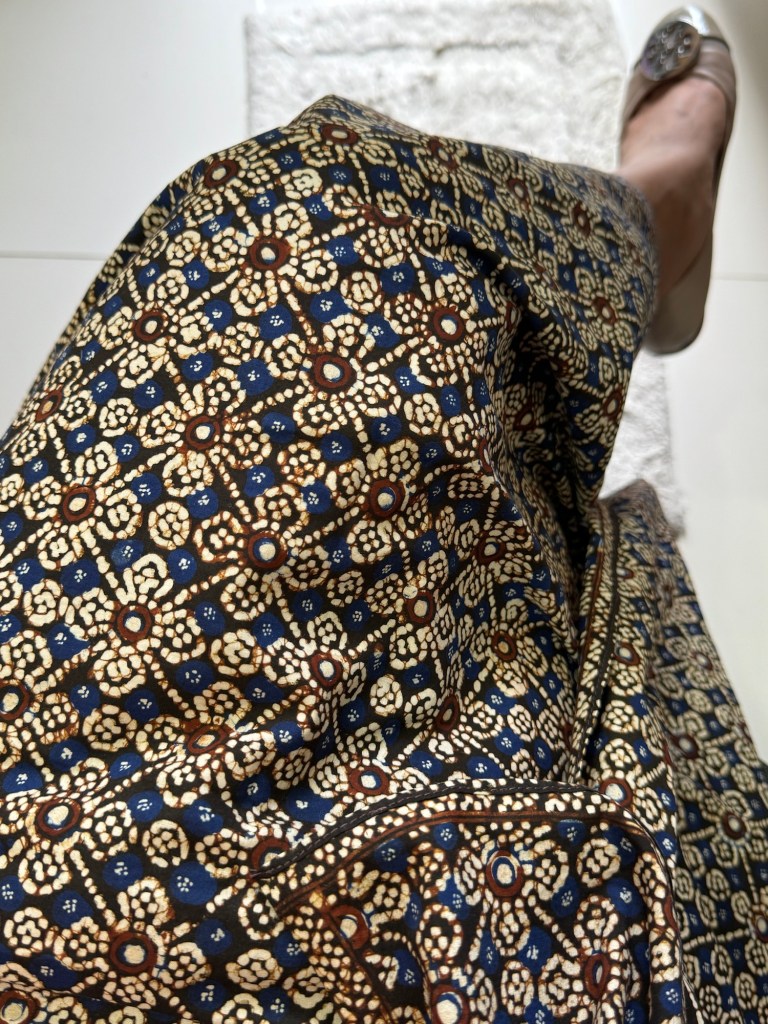
today’s apparel was batik skirt (from manually folded batik sheet) with red top to celebrate Indonesia’s National Batik Day

it is Batik “Nitik Sekar Kentang Bribilan Sogan Kerok”

💕

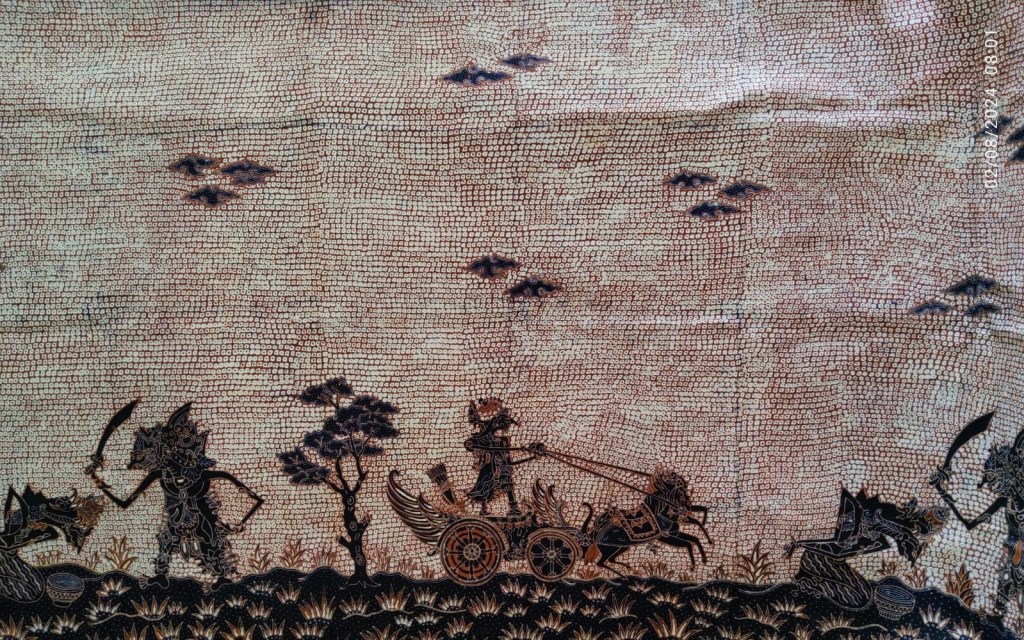
Gringsing Bharatayudha (batik)

This battle's, dear heart
Will win you with condition:
You have the courage.

Whatsapp gave me a surprise that my batik Gringsing Bharatayudha is ready to ship; by plan it should be by November this year.

This time I don’t want it to be shipped, I’d like to collect it by myself so I can say thank you directly to the makers.

Gringsing is my favourite aside from batik nitik, kawung and parang. Gringsing reminds me how I was taken care of when I was a girl and sick — my mother would wrap me in a sheet of batik gringsing, my father would chant his mantra (I can remember what it was and will disclose it at the right time some day.) and my siblings would sleep with me in my bedroom until I was recuperated. Gringsing bears a sweet memory about my family in early period.

Bharatayudha is something familiar in our family. Our parents wanted us to be “true Javanese” who knew “the root” as a middle way because our parents held different religions; so Javanese tradition would not make them play tug of war of who would follow whom and it would not harm any of us to learn local wisdom. They bought R. A. Kosasih’s wayang comic books and other funny wayang stories of Punakawan (please allow me talk about it later). Another series that also built some of us was series of S. H. Mintarja’s “Api Di Bukit Menoreh”. We enjoyed it and shared it to other friends — we lost some books as some friends did not responsibly return the books after reading.

Long story short I grew up with Javanese and wayang wisdom before finally I decided to hold one religion as a legal requirement in our country — Indonesian must display their religion in the ID card. 🙃 I am thankful to be raised by parents of different faiths — they have taught us to respect others regardless….

Last year Ibu Tien showed me a white sheet with Gringsing Bharatayudha pattern then several months later the half done. I could not resist its charm.

There are two scenes in the batik Gringsing Bharatayudha:

1. Bhatara Kresna the King of Dwaraka on the chariot: He is the coachman of Arjuna who is fighting against Adhipati Karna whose coachman is Prabu Salya the King of Madra. Arjuna and Karna are actually brothers from one mother (Dewi Kunthi) of different fathers whose each upbringing has brought them to different partiality. Arjuna for sure is in the side of Pandhawa, Karna decides to side with Kurawa who has provided life care and social status.

Bhatara Kresna, the King of Dwaraka (the most intelligent character in wayang, the master mind of all wars in his time) used to be my idol when I was a kid before I changed my mind to idolize Semar Badranaya (one humble deity who is assigned to accompany and guide Pandhawa)

2. Bima and Dursasana: Bima is the 2nd of 5 knights of Pandhawa the antagonist of wayang world; Dursasana is the 2nd of 100 Kurawa children the protagonist. In this scene Bima is executing Dursasana to death. This symbolises ending a preserved anger through revenge. Years back Bima swears to kill Dursasana and lets his sister in law Drupadi wash her hair using Dursasana blood — by then Dursasana sexually harasses Drupadi in public when Drupadi’s husband (Yudhistira) loses on a gamble table.

Not a few consider that the Bharatayudha (the civil war between Pandhawa and Kurawa) is not really a politically-triggered war; it is allegedly the result of the wounded pride of Pandhawa and the allies after Kurawa (Dursasana as the main perpetrator under the instruction of Duryudana the King and other Kurawa brothers’ cheering support) harasses Drupadi in the gamble court.

See. Woman can be the cause of war if not treated well— treated well can mean educated well, respected, nurtured, protected, etc. Drupadi is so broken hearted due to the fact that the Pandhawa knights donot do anything to stop the shameful act of harassment and she shouts pledging to wash her hair with Dursasana’s blood — that is when Pandhawa knights get so embarassed and promises to make Kurawa pays some day.

How could a group of knights be so retardedly ignorant? From one side it is integrity, following what’s agreed (the agreement is if Yudhistira loses in the last round of gamble, he has to give up Drupadi), in the other it is cowardice.

Sometimes being good is not an option when there is underpriviledge being abused or harassed. But it is predestined: there shall be evil to bring out good and good to bring out evil — cycle of life.

Fun fact about Bharatayudha: many don’t know that after death Pandhawa representing good side are still sent to hell for punishment, Kurawa considered representing evil are given chance to stay in heaven for some time. Indeed it is not our chosen side that brings us to heaven; it is our good deed does.

What a wisdom on one sheet of batik!

looks like a violence yet it is simply a depiction of a scene in Bharatayudha so please excuse the “looking like” violence

By the way honestly I prefer circle gringsing than square ones. Yet I know Ibu Tien’s team consists of those simbah-simbah and budhe-budhe (senior citizens) whose physical strength is not anymore at prime time so making square gringsing is easier than circle one. I will usually lend them my generous excuse: some of my batik sheets are not evenly dipped and even some are not fully drawn yet I still paid them full price. However, on some batik patterns like kawung and parang I will not let Mbak Izzah miss her grip in managing the work.

Weekend cannot be sweeter with this surprise.

I miss Jogja…. 💕

Delima (batik)

Fruit of heaven, love
No effort to pick-- It hangs
To reach you so low.

Another batik waiting in the pipeline to be disclosed is Batik Delima or Batik Delimo. I chose it because of the colour– white is always giving soothing effect to my ageing eyes.

Delima aka delimo means pomegranate in Bahasa Indonesia, Bahasa Melayu and Javanese.

When Ibu Tien and Mbak Izzah mentioned its name (Batik Delimo), my curiosity rose as Batik Delima that I knew didn’t look like that. The delimo I knew was a “sido” cluster (ceplok) batik with delima in the center of the cluster. But they insisted that this was known as Batik Delima in Jogja.

No argument with the batik makers please, Rike.

The next was a clarification of meaning which is always the interesting part. Mbak Izzah said “I give you what I know, you improve what I know based on your repertoire of meaning. As you wish.”

To me although that statement was uttered in a very soft speech, it was a blow on my face. Jogjakartan speak their truth through subtly cynical style. They will not tell you are wrong but they will tell that “you have your way which is not mine”. Almost like Japanese– Bloody hell! I’d better prepare as my retirement plan belongs to that city. ☺️

Mbak Izzah said Batik Delimo aka Delimo is about fertility.

I read some articles about pomegranate in different places and culture but I won’t include it here to avoid complication.

Pomegranate is used in one of Javanese traditional function named “tingkeban” which is a ceremony held on the 7th month of pregnancy when the fetus is considered mature enough to be called a human being. Pomegranate is one of the ingredients needed to make “rujak tingkeban” which consist of 7 kinds of fruit. Yes, Javanese is obsessed with number 7 (seven, pitu in Javanese, the short version of pitulungan that means help).

Pomegranate is added as a message that the fetus will grow strong until it is ready to be a newly born.

Those 7 kinds of fruit shall represent all taste of food: salty, sweet, sour, hot. These are to symbolise that the baby has started learning about the taste of life before her/his delivery to the world.

It is said that if the rujak tastes good, the baby will be a girl; if it tastes “not that good”, the baby will be a boy. Interesting fun (not verifiable) fact. Do I believe it? No, I believe in ultrasonography from the obgyn. 😁 I love though believing that this tradition is loaded with conprehensive stories of what happen around human being’s life. Fabulous!

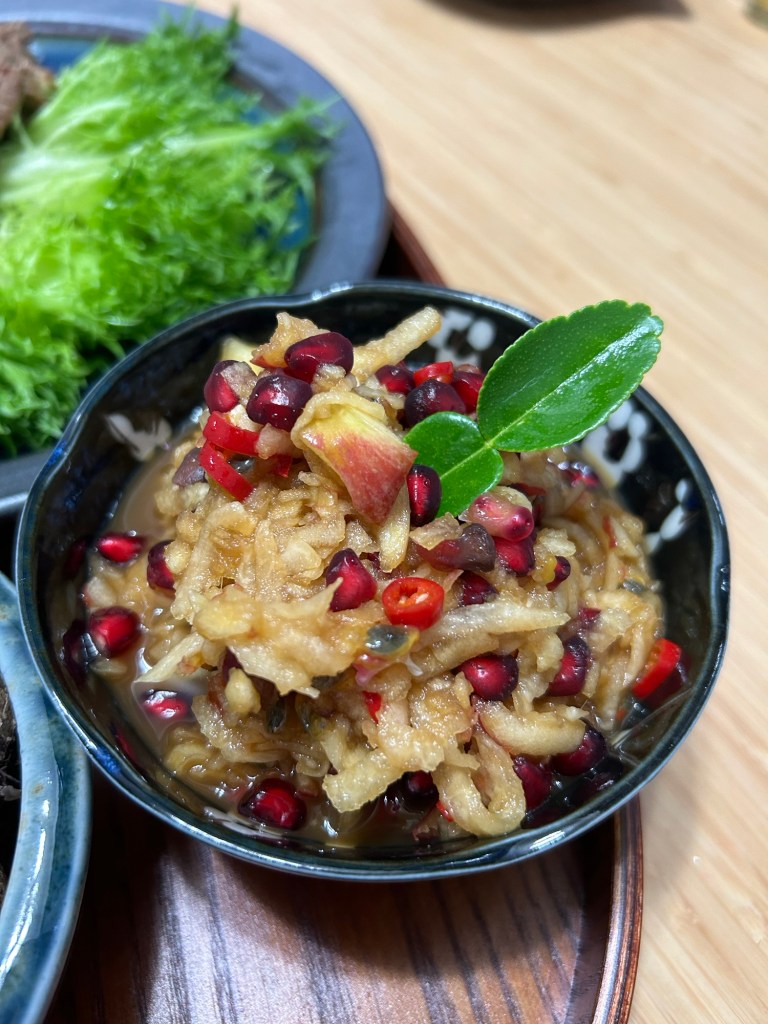
it is very refreshing, i make this rujak every now and then — one big bowl for one week

Back to Batik Delimo….

There are three elements in this batik that deserve attention: the pomegranate, the pomegranate flowers and the birds (pigeons).

The pomegranate is about fertility itself.

The pomegranate flower is about potential of fertilify that are surrounding the fruit as if waiting to continue the cycle.

Birds (pigeons) is those dwellers of pomegranate tree. They are the ones guarding the fertility.

Does it make sense? I will ask Mbak Izzah when I meet her in Jogja. I know she will just smile sweetly, saying nothing. 😂

This time I don’t include number in my intrepretating the batik as I am afraid Mbak Izzah will condemn me too creative. 😁

I know though someone intreprets delima from its linguistic aspect. Delima is transcribed as DALIMA. Dal is the 8th Arabic script (د). Lima is 5 in Javanese and Bahasa Indonesia. 5 “د” (five dals) is connected to a suurah in the Quran that has 5 “د” in its composition which is Al-Ikhlash.

Suurah Al-Ikhlash is about singularity in which human being is surenderring to the single authority in life.

So if people are interested to connect this batik to suurah Al-Ikhlash, it is possible. Yet, the story will not be about the 7th month celebration of a fetus. It might be about a fetus that is ready to worship the One.

😁

I prefer Batik Delima is about fertility. More simple, more straightforward–

Thank you, Mbak Izzah! 💕

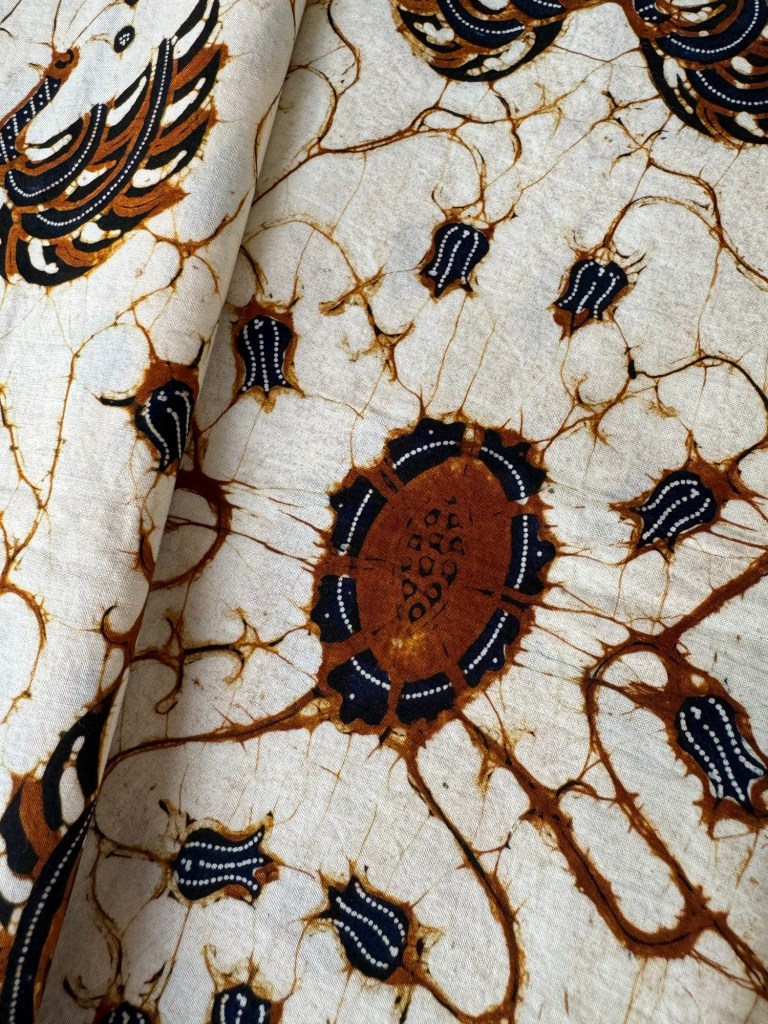
Batik Delimo aka Delima

pomegranate fruit, symbol of fertility

flowers of pomegranate, symbol of potential of fertility

pigeons of love, symbol of protectors of fertility

a pair of batik delima from Ibu Tien and her group – matur sembah nuwun, Ibu Tien, Simbah-Simbah and Budhe-Budhe

batik sogan never fails me, even its fragrance is a stress reliever to me

Ciptoning (batik)

A hermit walks in
To a cave in a market.
His night's never dark,
Day's never noisy. He's still
When he moves or talks. Centered--

Today is about another batik prepared by Mbak Izzah for shipment from Jogjakarta to Singapore.

Batik Ciptoning

Ciptoning is a Javanese word composed of two: cipta or cipto and ning.

Cipta or cipto means thought, imagination, creativity.

Also….

It means to create or to manifest.

And….

The ning, ening, bening, wening means clear as of water, clear as of mind, quiet, serene.

So ciptoning can mean clarify the thought and imagination or creativity….

Or creating or manifesting in serenity or in clear mind or in quiet mind.

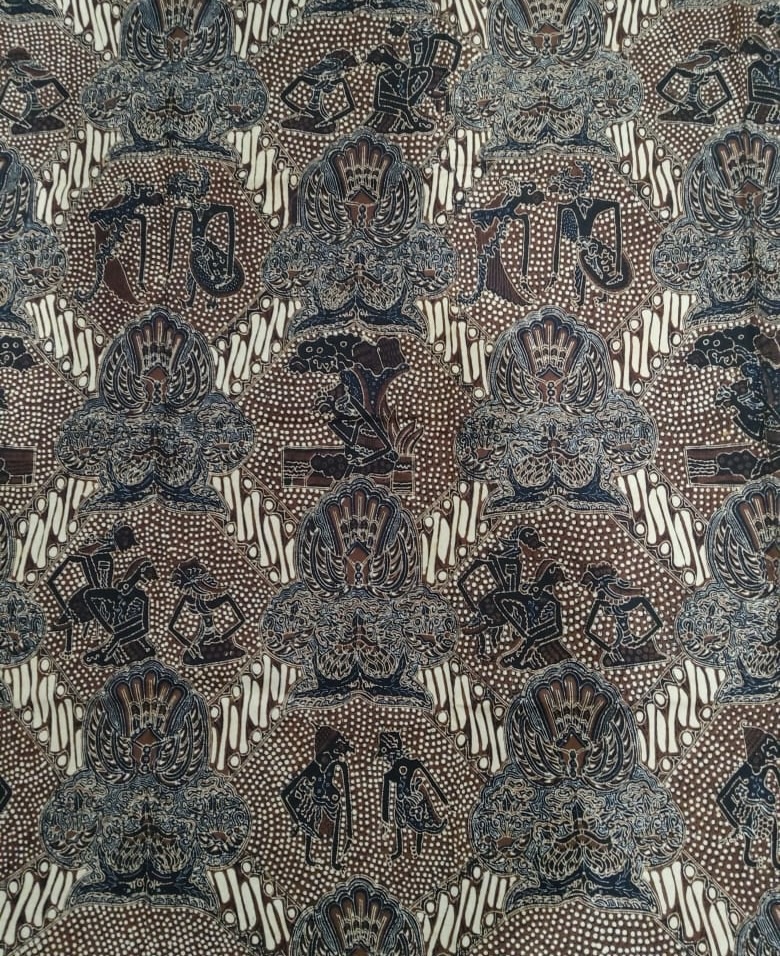
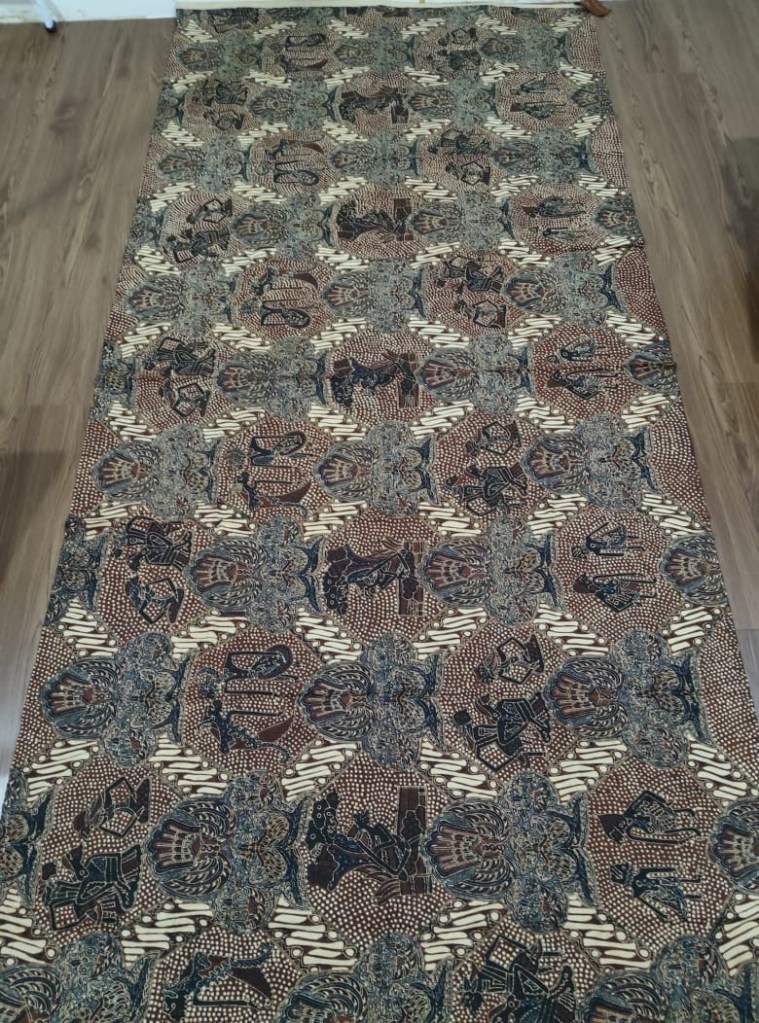
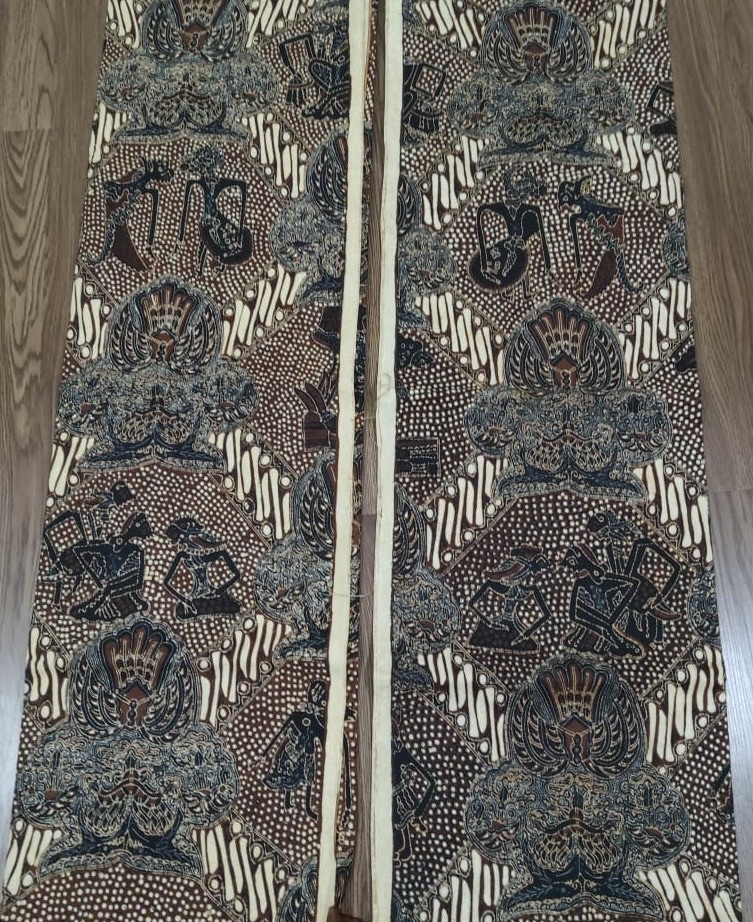
This batik pattern consists of ceplok (clusters) of geometry patterns formed by series of parang, wayang, gurdha (garuda) or wings pattern, bird and some isen-isen (repeated small dots or checks or lines to fill the space among all primary and secondary patterns).

I did talk about parang, gurdha and isen-isen in previous postings. Hope they still can be looked up, or else they should be googled. 😉

There are two wayang characters in the centers of the ceplok who are Begawan Abiyasa and Arjuna; one is the spiritual teacher, the other is the pupil. This is the scene when Begawan Abiyasa teaches Arjuna on how to complete a retreat. Once Begawan Abiyasa completes his task, he disappears and Arjuna has to start everything by himself. Yes, teacher will vanish when student is ready to jump alone — not needed anymore.

What does Begawan Abiyasa teach Arjuna to do?

A common retreat in Javanese tradition is a semedi or samadhi. The samadhi is usually conducted in a quiet, serene place and it is done by calming the mind, composing the body posture and focusing on nothing but the purpose of the retreat– can be anything including something, everything even nothing. That is what Begawan Abiyasa teaches him to do.

In wayang world a special retreat like this is normally done before a knight goes to a battle against raksasa or gandharwa that are representing evil energy of the world. Arjuna as a famous knight of his ability to survive a long retreat, his nature of complete human quality (including but not limited to naughtiness and ambition) and his high skills of warship; is assigned to spend from time to time for a retreat more often than his siblings; while Begawan Abiyasa is a maestro of spirituality in wayang world and so is trusted to guide a knight to face his impurity.

When doing a retreat, Arjuna uses a different name as he doesn’t want people to know that a royal family member is among the commoners doing a retreat. And that doing a retreat is a secret activity, he doesn’t want to be disturbed by commoners who want to take selfie with him. 😃

He is named Begawan Ciptoning.

Begawan can mean some: hermit, escatic, retreatant, recluse, solitaire, anchoret. In some way it can also mean maestro.

Ciptoning is to describe what Arjuna is doing during that period of hermitage. He is composing himself physically and mentally in serenity in order to achieve purity in his thought, imagination and creativity. He contemplates in silence among the crowd within himself, fighting against all distractions to survive the retreat and to finally get a clarity on how to manifest the everything or something or nothing that becomes his purpose of retreat.

Begawan Ciptoning will only end the retreat when The Undescribable blesses him with what is needed to go back to the “real world”, “to fight against the evil energy”.

When he is done with the retreat the begawan turns its meaning and value from hermit into maestro!

😳

Long story short please, Rike!

Batik Ciptoning is a special batik for those respected spiritually in Javanese early tradition. It was worn by those achieving certain levels of hermitage or having the quality of a spiritual maestro and so can provide guidance to others “lost” in the “search of meaning of life”. Those people shall go through repeated cycles like what Begawan Ciptoning has gone through with the guidance of Begawan Abiyasa.

It is now though worn by anyone who loves the pattern or one who prays that s/he is able to reach an enlightment in her/his own journey of life.

Gosh! My writing is broken pieces. Many to write but my thumbs need a retreat….

💕

my pieces of batik Ciptoning ready for delivery ♥️

A Knight Who Shoots

Who's a knight who shoots?
Archer who knows the bull's eye
And bow and arrow--

Satria manah (satrio manah) is a Javanese phrase formed by two words:

1. Satria or satrio that means a knight,

2. Manah that is derived from the word panah (archery in Javanese). Panah (Noun) is changed to manah (Verb)

As name of batik pattern should be incorporated with wisdom, the interpretation can be built with some exaggeration or maybe slightly drammatical structure. And so, satria manah is not simply a knight who shoots anything but it is intrepreted as a knight who shoots accurately at the heart of a lady.

Life of a wise can be as light as shooting a heart; yet as hard as shooting at the right spot so that it won’t hurt the heart; it even will make the lady fall in love harder with the knight.

Is that even possible?

I don’t know. Not a knight, am not a wise knight. A lady, am the lady whose heart should be shot by a wise knight. 😁

Another fun fact this batik is usually worn by the groom-to-be’s parents when they are officially proposing the bride-to-be in front of her family. The groom-to-be may also wear this batik when he is with his parents during the marriage proposal. Unofficially? the man can propose the woman personally before introducing to each other’s family.

What batik should be worn by the bride-to-be in the marriage proposal? It is batik semen rante. What is that? I will talk about it next year when the semen rante is ready to ship to me by Mbak Izzah. ☺️

This batik has given me a light heart and a good laugh after a long day.

Have a good weekend!

the batik that is ready for delivery

close up of batik Satria Manah

Traded Wisdom

You sell some wisdom
That unwraps with mere breathing
Dimensions and faith.

6 sheets of handmade batik are currently flying to my home; they are wisdom scribed on white cotton by some humble Javanese women who are willingly dedicating life as tradition protectors

matur nuwun 💕

Breathing

Living is breathing.
A quest of in and out air
To define meaning

breathing day for some of my beautiful batik, the Javanese exhibition of wisdom

One of treatments to handmade batik is letting them breath or in Javanese language we call it “angin-angin” that is literally “wind-wind” — hanging batik clothes in fresh air, not directly under the sun to let them be in contact with air to decrease the humidity.

Enjoy your breathing.

❣️

Balanced Kites

I am soaring
Like a kite
Finding its balance
Through moving air.
This kite is a rhombus
Proven mathematically,
Tested naturally,
Crafted beautifully.

You are flying
Like a kite
Decorating the sky
With rich hues.
That kite is a bird
Coloured green and white,
Singing sweet and mild,
Shining keen and bright.

batik sido luhur, pethak

Sido Luhur is one of classic series of “batik sido” i.e.: Sido Luhur, Sido Asih, Sido Mukti, Sido Mulyo and Sido Drajat.

Batik Sido Luhur pattern is the closest to the Sido Mukti one.

This pattern was composed by Ki Ageng Henis, the grandfather of Mataram Kingdom founder, Panembahan Senopati.

Batik Sido Luhur is composed of adjacent rhombus with various ornaments in each of the rhombus such as building, temple, butterfly, bird, lar gurdho (one wing of Javanese eagle), flowers and shells.

Batik Sido Luhur can be dyed with white (pethak) black (cemeng) or orangy brown (sogan) as background.

Sido Luhur is literally comprising 2 Javanese words: the word sido that means to be or to become, and luhur that means noble, honor and dignity.

As a norm in Javanese tradition: what you wear (especially in important occasion or function) is an exhibition of wish and pray. Batik Sido Luhur is meant as a wish and pray for those wearing it to be granted honourable heart and good role model for others around.

Batik Sido Luhur batik is often put on the bride in the night of midodareni (one night before wedding ceremony) also as a form of prayer and a hope that she be healthy and become a wife of honor and dignity.

Batik Sido Luhur is also put on the mother-to-be during tingkeban or mitoni ceremony (traditional ceremony when a mother-to-be enters the 7th month of pregnancy).

I just got a pair of Sido Luhur in white and am willing to own one pair in black and one pair in sogan.

I just got a thought of seriously becoming a batik curator. What a sweet dream!

💕

Diagonally

Many shorter distances
To reach a destination,
Diagonally.
Yet I take one of further ways
And so I see
That the longest journey
Is adorned with
The rich jungles,
The clean lakes,
The wide deserts,
The deep seas
Under windy light rain
To reach home
Whose door looking out
To a beautiful scenery.

batik sogan udan liris kupu by Ibu Tien Wartinah

Udan Liris (udan = rain, liris = light; udan liris = light rain or drizzle; Javanese) is a diagonal pattern of traditional Javanese batik. It resembles the light rain that comes down diagonally by the wind.

Kupu is butterfly in Javanese. It symbolises transformation– potential to realization.

Choice of War

What war do you prefer?
War where I win against
My own self
To be
With
You.

this batik-in-process is about the epic Bharatayudha, the war between Pandawa and Kurawa

my beloved batik maestro “Ibu Tien Wartinah” is committed to complete it this year

Mbak Izzah (Ibu Tien’s daughter in law who is also a batik maker) and me with the “Gringsing Bharatayudha”

gringsing is a type of batik, one of my favourite

About Bharatayudha

About grinsing

Diagonally (Batik Parang)

Diagonally
Between axes: x and y.
Dynamic and free—

——

Batik Parang Rusak

As one of the oldest patterns in Java island, “batik parang” is loaded with wisdom of life. Designed by one VVIP in Mataram, Panembahan Senopati, it is not surprising that this pattern is considered special and sacred.

Parang was previously a “larangan” pattern meaning that this pattern was allowed to wear only by royal family in certain occasion/function. Nowadays it is worn by anyone loving it; yet in Java island almost no one will wear it for wedding functions — most Javanese believe that wearing batik parang will bring negative impact and disputes among the family of the bride’s and groom’s and/or bring inharmonious life to the marriage.

The word “parang” was adopted from the word “pereng” that means the slope or the cliff of a mountain/hillside or the steep of a shore so that is why it is diagonally structured. The word “lereng” is also used to name this batik to show the same meaning with “pereng”.

Basic shape of “parang” pattern is an “S” connecting to one another with an angle of 45 degree. This signifies unbroken wavy lines. They are silently moving like waves that are able to move anything at certain level of the ocean surface. The waves will move as long as there are winds. The winds will not stop as long as there are movement of pressures in the air. And the pressures will sustain as long as there are celestial bodies especially the sun interacting with the earth. Forever — until death do us apart.

Some people say “parang” also means “perang” or war in Englihs but I am not into that discussion. Linguistically “parang” should never be “perang” in Javanese. It just happened to be historically told that this “batik parang” was worn by soldiers returning from war (“perang” in Javanese) to show the king that they won. So, it doesn’t suit my logic to call “parang” as “perang”.

Parang Barong handmade, my collection from “Barong Gung”, an original brand from Tulungagung

From all symbols I agree above, I’ve learnt lessons from “batik parang”.

Here it is.

1. Don’t give up

Like waves in the ocean, we should not stop. Just feel the winds and move. FInd your wind and move unstoppably! Live like moving waves, playfully and flexibly responding to the different pressure of air. Push the ships to destination shore. Let the pressure be an activating force, not a demotivating factor.

2. Sustain

Connecting S — it is unbroken S’ surfing on the waves. Good behaviours and attitude generated from objective contemplation and reflection should sustain. It takes a good management system to sustain good practices in an institution including life.

Let’s make a management system more human-based. 🙂

There should be values adopted by a human being — no value, no valuable life.

Values in life (useful link): https://liveboldandbloom.com/11/self-improvement/values-in-life

From the values there is born a boundary. If I value friendship, I will make sure I act as a fair friend to everyone around me. What is fair: take and give (might not be 50/50 but I won’t be happy if it is imbalanced 70/30 and above, and never about material needs sharing).

From the boundary there will be discerning of pros and cons. If I set a boundary, I am listing a do’s and don’ts based on the pros and cons around my boundary. From the do’s and don’ts, there shall be born priorisation of action. You can do this but not that. You can do this first, that later. 

From the prioritation of actions there shall be a materialization of consistent decision to choose preferred actions. And….

… The preferred actions are to be observed and surveilled. Who observes or surveils? And how?

Who: Ourselves, our family, our friends, our community, our environment, angels, god and godess, universe, ultimate creator.

How: through re-evaluation of values — this it tricky as it can be as easy as making immediate decision of the day or as complicated as trial and error the whole life

Then go back to setting boundary, etc, etc…. A cycle of self love 💕

Management system (useful link): https://www.iso.org/management-system-standards.html

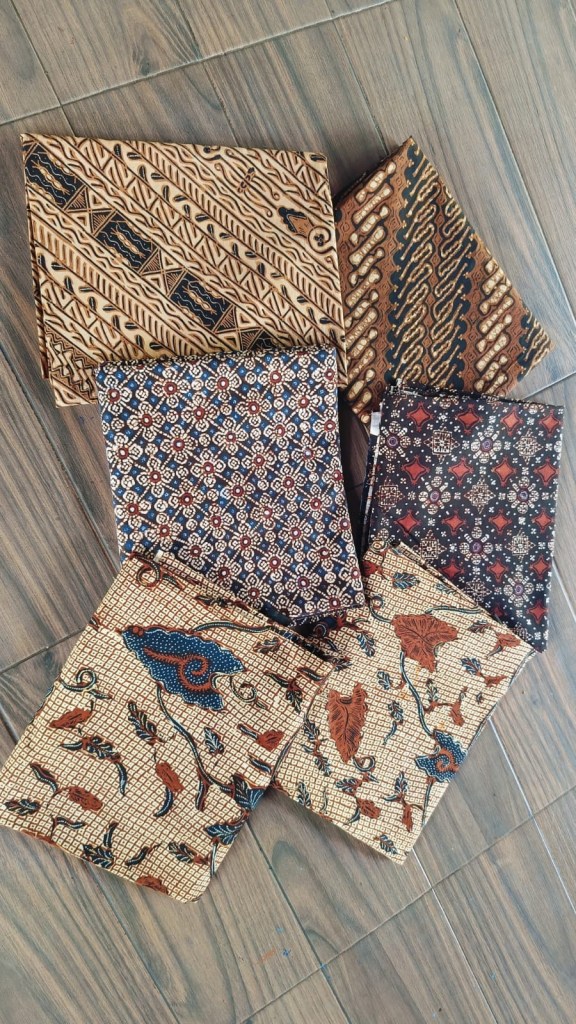
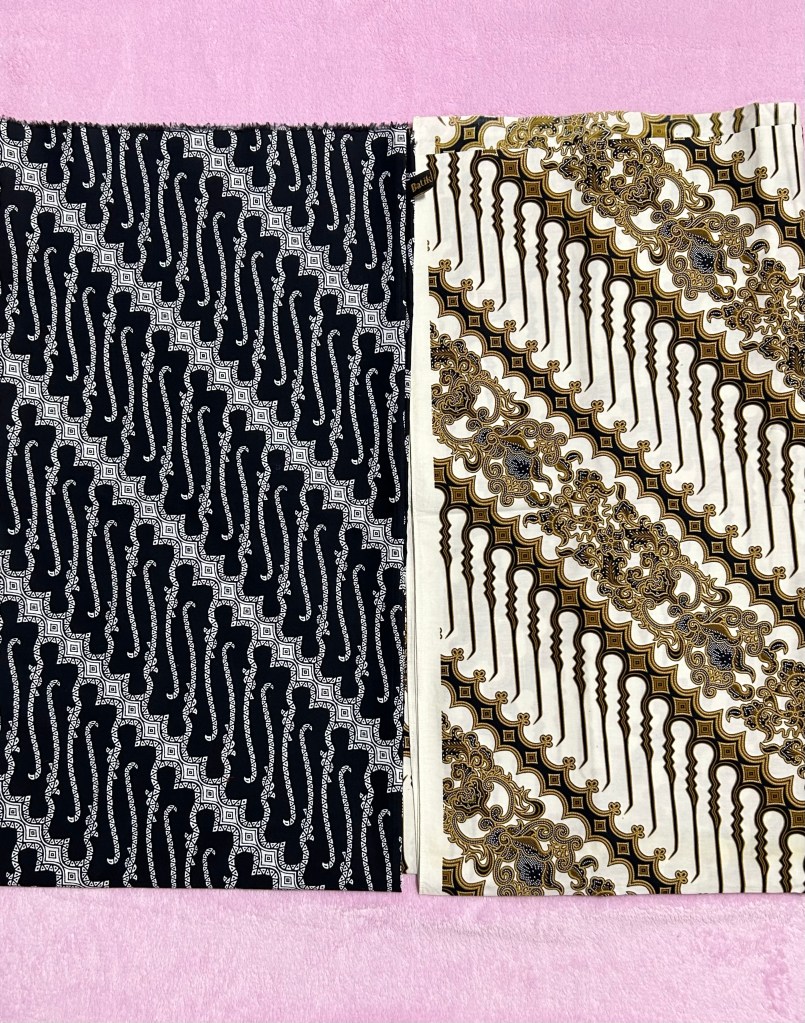
2 pieces of collection from Batik Keris — it is a printed batik, not handmade (black: modern Batik Parang; white: Batik Parang Sekar Jati)

3. Agility, Noble Ideals & Loyality

Agility: Only when I am agile, I can surf the waves of life. My life is not others’ life so the waves are not the same. Your waves might be taller than mine but they might not make you higher quality than me if you don’t develop agility to surf your life; as a result my life seems easier and nicer although I have to deal with more beasts below my wave while you have nothing under yours. And of course vice versa– 💕

Noble Ideals: Only those having values can believe with noble ideals. And having noble ideals make human beings believe that whatever situation life gives them, there are always meanings to deploy. And it is meanings in life that make human beings live with no regret although they know that their role in this vast universe is just a tiny teeny weeny mini (almost unseen) dot.

Loyalty: Only if I am loyal to my values, I can sustain life. The life I run might not be the most dreamt one; yet it is the best-suited one for me with all the pluses and minuses.

my collection of handmade Batik Parang coloured in natural colouring agents from Mbak Izzah, the daughter in law of Ibu Tien the best batik artisan from Imogiri

Care to try wearing “batik parang”? 💕

Salam.

Batik Grompol (Javanese Culture)

There are star clusters
Glowing in the horizon
Sending messages.

——

From Yogyakarta I brought home a pair of batik grompol sheets which I ordered 6 months ago. Happy I must be!

Grompol is a Yogyakartan special classical batik pattern. No other regions can claim otherwise.

Let’s talk about batik grompol today.

Disclaimer: 1) while the primary interpretation is based on what I learnt from the masters; many of it is my own thought based on what I understand on symbols and signs of Javanese, Islam and Hinduism that intertwined in my upbringing. So please be critical. 2) too much information, too little time for me to summarise. Please expect disconnected ideas, connect them by yourselves.

Grompol batik pattern is a sub-category of ceplok pattern in which one geometry pattern is clustered (squares, triangle, circle, lines, etc). In Javanese language ceplok literally means clustering, grouping, gathering based on the same characteristics or criteria (size, colour, shape, pattern, lines, etc). So hypothetically ceplok pattern is always about gathering, uniting, getting together.

Grompol pattern is characterised through the clustering of of 4-petal flower, a flower pistil in the middle, a seed with 4 couples of 3-ceceg and 5-ceceg (ceceg is a terminology used to describe dots in batik pattern) and “wrapped” by a square with 8 points that almost looks like octagram. 

Flower

4-petal flower is a symbol of fertile or healthy life. The 4 petals of the flower can be related to four points of the compass: east, west, north and south.

Flower pistil symbolises the centre of life, potential growth in human being. It can also represent the sun, the soul, the heart as centres of discourses to be applied based on contexts.

Flower which is the beauty before fruition is representing an expectation that human being should optimise their state of beauty which in Javanese almost always refers to the developed wisdom in human being manifested as kindness to fellow creature on earth before one dies.

Seed

A round seed surrounded by 4 couples of 3-ceceg and 5-ceceg symbolises seed of life that should be well protected from all directions.

The seed can be interpreted the same as the flower pistil in the middle of a flower. It is generated from the pistil fertilised by the pollens. It is the centre of life, potential growth in human being. It can also represent the sun, the soul, the heart as centres of discourses to be applied based on contexts.

The round shape of the seed indicates the completeness, thoroughness, integration, centredness, perfection, full cycle.

Ceceg is one type of isen (ornament in empty spaces among primary patterns of batik) in batik. Isen is more popular in Central Java than other regions, isen can be in the form of dots or lines or the combination of both repeatedly put in the intended empty spaces without changing the primary pattern, even there is an intension for isen to highlight the primary patterns.

3-ceceg can be interpreted as Trimurti, the three balancing power of Brahma, Wisnu and Siwa (Siva) which are the 3 powerful powers of creation of the universe, preservation of the universe and destruction of the universe.

5-ceceg can be interpreted as 5 types of self regulation: knowing one’s own identity and personality, connecting to inner self, managing the humane desires, living through good sources of life (no corruption, sharing to the needy) and self reflection through traveling or pilgrimage. A human being is expected to continuously strive for perfection of these five without expecting the perfection to happen.

Points of the Compass

Octagram represents 8. Number 8 in Javanese wisdom is about welfare and authority. Number 8 also represents 8 gods guarding the 4 points of the compass in which 1 direction is guarded by 2 gods of specific authority. The compass itself has 9 points – 1 the centre, 8 the directing points.

The 1 point in the middle is sat by Siwa. 8 points are sat by other gods based on what they manage in the natural realm. Those 9 (1+8) are called Dewata Nawa Sanga (nine guardian gods) in Balinese and Javanese culture. Those 8 are wellknown as Asta Dikplaka (eight gods of 8 directions).

  • North (Uttara): Wisnu or Kuwera guarding the north, Sambhu or Isana guarding east north – gods of rain
  • East (Purwa): Iswara or Indra guarding east, Mahesora or Agni guarding south east – gods of music
  • South (Dakhsina): Brahma or Yama guarding the south, Rudra or Nritti guarding south west – gods of winds and growth
  • West (Pascima): Mahadewa or Baruna guarding west, Sangkara or Bayu guarding north west.

Number 1, 3, 4, 5, 8, 9

Like in other cultures, Javanese gives significant role to numbers in their game of meaning.

  • 1 – siji, setunggal, tunggal, ika, eka: It can mean uniting, integrating, the first, the earth, the sun, the moon, queen, king, country or any other thing perceived as singular or superior.
  • 3 – telu, tiga, tri: It can refer to 3 life (spirit life, physical life, life after life), attitude/behaviour/work, celebration/luxury/merriness
  • 4 – papat, sekawan, catur: Number 4 in Javanese culture signifies creativity and intelligence, endurance, perseverance and victory. The 4 points of the compass also represent something about those 4 directions. The power of sun in the east, the power of mountain in the north. The power of luck in the west. The power of maximum ability in everything in the south.
  • 5 – lima, gangsal, panca: self integration, self regulation, supernatural powers
  • 8 – wolu, asta: Number 8 signifies high rank, respected people, physical forms, dragon as symbol of authority

Summary

That it is a ceplok type signifies the clustering, gathering, integrating of certain characters. So this batik is message and prayer for uniting of between or among family members. It is also a message and prayer of integration of human being internal wisdom – a state of maturity. Batik grompol is often worn by bride and groom in their wedding day due to its very sacred meaning of ultimate protection and potential growth through a gathering.

The uniting or integration should be based on clarity of wisdom and protection. It is the wisdom personally and culturally harvested and nurtured. The beholder, owner, wearer of batik grompol is expected to realise that this pattern is a message and a prayer that they are well protected at the same time expected to extend the given protection to all directions as the gods of all points of compass spread their protection to the universe.

The pistil of the flower as the potential growth in human being put as a compass centre in human being life can be interpreted that human being integrated wisdom has as strong power as Siwa who is sitting at the centre of the compass/chakra. Although described as destroying god, Siwa is actually symbol of re-creating, re-cycling. His being sat in the centre of a chakra (wheel, cycle) is significantly describing him as recreation/recycling agent who then distributes the re-created/re-cycled material to different function around him to be re-governed wisely by “different gods” (remember the 8 gods of all directions).

A human being should be able to learn, re-learn and un-learn one’s own life experience and lessons then to better redo or re-process the way one solves problems or to simply treat other creatures.

The round seed means a centred human being who has achieved the understanding of integrity, full cycle of life. It doesn’t mean the human being is flawless; it means the human being is aware of one’s flawedness yet accepting the state of imperfection of being human. And through the acceptance the human being keeps bettering one’s self in treating one’s self, fellow creatures and the nature. This is an everlasting interaction and intertwining between micro cosmos (jagat alit in Javanese language which represents human being) and macro cosmos (jagat gedhe, the universe).

And all in all, a human being shall pray to his God or make one’s self sure that to any direction one is heading to, one is safe and peaceful. Religious human being will live through guidance and protection from God. Spiritual human being will find inner centre in one’s self whatever one calls it and focus on what one is doing in honesty and sincerity. Free thinker will boost one’s self confidence and focus on what one is aiming with integrity.

So batik grompol has helped me understand that all my fellow human beings are essentially doing the same things as what I am doing in my life, just explained through different perspectives; and we are only of different pace and timing.

What a beautiful batik pattern. What a beautiful meaning.

my beautiful grompol batik cloths were born through the golden hands and soul blessed to this beautiful lady, Ibu Tien Wartienah

Devotion

Orbit of a star
Keeps it moving yet centred.
Devotional fact—

——

Ibu Tien Wartienah is one of the best batik makers whose work of art has spread around the globe; most of her customers are international art curators and prominent people from many countries incl our own country
she started making batik at 8 years old to help her mother who was also a batik maker; in her 66, she is the most sought-after devoted batik maker — her devotion to batik esp Yogyakartan style is second to none – her eyes were sparkling when she was sharing about batik and what she has done with her skill and art

many of my classical batik collection are made by this humble lady — i’m so blessed to keep guard her work of art and to have met her this visit; thank you, Ibu Tien — your life is blessed by many

Ibu Tien’s half done wax-blocking (nyanthing) work “Kembang Manggar” aka “Satria Manah”

i tried one batik yesterday in Ibu Tien’s home in Imogiri — trust me it is a challenging task 🤓

batik working tools

Love of Batik

Colours and patterns
Drawn for beauty and meaning—

At times the colours call
To get brightened up.

At times the patterns invite
To compare accuracy.

To me the highest luxury in life is not branded bags, luxurious houses, luxurious car, luxurious holiday (not backpacking though); but it is hand-made batik. With as low as USD100 I can afford a sheet of hand-made batik that definitely a way to conserve local culture and to help the batik makers survive life. There are brands and designers sell the batik for doubled prices; with the same quality of my USD100 batik, they probably sell it for at least USD400. My most expensive batik is only for USD700; imagine how much those brands and designers will sell them — trusted names do sell.

How can batik be so expensive even bought from the first hand like mine? It of course involves high technique and skills (senior batik makers can make very delicate and accurate result of batik), the patterns made, the colours used (the more colours esp natural colourants, the more expensive as the blocking process can be more than twice); time consumed (can be up to 5 months to complete one sheet of 2.5m of hand-made batik sheet), quality of fabric used (cotton and silk is the most common). In short quality hand-made batik is a combination of high art and high patience!

Today is my batik day. Some of the batik sheets got light treatment of “airing” in which folded batik is unfolded, hung loose to get some breeze for around an hour. This is my own technique in rainy days. In sunny day the sheets should be sunbathed.

Batik treatment by an amateur batik curator ✅

Let’s do more fun today! 💗

Thank you, dear weekend.

Salaam.

treatment done with one group 🙂
another group that need airing or sunbathing tomorrow 🙂 others will be next month 🙏🏼
amazed by the batiks as collected or curated by those professional curators 😍

Clear Sky (ranting)

Clear sky, Beloved,
Calm blue where clouds swim, birds fly
Under the warm sun—

Javanese live their life with meaning and that makes them “effortlessly” survive even in the hardest time. They pin meaning to everything they experience. I believe Javanese are naturally philosophers whose communal humble life is richly loaded with wisdom; unfortunately fading away by the time.

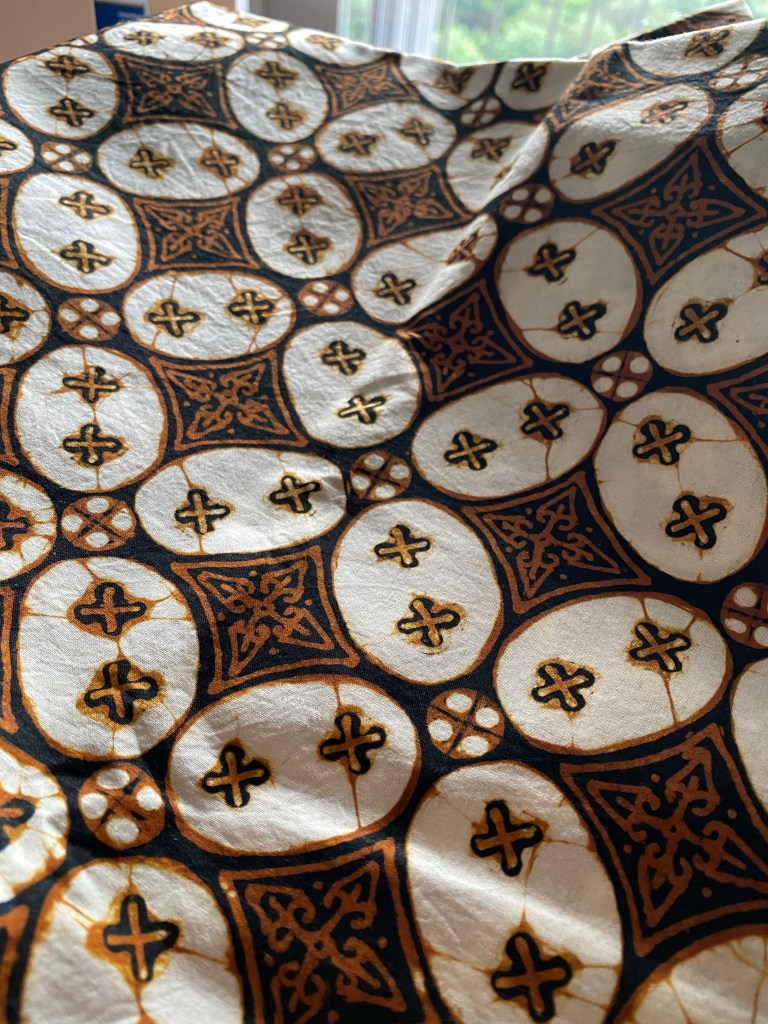
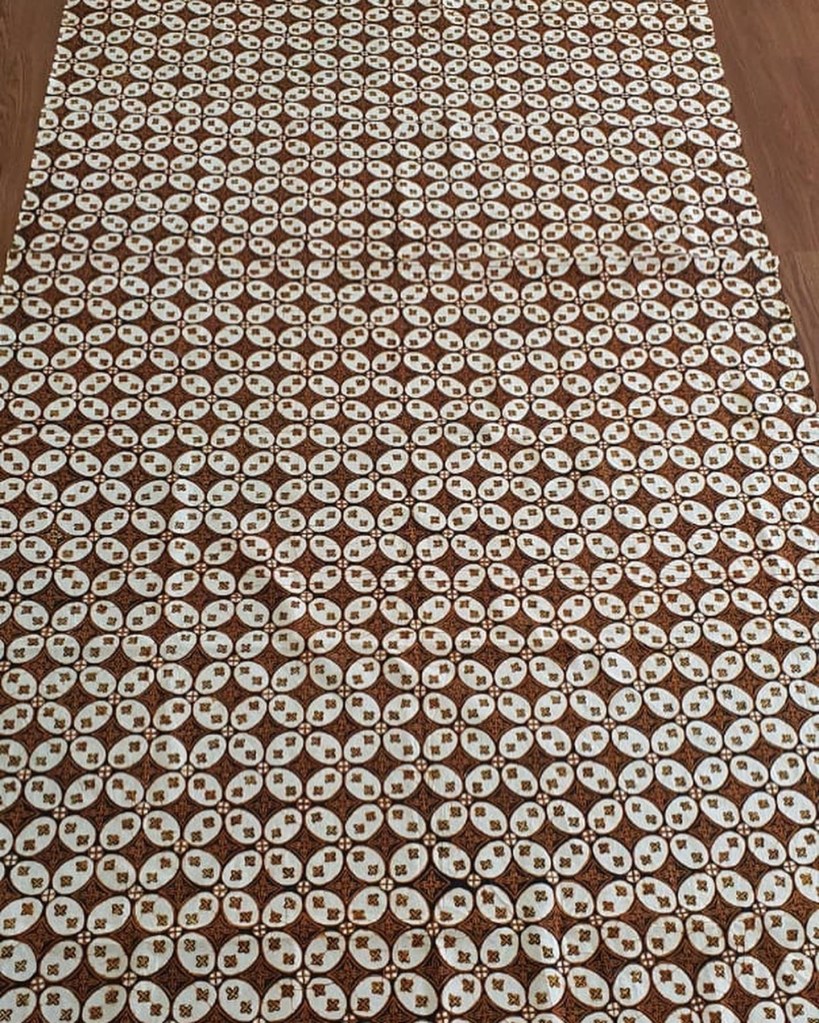
Meanings easily recognised by most Javanese are those pinned to batik method and patterns. Historically batik patterns were works of art composed by either scholars from padepokan (ashram in Sanskrit) or the royals (king, queen, prince, princess or royal artists). In fact, there were few batik patterns created by commoners such as batik nitik and batik kawungKawung is one of the oldest original patterns of Javanese batik which has existed since 12th century. Nitik was born younger, approximately in 19th century.

Fun fact about Javanese king: aside from courses of political knowledge, leadership, palace management etc, long time before his coronation a Javanese crown prince must completely compose 3 works of art and publicly present them to the board of senior royals then announced the art pieces to people in the kingdom. Those three are batik pattern whose batik is handmade by him, tembang/kidung (sacred Javanese song) sung by him; and bedhaya dance trained to the dancers by him (a solemn Javanese dance performed by a group of dancers).

While batik nitik was initially created as secret codes by commoners to circulate among them classified information kept hidden from unjust aristocrats at that time or from the enemies (some historians said though this pattern was composed by the royals); kawung was allegedly created by a mother to dress her son who was instructed by the king to join his exclusive team due to his outstanding skill of espionage and balanced state of mind (again the historians said this pattern was composed by the royals). The said mother made a sheet of kawung pattern for him before he left as a prayer that her son could keep his current quality even after he later lived among (socially, politically, professionally) higher rank people.

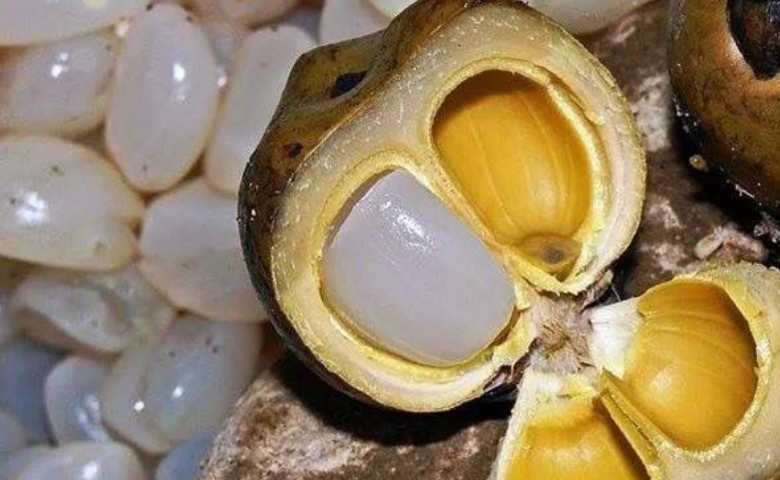
kawung aka kolang-kaling, two seeds, four half-chambers (from Pinterest)

Kawung is the Javanese word of sugar palm (kolang-kaling). The symmetrical four half chambers in a fruit are used to symbolise balanced state among physical, mental, intellectual and spiritual. The clear colour of the seed is borrowed to symbolise clarity: of conscious mind, of conscious decisions, of intension, of purpose and of actions.

People also relate the word kawung to suwung that can mean emptiness: in this matter suwung is more about self alignment, absence of sense-driven wanting. A person in this suwung state in positive interpretation means someone who is already free from his/her craving for worldly interests, s/he is able to calmly and consciously prioritise among physical, mental, intellectual and spiritual proportions with no doubt or confusion. S/he is in high level of awareness of a “perfect” human being.

In Java region that kind of person is not necessarily a saint or a priest or a bikhu(ni) or a nun; s/he might be a farmer, a batik maker, a herbal seller, a taxi driver, an employee, a housewife, a leader etc, just whoever is willing to self align through what they do everyday regardless their professions. Not a few of them were “bad” people hearing the inner calling, deciding to quit their wrong doings and living “new” life.

At younger age, I met more of that type around us in my hometown. Now fewer and fewer people are interested to achieve that level because life pace is now becoming faster with the “tsunami of information” and life needs are “forcing” people to be constantly in alert mode with the high competition to “survive certain life style”. 

Not much I can do this time. I try to breath more slowly, pay attention on shift of emotions through body reaction (my body will never betray me) then acknowledge the emotion whatever it is. Time flies like a wind sometimes like a storm, I choose to ride it, not to get dragged by it. Not easy but doable.

How light this head is after ranting! 

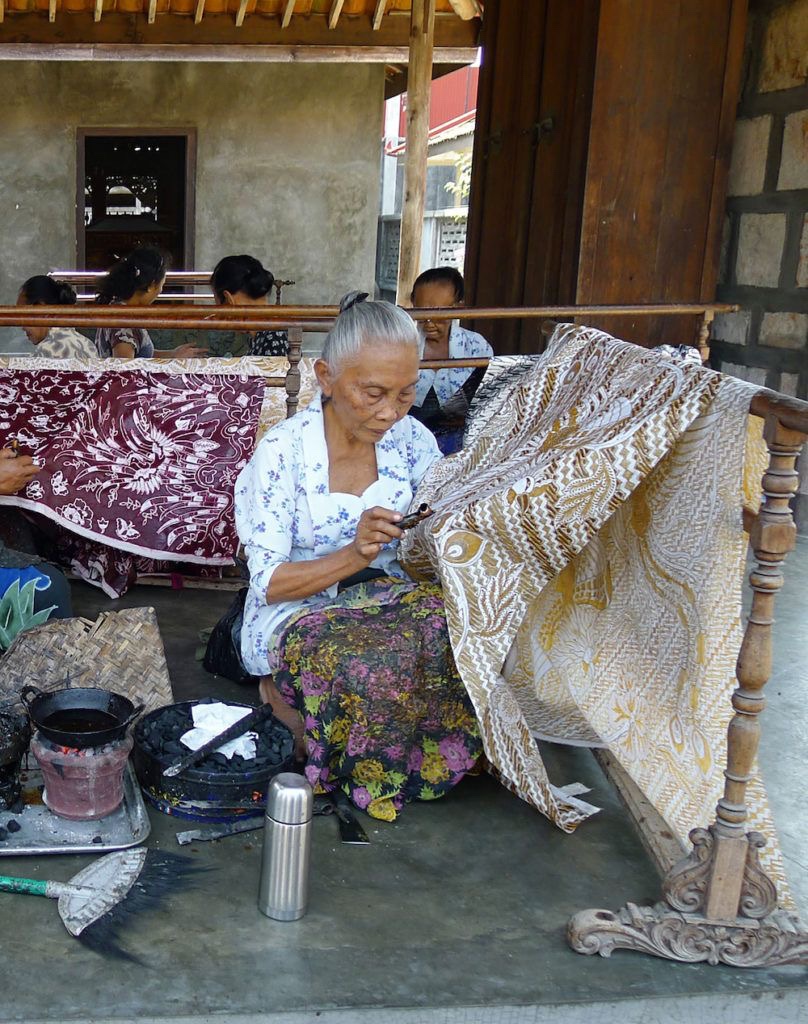
batik kawung beton crafted by Mbak Arifah (25 yo), a mute-deaf female who never goes to school but is able to write and read – thank you, Mbak Arifah
primissima cotton, 250*106cm, two sided
Fun fact about the honourable batik makers:
- Once a batik maker pulls the “canting” filled with hot wax on a sheet of fabric, it will start developing lines or dots as the hot wax gets dry fast and block the fabric. That is why they work very carefully to avoid unplanned error. Correcting unplanned error is more tedious in batik making process compared to drawing the patterns with canting. Zero accident policy applies.
- Batik making is a highly contemplative activity (almost) like meditation. That is what makes many of batik makers especially those senior and/or with high quality artisanal works have good self alignment.
- Some batik makers don’t need to draw the planned pattern with pencil on the fabric. They are the highly skilled, the artist, the master of what they are doing.
- It takes approximately 5 months to complete a piece of two sided hand-made batik of 210-250cm long. Those batik makers also do household chores in between their batik making activities as they mostly don’t earn good money. If you buy hand made batik, please give extra dollars to share some comfort.
- Majority of batik makers are female. Very few of them are young.
at workshop (from Pinterest)
at home (from Pinterest)

Batik Gringsing

Time travels with you
To where good memories sit,
Waiting to rejoice.

———————————————————-

When I was a girl, I got sick very often. Yet what I remember the most isn’t the pain but is how my family would take care of me. Of course they medically treated me either at home or hospitalised, but there was a unique way I can never forget what my mother, father and siblings did extra.

My father would chant Javanese mantra that would calm me down. My mother would wrap me with a sheet of batik cloth before putting the next thicker blanket. And of course siblings especially sisters would sleep with me the whole night.

What Javanese mantra chanted by father? Oh can’t remember! What batik, I definitely remember it and now own it for the same need; covering myself with batik gringsing when sick.

1.2mx2.3m batik cloth with gringsing background pattern of flower bouquets

Gringsing is one of the oldest batik background patterns in Java. It is thousands of tiny square with a dot in the center symbolising “sedulur papat kalima pancer” (literally means 4 siblings and 1 core as the fifth) the cosmic balance of human reality in Javanese wisdom. And through the philosophy it is believed that when a Javanese human is sick, s/he is cosmically imbalanced and needs to be balanced. Physically s/he is medically treated, metaphysically s/he is cured with gringsing the balance symbol.

Gringsing is an acronym of gring or gering (sick, not well, ill) and sing (not); gringsing means not sick anymore. Oh! That simple! Made by hand! Oh! Not that simple!

What a blessed human being!

wrapping body when catching fever doesn’t replace paracetamol, it’s to recall the memory of how my family well treated me when I was sick 🥰
detail of gringsing: a tiny squarish scale with a dot in the center – sedulur 4 ka-5 pancer

Make Peace

Make peace, Beloved,
With the softest anger in.
Growing peaceful stars—

—————————————————-

🌱

Weekend, bring the peace intact.

Salaam 🙏🏼

batik truntum to cover my working chair; truntum is taken from a Javanese word “tumaruntum” meaning growing

Does Too Much Love Kill?

Too much love will kill
Who? None. Love will overflow,
Reviving the death.

——————————————————

Finally an agreement was achieved among some friends to start a project to support a few batik makers that we know and to spread knowledge about batik from unique perspectives. There will be video about batik, the batik artisan’s life and thin slices of Javanese wisdom. And so I have to restart the old hobby that has been dormant for how long only heaven knows.

Can’t wait to travel to dear home-base-will-be and produce slides and shows….

Hope it works well.

Friendship nurtures human beings in many ways possible.

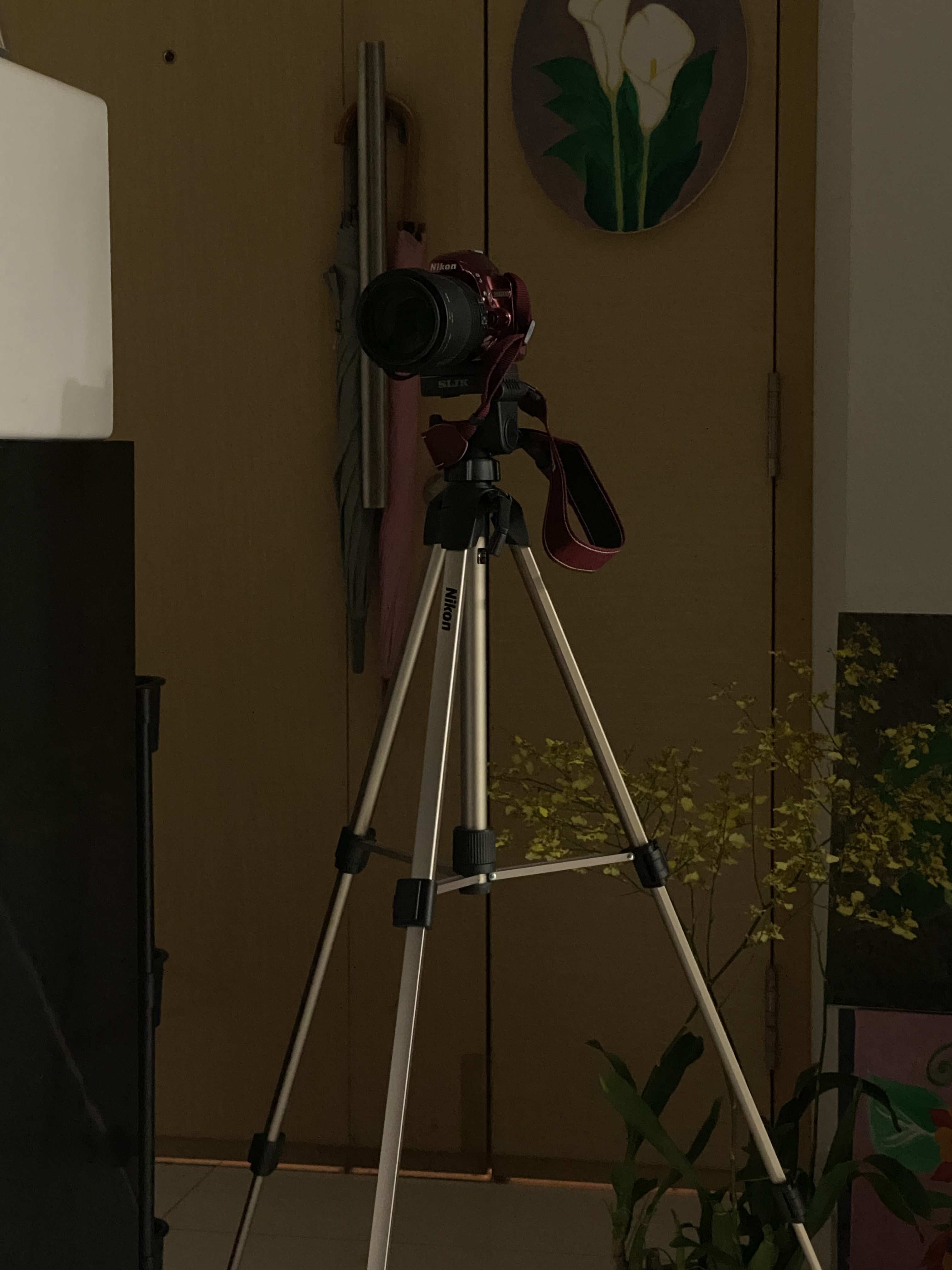
good, the tripod still stands still 👍🏽

Dark, Fragrant Beauty

A bunch of roses,
Send this prayer as a gift
To those remembered
Through air, land, water, fire in
Dark, fragrant beauty. Amen.

I pray with flowers in a glass vase every week: reciting beautiful verses to those I’ve loved and remembered especially the ancestors, whispering unsaid love to those faraway, wishing they be happy everyday. Some people consider it ancient practice and not applicable or acceptable as modern but I feel more connected to my own self by doing it. So making it a habit

I love the dark mood of today’s flowers combined with my “sogan handmade batik”. It painted a shade of dark beauty with special fragrance and colour.

May all beings be happy.

HARI INI HARI BATIK

Tanggal 2 Oktober telah ditetapkan sebagai Hari Batik oleh pemerintah setelah UNESCO mengukuhkan batik kita sebagai kekayaan dunia dan seyogyanya kita menyokongnya dengan suka cita. Masih teringat bagaimana hingar-bingar pecinta batik kita berjuang dengan cara mereka sendiri ketika Malaysia mengklaim batik sebagai milik mereka.

Sekilas tentang batik
Batik adalah metode pembentukan motif pada media tertentu – awalnya hanya kain mori lalu berkembang hingga sekarang batik dapat diterapkan pada kulit, kayu, dll – dengan cara menutup bagian tertentu dengan lilin (malam) sebelum proses pewarnaan dilakukan. Awalnya batik memiliki motif tertentu yang dihubungkan dengan proses kontemplasi seniman batik pada jamannya yang biasanya menciptakan karyanya untuk kebutuhan kraton mengingat dulunya batik hanya bisa dijangkau oleh kaum ningrat. Maka terciptalah motif-motif batik seperti Wahyu Tumurun, Kawung, Klithik, Sido Mukti, Parang dengan berbagai variannya, Mega Mendung dll. Semua yang saya sebutkan adalah “batik pakem”
Di negeri kita ini hampir semua daerah utama memiliki batik dengan ciri khas tersendiri walaupun secara umum batik dibagi 2 kelompok besar: batik pesisiran (daerah pinggir laut) dan batik Jogja-Solo (pedalaman). Dua kelompok besar ini membuat khazanah batik Indonesia menjadi kaya luar biasa. Batik pesisiran biasanya menggunakan warna-warna terang dan aplikasi motif yang lebih ringan dan ceria serta menggambarkan objek secara gamblang dan nyata sedangkan batik pedalaman lebih didominasi oleh lebih banyak warna gelap yang lazim disebut sogan (coklat, hitam, kelabu) dan penggambaran objeknya lebih abstrak dan penuh simbol.
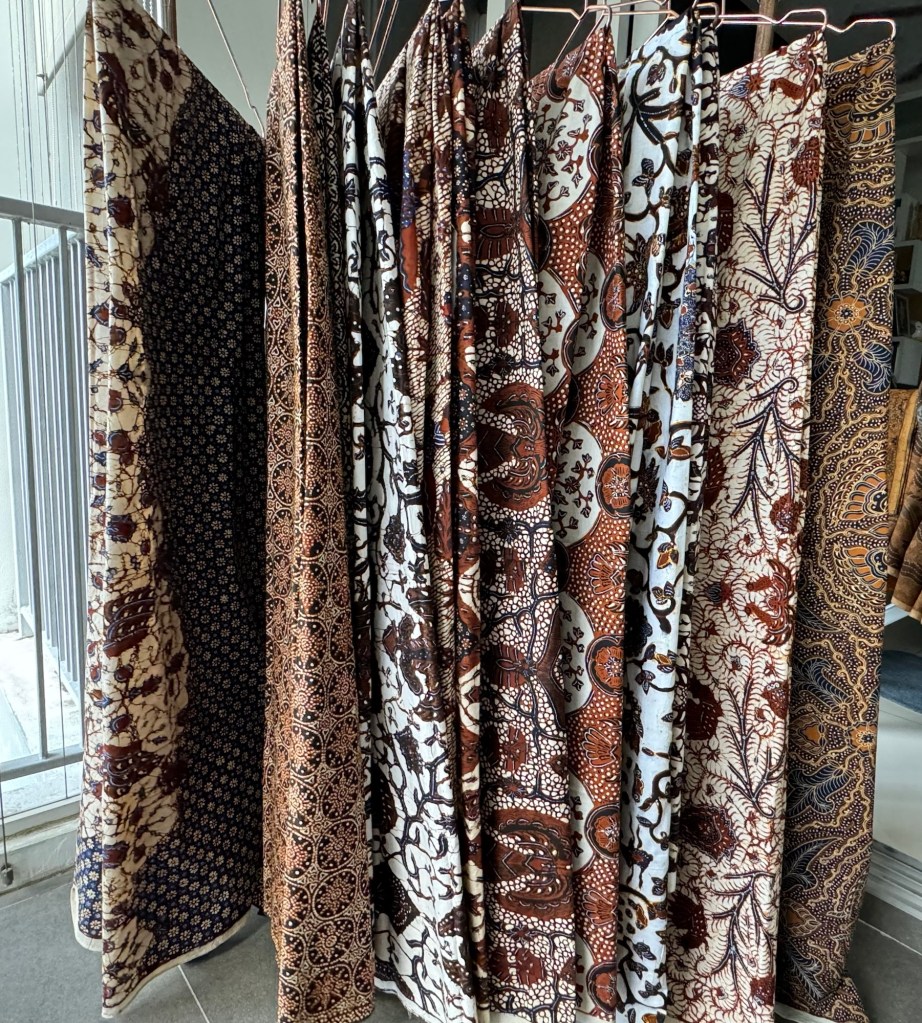
Batik Cirebonan adalah contoh batik pesisiran yang paling memasyarakat saat ini. Dengan warna yang gonjrengnya batik Cirebonan mampu menyelinap ke dalam hati para penggemar instan karena memungkinkan mereka untuk bergaya dengan batik secara lebih mudah. Ciri khas batik Cirebonan juga terletak pada objeknya: tanaman, burung-burung, langit berarak, matahari, dll dan satu lagi yaitu “tumpal”. Tumpal adalah aplikasi motif penyelaras di ujung kanan atau kiri kain yang biasanya diletakkan di depan ketika batik dipakai sebagai sarung.

Batik pedalaman atau Jogja-Solo lebih banyak bermain dengan simbol dan pemaparan ide secara abstrak dan mengedepankan kesan sakral dalam setiap motif pakemnya. Misalnya “jarik” Sido Mukti adalah ekspresi doa kebahagiaan, kemakmuran dan kelanggengan desainernya sehingga dipakailah batik ini sebagai salah satu pakaian pengantin. Sebaliknya batik bermotif Parang tidak direkomendasikan dikenakan dalam prosesi itu.

Proses dalam membatik
– memilih media
– memilih motif
– menggambar motif (mola)
– membatik (menutup bagian dengan lilin sesuai pola)
– mewarnai (nyelup)
– membuang lilin (nglorot) dengan cara merebus kain yang telah dicelup
– mengeringkan
– membersihkan batik dari sisa-sisa lilin yang menempel

Tidak terlalu sulit bukan? Tidak ada salahnya jika kita mau mencoba. Kalau ada waktu, silakan kunjungi Musium Tekstil di Jl. Karel Sasuit Tubun, Jakarta yang mengadakan kursus batik secara reguler. Anda akan bertemu dengan para seniman dan instruktur yang dengan suka rela berbagi ilmu, pengalaman dan kecintaan budaya.

Banyak istilah dalam dunia perbatikan yang mungkin tidak terlalu dikenal secara luas misalnya isen, semen, nitik, nyolet, dll. Namun itu bukan hal yang urgent bagi kita untuk mengetahuinya. Untuk saat ini mari kita mencintai dulu batik kita dengan cara memakainya baik setiap hari maupun pada acara-acara tertentu saja.

Kiranya tulisanku di Hari Batik ini cukuplah untuk memberikan penghargaan pada batik dan pelestarinya serta membagi sedikit pengetahuan bermanfaat.

Selamat Hari Batik
Mari pakai batik paling tidak sekali seumur hidup 🙂

Otw Blok M di Ekspres MC2636 – 7:45 pagi

MEMBATIK LAGI

MEMBATIK LAGI

Sudah setahun lebih saya tidak memegang canting. Selama itu saya berkutat dengan kesibukan yang tidak bisa saya ungkapkan secara terperinci. Yang pasti selama kurun waktu itu saya membiarkan kompor kecil saya kering sumbunya, wajan tembaga saya penuh dengan malam beku dan canting saya buntu sama sekali.

Saya ingin membatik lagi. Dulu saya membatik bisa sampai pagi. Saya tidak peduli walaupun saya harus membatik di teras luar supaya asap tidak mengganggu pernafasan di dalam ruangan. Saya tidak peduli bahwa malam itu bisa saja maling celana sedang gentayangan,. Saya tidak peduli pada makhluk-makhluk lain yang sejatinya sedang menggoda saya dengan rupa yang berbeda-beda, dari tikus, cicak, kecoa, laba-laba, semut merah dan yang berpakaian compang-camping atau berpakaian kerajaan menembus dinding… Apa itu ya…

Karya batik saya sudah ada beberapa lemabr baik yang telah sempurna proses pembuatannya maupun yang belum diwarnai atau belum dicanting sebagian atau baru dipola. Semua itu membuat saya terpacu untuk menyelesaikan tugas saya. Tugas saya adalah menyempurnakan karya saya. Saya tidak mau karya saya terbengkalai sebelum purna usia. Apapun tugas dan karya saya yang belum tuntas saya anggap hutang. Dan hutang saya harus terbayar sebelum saya meninggal. Batik saya harus jadi dalam waktu dekat.

Satu batik yang akan segera saya kerjakan adalah sebuah selendang sutera yang ingin saya persembahkan pada ibu saya Lebaran ini. Cantik sekali polanya. Saya membayangkan alangkah cantiknya ibu saya mengenakan selendang sutera pada saat shola Id.

Ok, yang penting sekarang saya telah memiliki waktu lagi untuk membatik. Membatik seperti tidka jauh berbeda dengan kegemaran saya menggambar dan melukis namun jujur adanya membatik membutuhkan kesabaran ekstra. Saya tak heran jika setahun ini saya merasa kesabaran saya tidak sebagus ketika saya aktif membatik.

Ternyata kesabaran bukanlah sebuah kata benda yang dapat kita peroleh begitu saja. Kesabaran adalah buha latihan bersabar dalam kehidupan sehari-hari.

Duh, saya ingin membatik lagi…