National Batik’s Day

Why we live and what for we live are different from one person to another, that’s normal. And its normality is cascaded to the next levels of why and what for of smaller aspects of life. In mine it’s including but not limited to why and what for I conserve batik as part of the Javanese culture, the culture in which I’m primarily raised and nurtured.

The word conserve might be too humongous for me personally; what I’m doing is simply preserving the batik that I’ve collected as part of adoration to how the batik has come to its existence. Yet if my preserving humble collection of all the batik from the simbah, budhe and mbak (how I address the batik artisans) can be defined as part of conservation in individual level, I’m glad and honored.
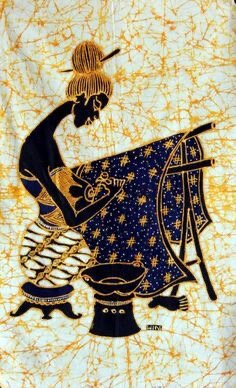
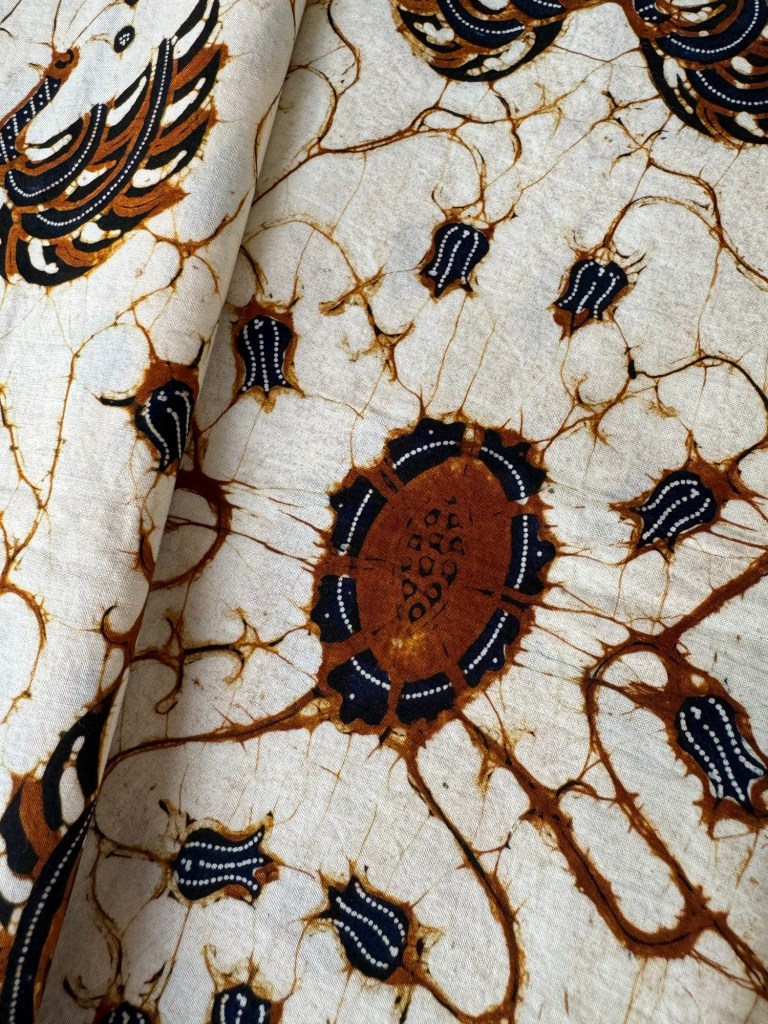
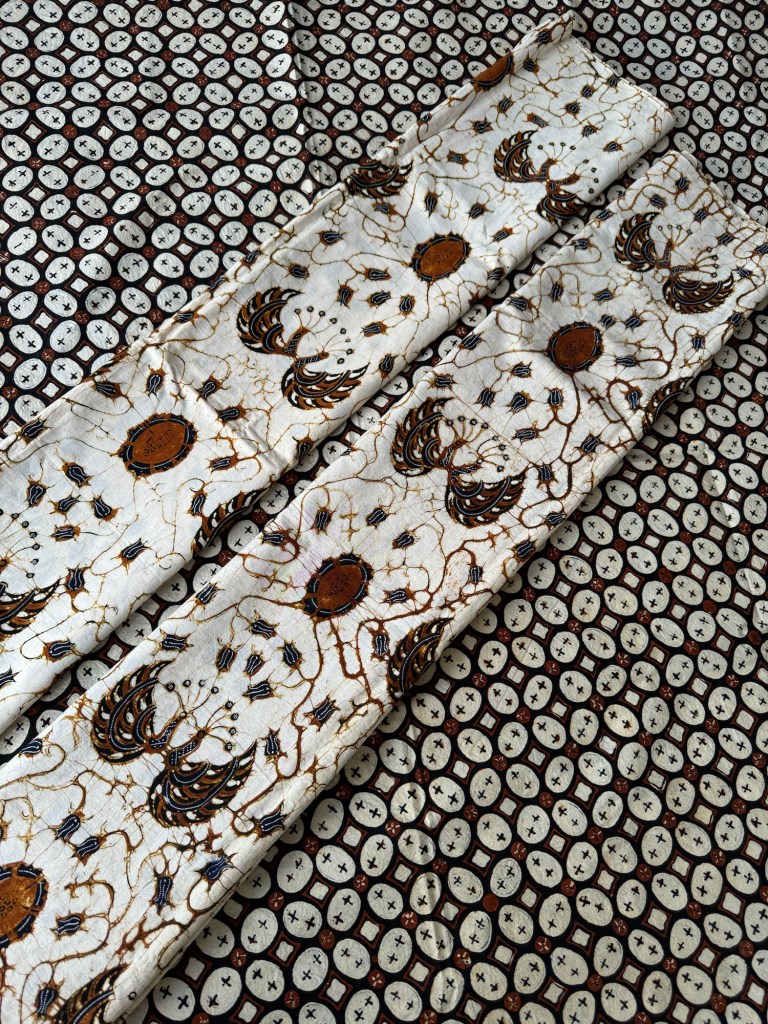
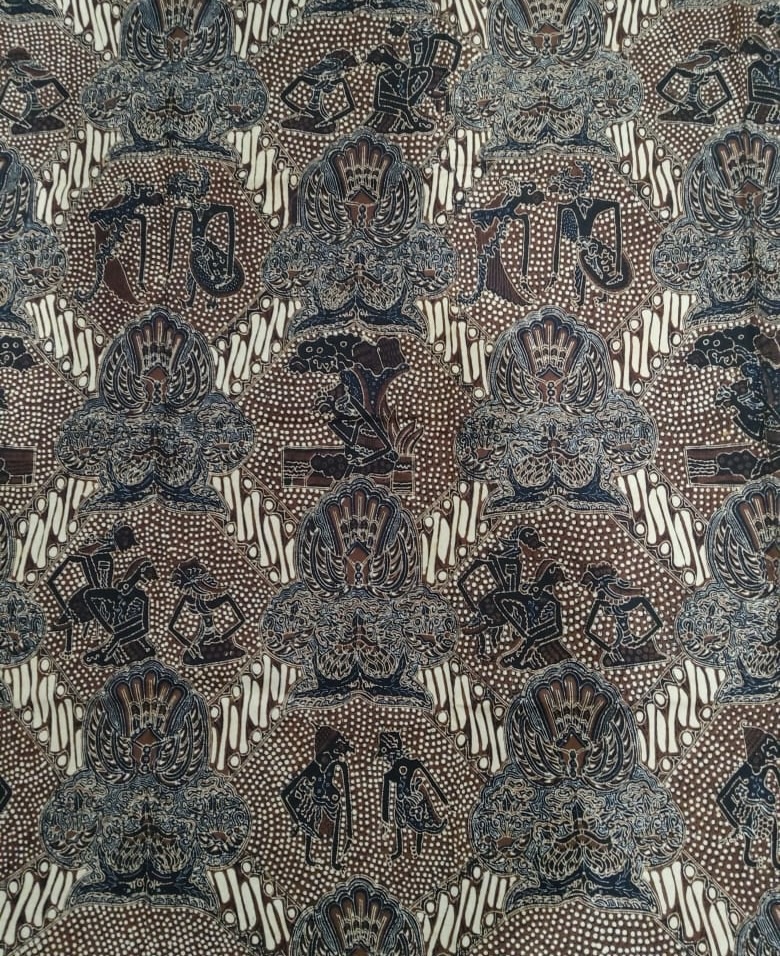
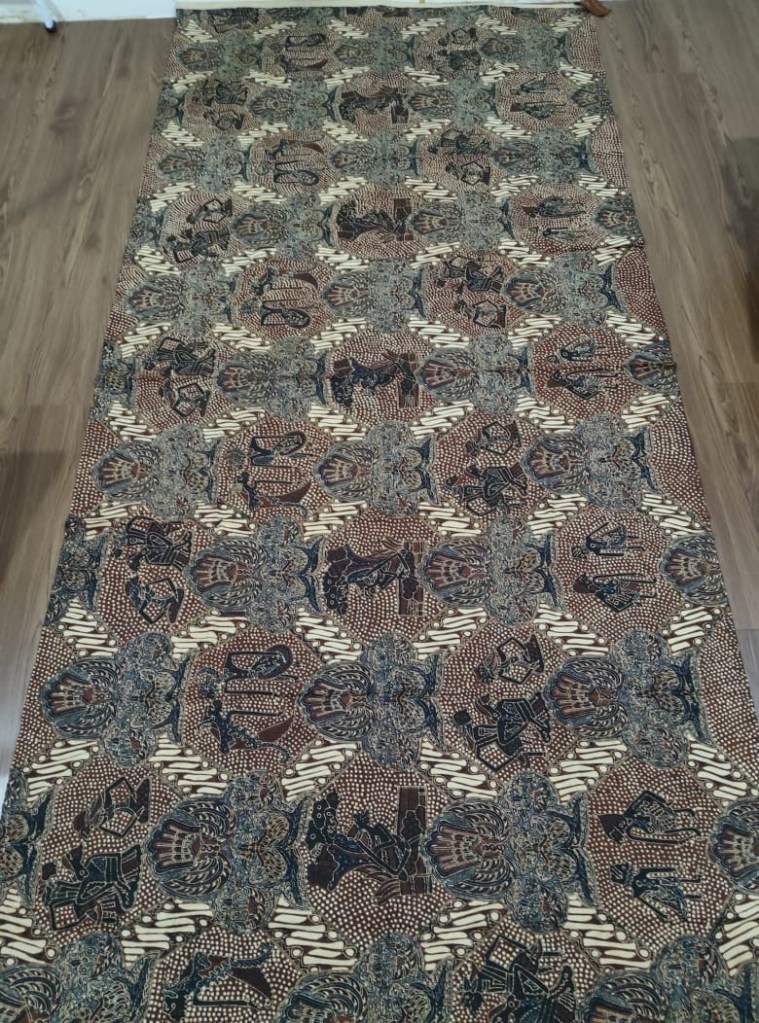
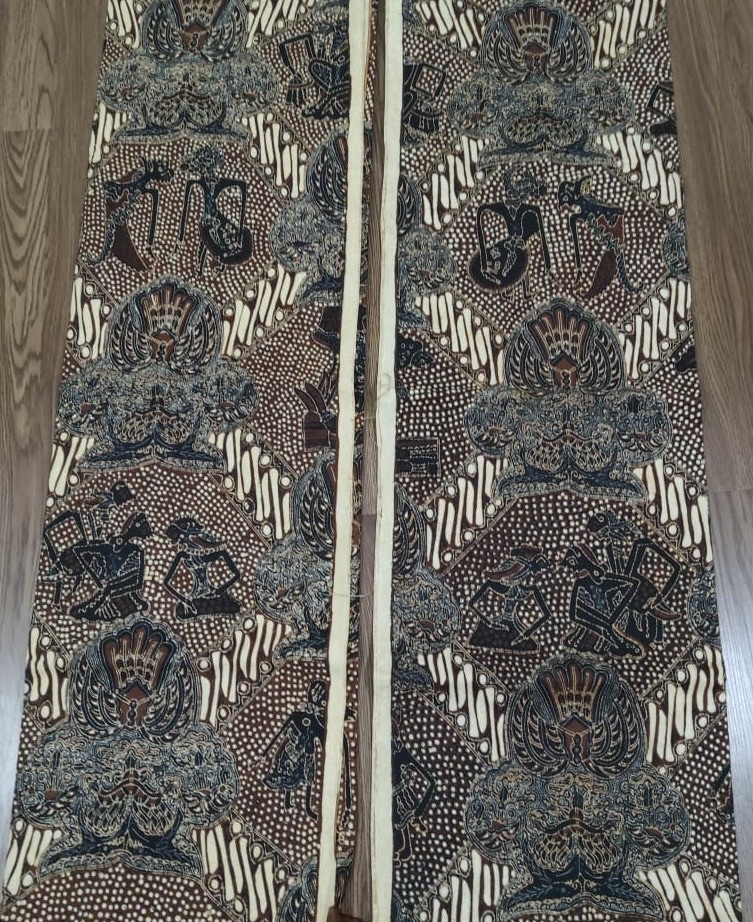
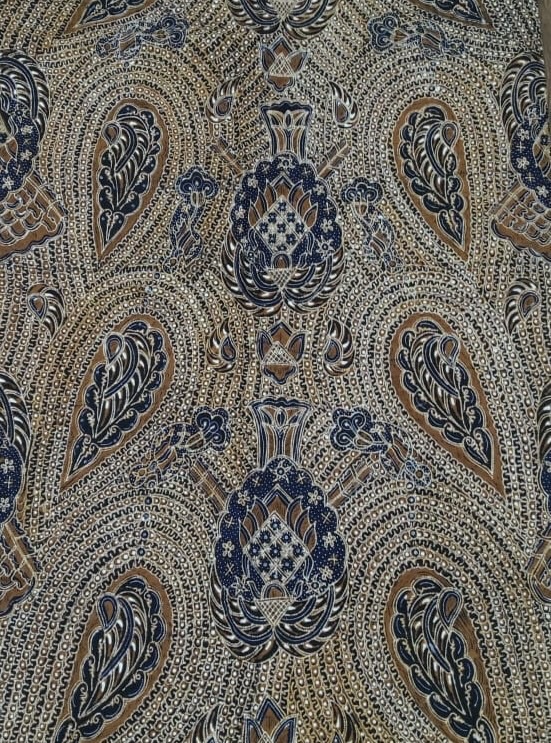
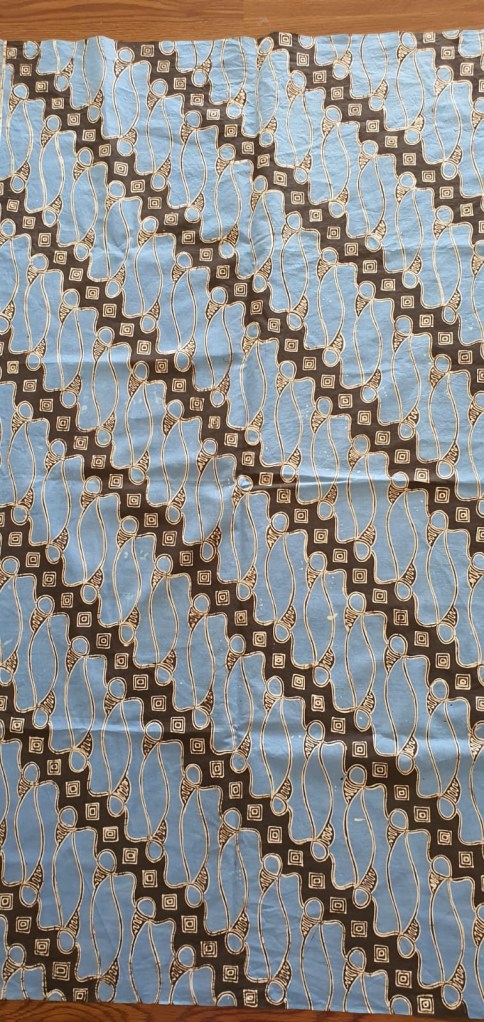
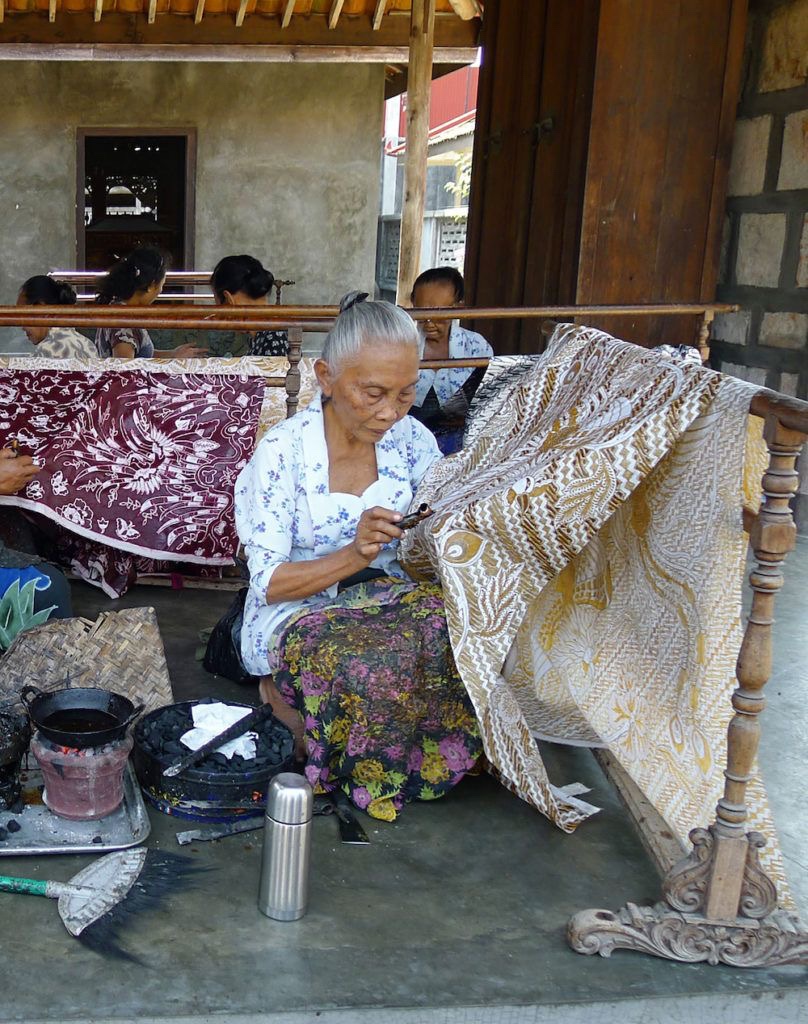
a piece of batik of a batik maker

I’m nobody— just a human being consistently putting meanings to life, even in her lowest point of life. Batik has been one tool that helps tap part of me to wake up, through its patterns and motifs. As I mentioned in one of my blogs earlier, Javanese is people of wisdom or people of culture or people of meaning. They insert lessons and meanings through symbols they expose to the world in this case through patterns and motifs of batik they’ve designed either the ones traditional or modern.

I did feel like loving batik as part of my culture. Yet from time to time I’ve contemplated whether I’m truly loving batik because of its being a culture value or culture element. Am I a Javanese, the people of symbols, the people of wisdom, the people of culture and meaning? Or, am I simply a human being who adores batik because of batik itself. And yes I’ve found reasons sentimentally pushing me to observe then love batik. They might sound more like excuses instead of reasons though, yet I love to claim them as genuine motivation for me to keep batik alive within.

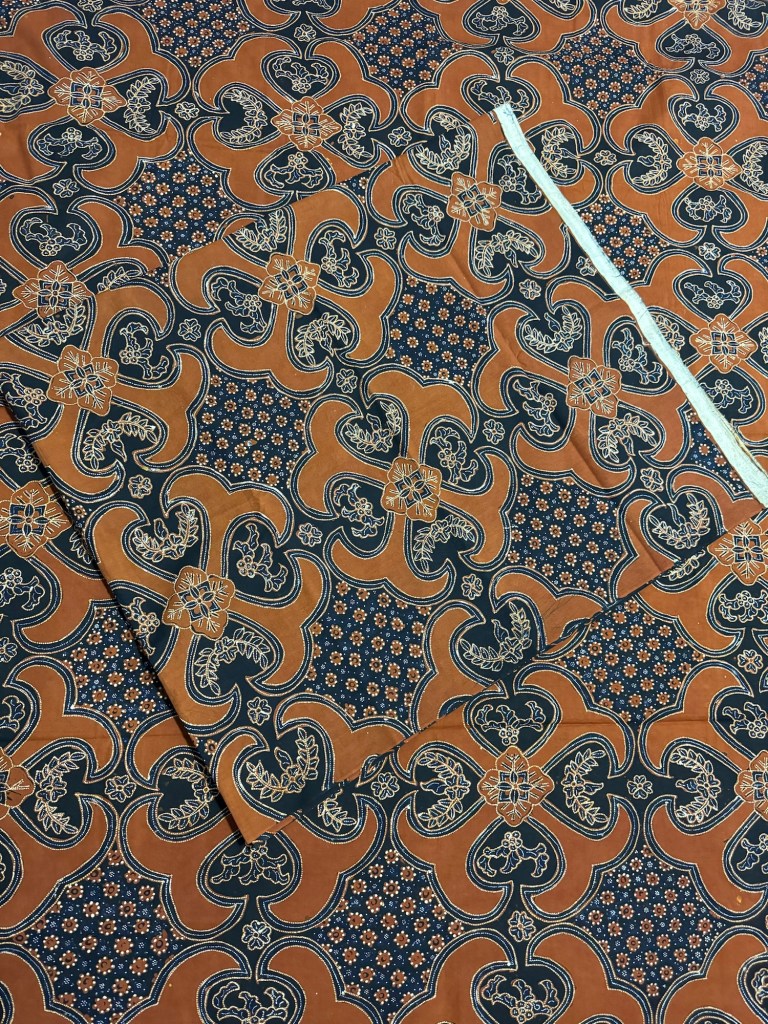
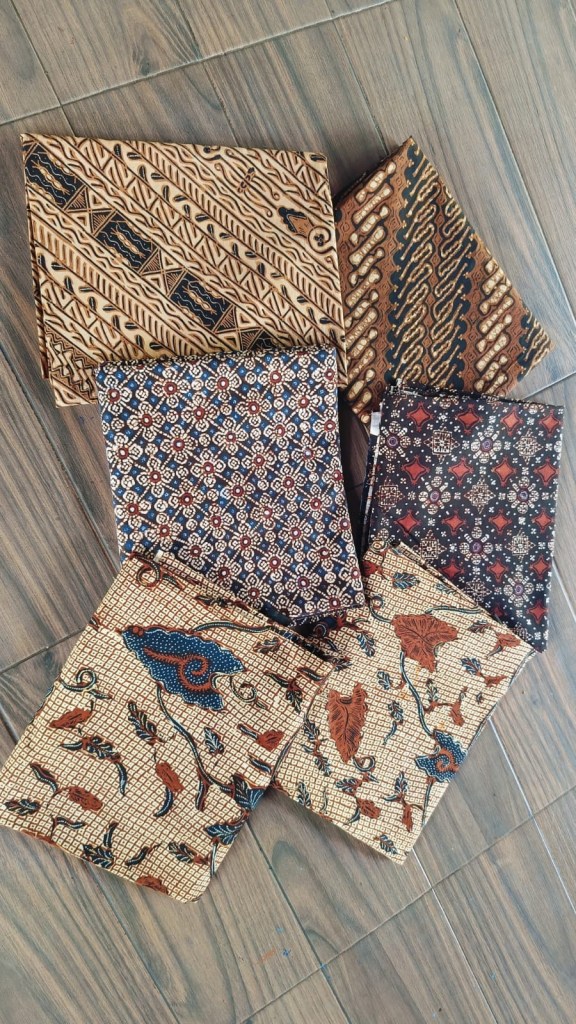
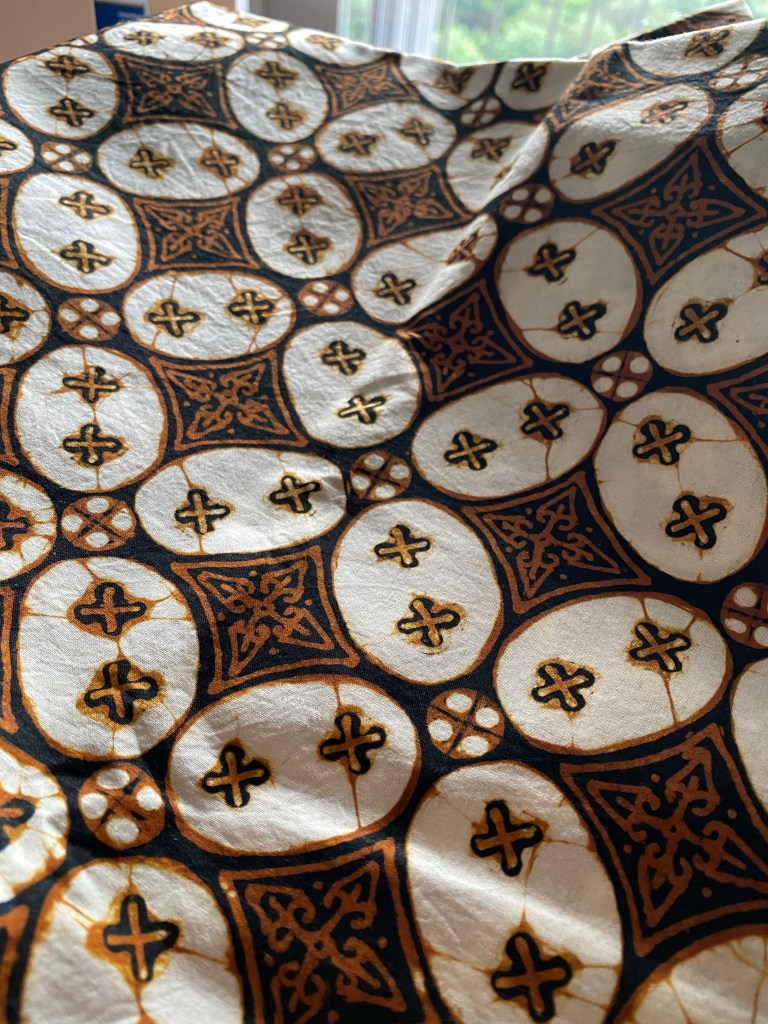
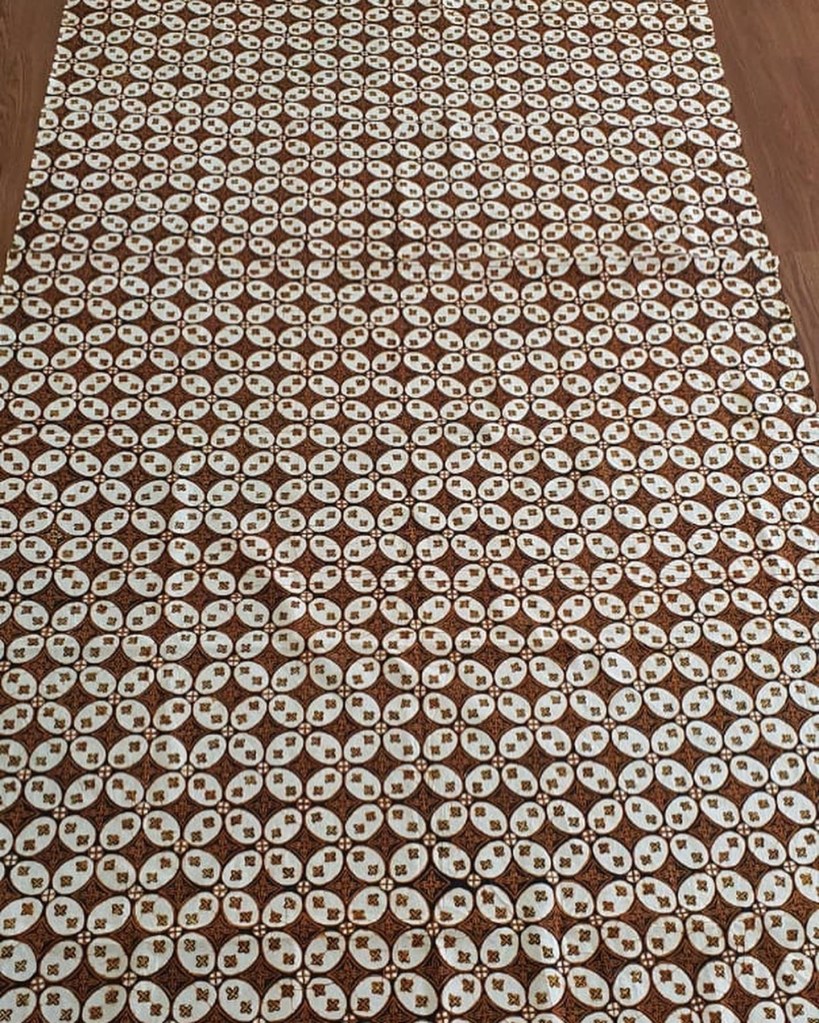
batik Nitik

My mother’s mother was a mother who had to raise 4 children, send them all to schools (school was popular for high class society by then, for a widow like her sending children to schools was uniquely rare), my grandmother didn’t want her children to live poor like her.

My mother loved to tell us how she would go with her mother to the rice field to work in harvest time; and to go to her mother’s niece’s house where she would fetch white sheets of cotton to be made batik when rice field labor was rest before harvest time. Since then batik had been a sweet spot within me to always connect to a grandmother that I never meet. I’ve always felt a calm tone of honor (if not pride) to be the offspring of a tough dignified lady like her. Mother said her mother would make many batik patterns or motifs: kawung, parang, wahyu tumurun, cuwiri, yet mostly truntum. It might be 1st excuse why I fell in love with batik.

2nd excuse? I remember a pretty lady would visit my mother and offer some handmade batik. Her eyes were glowing when explaining the meaning or wisdom of the batik patterns and motifs, moving her fingers on the smooth fabric. I always wanted to be like her.
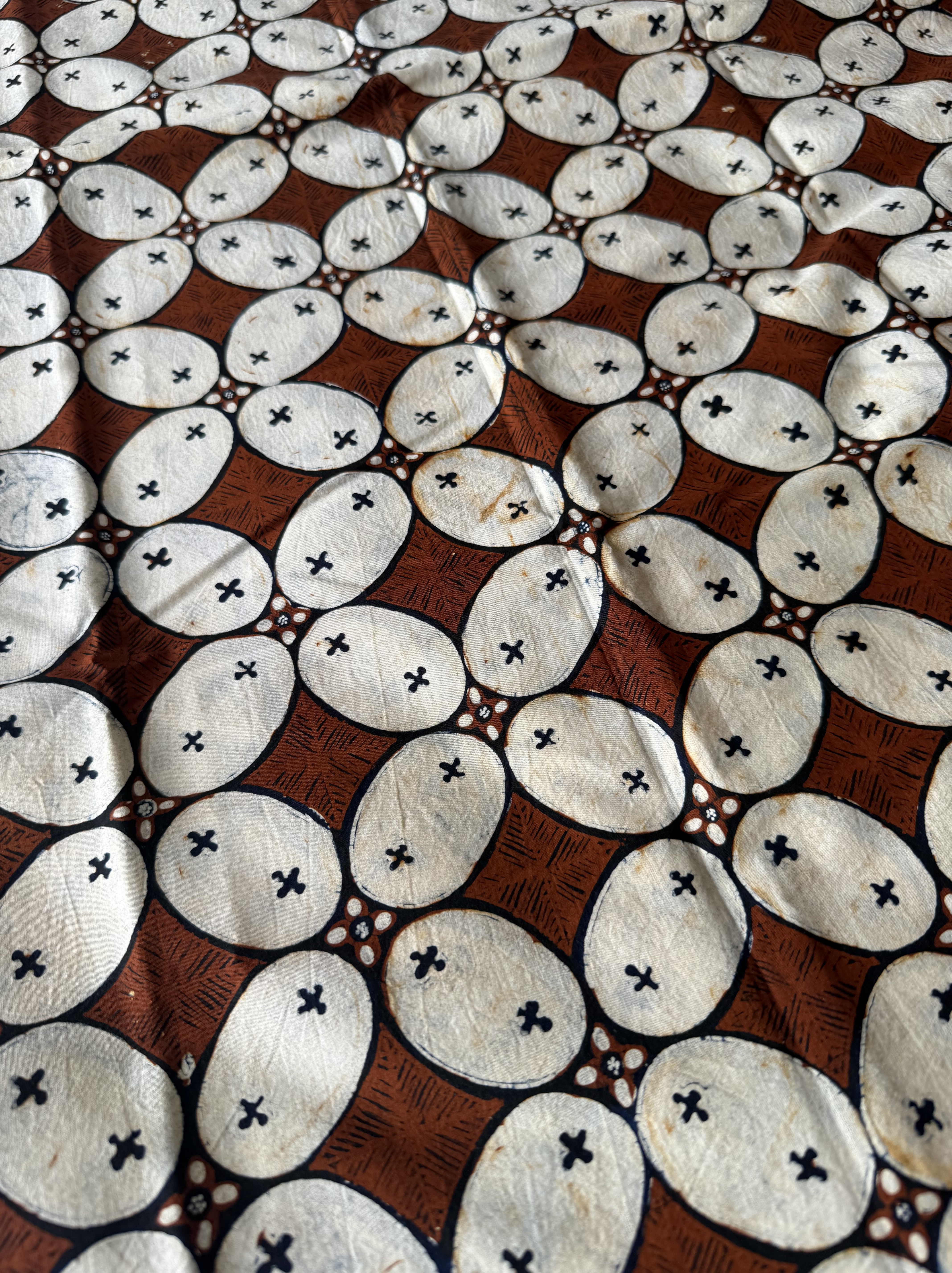
batik Kawung

Next…. 3rd excuse.

I was a student of batik class in Jakarta Textile Museum back then. Our batik teacher was a pretty lady named Mbak Ari. She liked to tease me because I would only make small patches of batik either with flower, bird or my favorite verses from the Quran humbly coloured. Yet I knew she liked me around as I would stay the longest in the museum every weekend while everyone else left; I would only go home when she told me “Closing time….”. Yes, I trained myself to face my patience through full day of batik making at that time.

One fine day Paras magazine came to cover news about batik to the museum, Mbak Ari requested me to be the batik maker model. Tada! My photo was in the magazine. What a shame! Yet I was happy to help. There was only one reason why I was appointed to be “the model”: I was the only one female mature student that day, others were all young learners.

Another day I prepared batik sidomukti on a 2.5-meter primisima cotton, saying to Mbak Ari that I would someday wear the batik I made with my own hand on my wedding day. She said “Too long! You get married even before this poor batik is completed. Go soon!” Funny, I’ve never finished the batik and the drawn white sheet is even no where to find. Making another one?

batik Grompol

4th excuse.

I don’t buy expensive batik. Of all my collection the most expensive is SGD1000 per sheet. And I decided not to buy that level anymore; max I’d take with no bargain is SGD200 per sheet for the price of batik, with additional tip I’ll specifically give to the primary batik makers who have done the primary patterns/motifs or do the most processes (note that one sheet of batik can be finished by a group of batik makers who will draw the patterns, put the wax on primary patterns/motifs, put the wax to form secondary patterns (isen-isen), colour the batik, clean the wax from the fabric to see the final colours– we can only know when we buy from direct source, otherwise, we can’t trace back such information and to me that makes the batik value just a anonymous work of art: beautiful but having no history of itself. (Someday I’d like to blog about “anonymous beauty in Javanese art especially batik).

I promised to myself that buying batik shall be only to the artisans in their places of origin, not to the high-class stores that hang price tags as high as gold can be. I want my collection to source from simbah or budhe or mbak who make batik to keep their kitchen and light on. Thank you, dear batik artisans.

Then what for are all the batik I’ve stacked in the cupboard? There is always discussion about what I’ll be doing with my batik. Selling them? Giving them away? Probably. Yet before it happens, I want to make myself a batik curator. Whoa! Curator?

It’s not the curator in the level of those curating collected items in museums. Being a curator, I’d love to curate the batik in my humble collection by studying whatever dots, lines, curves, nooks and colors then give additional meanings to the ones traditionally existing and culturally standardized. Personal meanings will hopefully glue batik even stronger on to my life. I wish to sit with some friends to spread batik sheets and study the wisdom together.

batik Parang Klithik

Seems like I love batik not really because of its being an element or value of Javanese culture. It is more about how batik personally sits on my soul. Taking culture as the primary aspect might not work to me; I might lose grip when I’m culturally crossed over.

Happy National Batik’s Day! (tomorrow, Oct 2)

Dear fellow Indonesians, let’s wear batik. You don’t have to wear handmade batik (drawn or stamped). You can wear machine stamped or printed ones as long as the batik is made in Indonesia. Please kindly note that we need to work hand in hand in this difficult situation to survive. Buy our neighbors’ products including but not limited to batik. 

Dear those cross cultures, if you read this; please google “batik”, “handmade batik”, “sogan batik”, “Indonesia batik”, “imogiri batik”, etc about batik. Who knows someday life will pull you all and me together in a spot where batik is the center of discussion? Heaven knows.

Note: Simbah: grandmother; Budhe: Aunty; Mbak: Older Sister

batik Gringsing Pisan Bali
Siapa Guru? (in Bahasa Indonesia)

Kata guruku hati harus ringan,
Harus.
Kata guruku langkah harus pasti,
Harus.
Kata guruku badan harus rajin,
Harus.
Kata guruku hidup harus berserah,
Harus.
Susahnya!
Laku kuganti guru.
Ngomongnya begini:
Buat apa jadi manusia kalau tidak punya hati bahagia? Kalau kerjanya bermalas-malas diombang-ambing angan-angan? Kalau kerjanya memaksa semua dengan maunya?

Duh!
Berguru di mana-mana sama!
Aku duduk di depan patung Dorna,
Pendeta legenda,
Sebagai Ekalaya aku berpura-pura.

Bambang Ekalaya (Anggraeni’s husband), most loyal male wayang to his teacher

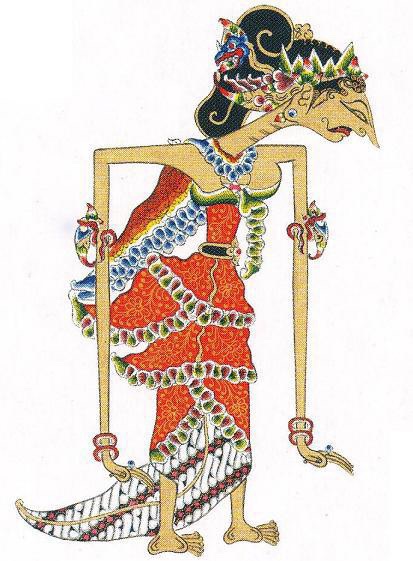
Dewi Anggraeni (Ekalaya’s wife), most loyal female wayang to her husband

Bokor Kencana (batik)

Bokor Kencana is a Javanese phrase formed from the words “bokor” and “kencana”. “Bokor” means jar commonly made from metal. “Kencana” or “kencono” means gold, golden. So, “bokor kencana” is golden jar.

While many associate “bokor” with a jar to contain flowers and water in Javanese ceremonies, it is also mentioned in one of Javanese traditional songs  (Tembang Mocopat) called “Asmarandana” in which “bokor kencana” is used to describe golden jars carried by the deities whose task is to distribute blessings at the  later time of night (midnight to time before dawn).

batik Bokor Kencana from Ibu Tien’s team

To me the “bokor kencana” in Asmarandana song is suitable to describe this Javanese batik pattern.

Javanese people (traditional ones) love to stay awake late at night until early morning because they believe those who give up most of their sleep portion will receive extraordinary blessings especially higher spitituality, wisdom and charisma. Is it true? No one knows if it is truly. A belief is a belief; let the believers prove it. Giving little to no judgement is better.

a full length of Bokor Kencana taken picture by Mbak Izzah

Additionally I read somewhere that this batik pattern is allegedly the one designated to all ranks of Javanese people without exception since its first composition; not only for royal but also for laypeople. Everyone can wear it.

It obviously underlines that this batik pattern is a symbol that everyone can reach higher spiritual/wisdom/charisma level regardless the position in the society as long as they are willing to give up some part of their comfort.

What a relief! At least in this particular area other than time life is fair!

😊

Asmaradhana

Aja turu sore kaki
Ana dewa nglanglang jagad
Nyangking bokor kencanane
Isine dunga tetulak
Sandang kalawan pangan
Yoiku bagianipun
Wong melek, sabar, narima

English translation
Don't sleep early
There are deities wander around the universe
Carrying their golden jars
In which protection prayers are contained,
Also clothing and food *)
Apportioned for
Those awake (sleeping less), patient, acceptant

*) clothing and food is a symbol of basic welfare in Javanese culture. First basic is clothing followed by food then house. Sandang (clothing) comes before food in traditional Javanese culture as sandang means dignity and self esteem. Traditional Javanese prefer suffering from hunger to suffering from shame. Traditional Javanese will not eat your free food if you give the food by showing arrogance or superiority, not because they want to be more than you, they just want basic respect as fellow human beings. This value has shifted in modern era where dignity is defined differently– people prefer eating for free although they have to give up their self esteem. This applies not only to real food but also to modern consummerism

Batik Ceplok Godheg

Happy National Batik Day, dear Indonesia.

Godheg means sideburns in Javanese. Why is this batik named godheg, we can just assume that this is meant to highlight the value of sideburns when this batik pattern was composed.

Mbak Izzah could not give me exact answer when I asked her the meaning behind this batik. So like usual my wild creativity run to every nook and cranny of my imagination.

I remember my father liked to have nicely trimmed but rather thick sideburns. He said a man with sideburns looked handsome and masculine. He then said “Ini Bapak ganteng ya, Rike.” (Your father is handsome, Rike). I was mute not agreeing or disagreeing with his statement — admittedly my understanding about sexuality grew a bit later compared to my cheerful peer. Our mother always laughed teasingly when he gave himself compliments. We children just laughed as solidarity to those adult in love. 🤪

So honestly taking my father’s words (before further research) I claimed that batik Godheg was brought into existence by heaven knows which bloody Javanese man to celebrate the masculinity of the man wearing it.

By then Javanese men of high social and/or economic ranks who were definitely able to afford this batik would wear this pattern (Godheg) to attend functions or parties where they could show personification of masculinity in his class.

a pair of batik Godheg from Ibu Tien

matur nuwun, Ibu Tien — see you on either Oct 25 or 26, 2024 insya Allah

Browsing, I found one interesting article about sideburns in Javanese culture. It says that sideburns symbolise masculinity in traditional Javanese. Please allow me to include some excerpt below.


Jambang: Simbol Maskulinitas dalam Budaya Jawa

by: Lagan

Jambang, a traditional Javanese facial hair style, has long been a symbol of masculinity in Javanese culture. This unique style, which involves growing a mustache and beard, is not merely a fashion statement but a reflection of the wearer's character, social status, and spiritual beliefs. This article will delve into the significance of Jambang as a symbol of masculinity in Javanese culture.

The Historical Significance of Jambang

Jambang has a rich history in Javanese culture. It is believed to have originated from the ancient Javanese kingdoms, where it was worn by kings, nobles, and warriors as a symbol of power and authority. The style was also associated with wisdom and maturity, as it was typically worn by older men who had achieved a certain level of social status. The presence of Jambang was considered a sign of a man's ability to lead and protect his family and community.

Jambang and Javanese Masculinity

In Javanese culture, masculinity is not solely defined by physical strength or aggression. Instead, it encompasses a range of qualities such as wisdom, patience, self-control, and spiritual strength. Jambang, with its association with maturity and wisdom, perfectly embodies this nuanced understanding of masculinity. Men who wear Jambang are seen as embodying the ideal Javanese man, who is not only physically strong but also emotionally and spiritually mature.
The Spiritual Significance of Jambang

Beyond its social and cultural implications, Jambang also holds spiritual significance in Javanese culture. It is believed that the facial hair serves as a medium for spiritual energy, connecting the wearer to the divine. Some Javanese men even believe that growing a Jambang can enhance their spiritual practices, helping them to achieve a deeper level of meditation and connection with the divine.
Jambang in Modern Javanese Culture

Despite the influence of Western culture and modern fashion trends, Jambang continues to hold a special place in Javanese culture. Many Javanese men still choose to grow a Jambang as a way of connecting with their cultural heritage and expressing their masculinity. The style has also gained popularity among younger generations, who see it as a unique and stylish way to express their individuality and cultural identity.
In conclusion, Jambang is more than just a facial hair style in Javanese culture. It is a powerful symbol of masculinity, embodying the qualities of wisdom, maturity, and spiritual strength that are highly valued in Javanese men. Despite the changes in fashion and cultural trends, the significance of Jambang remains deeply rooted in Javanese culture, continuing to shape the way masculinity is understood and expressed.

Usedul link: https://www.questionai.id/amp/essays-e7pHAwYIR69/jambang-simbol-maskulinitas-dalam-budaya-jawa

I can't deny my instinct SOMETIMES can catch something on point. Please excuse my frankness; simply fulfilling a need to self appreciation. 😎

Back to batik Godheg….

It is a ceplok (cluster) batik in which the same pattern is repeated to form clusters that fill the whole sheet.

handsome batik indeed!

There are 4 pairs or godheg (sideburns) in each cluster and another inner and the center with also 4 parts as the elements.

Why 4?

4 is papat or sekawan or catur in Javanese, which symbolises creativity, intelligence, victory or even gold.

What’s more luxurious for Javanese men who traditionally artistic, cultural, silently dominant and (who is not) proud to be rich who can take care of the family decently. No wonder this batik use a lot of number 4 as its detail.

Do the numbers of dots in the isen (additional ornaments to fill in the blank spots among primary pattern on the sheet) also bear meaning?

Ahem! This is where imagination should be let be free.

Number 1 or siji, sawiji, esa, eka, ika, atunggal, tunggal, setunggal, symbolises unity, priority, the start, the world, the sun, the moon, country or kingdom, the king (leader), etc connotatively related to one existing. If ancient Javanese learn that there are two moons for certain period of time, they might omit the moon from the list.

Number 6 is nem, enem, enem, sad that symbolises emphaty and sympathy, humbleness, wise and wisdom, highly educated or scholar, etc.

Number 8 is wolu, asta, manggala that symbolises benevolence, honored, high rank, etc. Dragon in Javanese culture is also connoted to number 8 – why? Heaven knows!

If I may challenge all Javanese men who still consider themselves handsome Javanese, please kindly refer to these numbers to project their perfection and to evaluate their existence. 🤩

Do I truly mean with all my description of number of dots in the batik? Don’t quote me, I am speculating about most of what I say about the meaning behind batik patterns. All those symbols are taken from responsible sources of Javanese tradition though; so the number symbols are legit.

Or probably to quote Mbak Izzah’s random words when she thinks my questions are too intimidating: “Maybe the batik maker wanted to put 5 dots and no other intention, Mbak Rike.”

🤪

Once again….

Happy National Batik, Indonesia❣️

Time for me to take a rest…. I will rise earlier to go across the strait to Johor at 5am tomorrow.

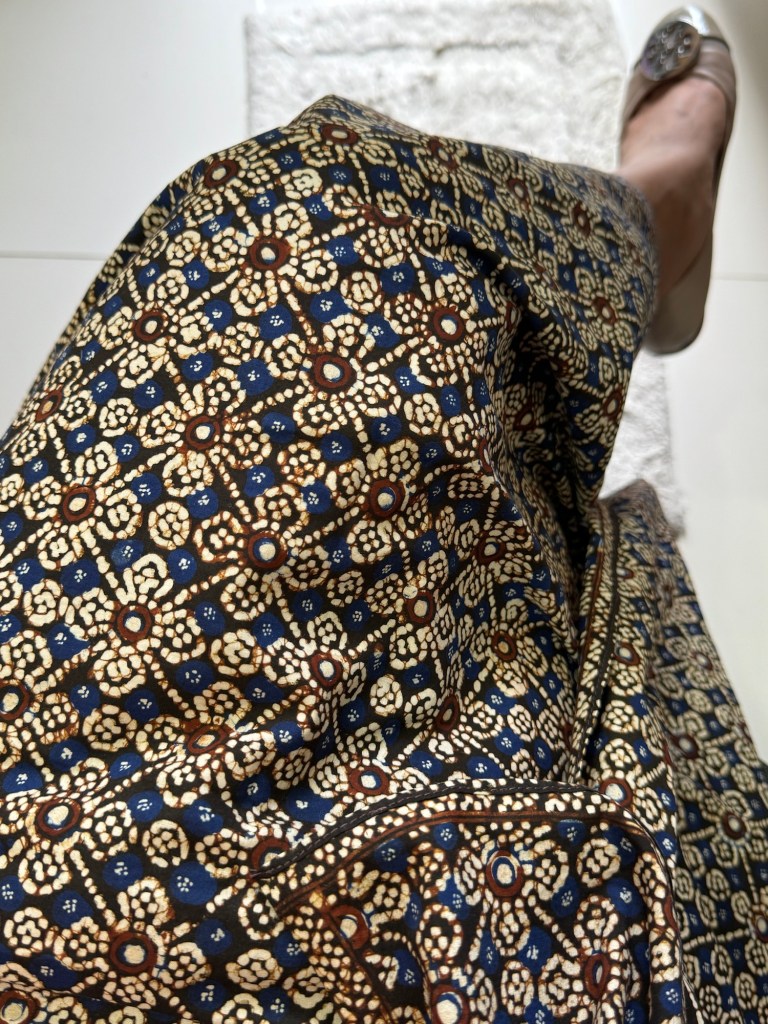
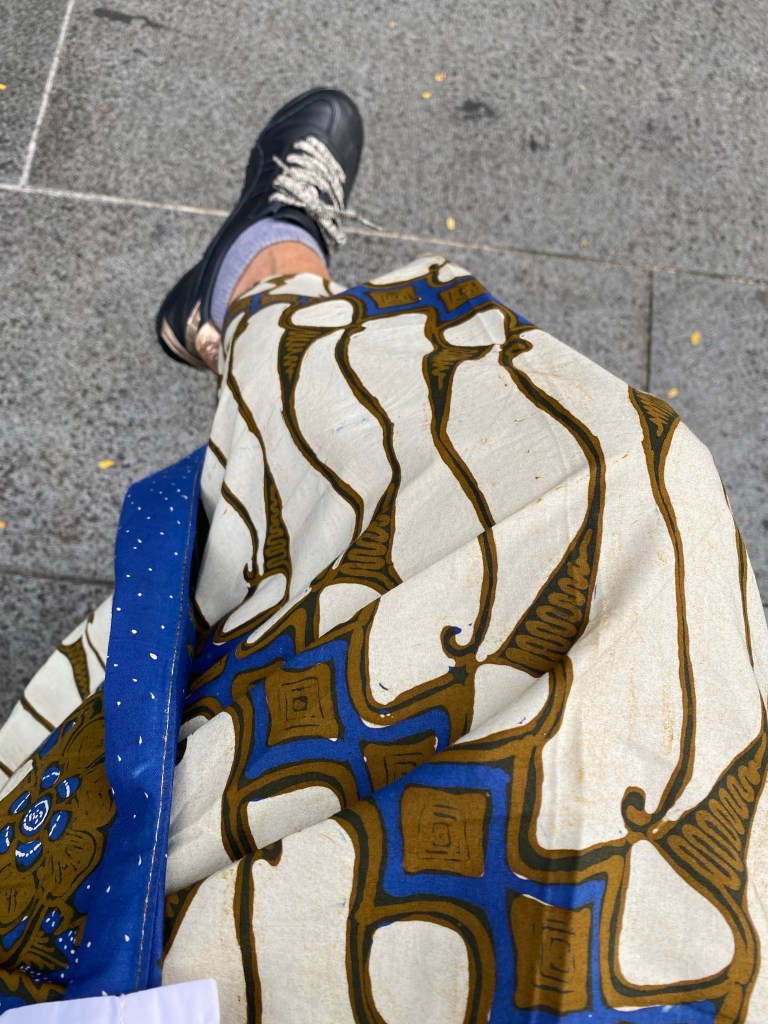
today’s apparel was batik skirt (from manually folded batik sheet) with red top to celebrate Indonesia’s National Batik Day

it is Batik “Nitik Sekar Kentang Bribilan Sogan Kerok”

💕

Semar Mbangun Kayangan (Ki Dalang Seno Nugroho)

tonight’s audio while drawing

Semar has fascinated me with his high wisdom and hilarious family, the Ponokawan — in the show Dalang Seno performed the lakon (story) fascinatingly

Dalang Seno was our friend Agnes’ late husband, now their son is becoming a young puppeteer who has shown talent and perseverence to dedicate himself to Javanese wayang as his father did

God bless this family

Gringsing Bharatayudha (batik)

This battle's, dear heart
Will win you with condition:
You have the courage.

Whatsapp gave me a surprise that my batik Gringsing Bharatayudha is ready to ship; by plan it should be by November this year.

This time I don’t want it to be shipped, I’d like to collect it by myself so I can say thank you directly to the makers.

Gringsing is my favourite aside from batik nitik, kawung and parang. Gringsing reminds me how I was taken care of when I was a girl and sick — my mother would wrap me in a sheet of batik gringsing, my father would chant his mantra (I can remember what it was and will disclose it at the right time some day.) and my siblings would sleep with me in my bedroom until I was recuperated. Gringsing bears a sweet memory about my family in early period.

Bharatayudha is something familiar in our family. Our parents wanted us to be “true Javanese” who knew “the root” as a middle way because our parents held different religions; so Javanese tradition would not make them play tug of war of who would follow whom and it would not harm any of us to learn local wisdom. They bought R. A. Kosasih’s wayang comic books and other funny wayang stories of Punakawan (please allow me talk about it later). Another series that also built some of us was series of S. H. Mintarja’s “Api Di Bukit Menoreh”. We enjoyed it and shared it to other friends — we lost some books as some friends did not responsibly return the books after reading.

Long story short I grew up with Javanese and wayang wisdom before finally I decided to hold one religion as a legal requirement in our country — Indonesian must display their religion in the ID card. 🙃 I am thankful to be raised by parents of different faiths — they have taught us to respect others regardless….

Last year Ibu Tien showed me a white sheet with Gringsing Bharatayudha pattern then several months later the half done. I could not resist its charm.

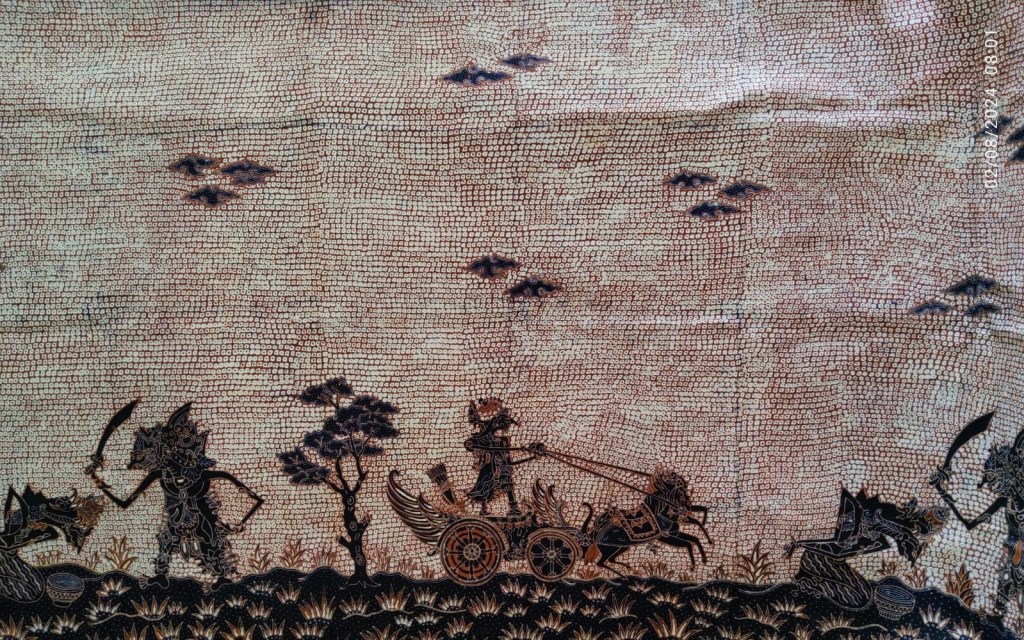
There are two scenes in the batik Gringsing Bharatayudha:

1. Bhatara Kresna the King of Dwaraka on the chariot: He is the coachman of Arjuna who is fighting against Adhipati Karna whose coachman is Prabu Salya the King of Madra. Arjuna and Karna are actually brothers from one mother (Dewi Kunthi) of different fathers whose each upbringing has brought them to different partiality. Arjuna for sure is in the side of Pandhawa, Karna decides to side with Kurawa who has provided life care and social status.

Bhatara Kresna, the King of Dwaraka (the most intelligent character in wayang, the master mind of all wars in his time) used to be my idol when I was a kid before I changed my mind to idolize Semar Badranaya (one humble deity who is assigned to accompany and guide Pandhawa)

2. Bima and Dursasana: Bima is the 2nd of 5 knights of Pandhawa the antagonist of wayang world; Dursasana is the 2nd of 100 Kurawa children the protagonist. In this scene Bima is executing Dursasana to death. This symbolises ending a preserved anger through revenge. Years back Bima swears to kill Dursasana and lets his sister in law Drupadi wash her hair using Dursasana blood — by then Dursasana sexually harasses Drupadi in public when Drupadi’s husband (Yudhistira) loses on a gamble table.

Not a few consider that the Bharatayudha (the civil war between Pandhawa and Kurawa) is not really a politically-triggered war; it is allegedly the result of the wounded pride of Pandhawa and the allies after Kurawa (Dursasana as the main perpetrator under the instruction of Duryudana the King and other Kurawa brothers’ cheering support) harasses Drupadi in the gamble court.

See. Woman can be the cause of war if not treated well— treated well can mean educated well, respected, nurtured, protected, etc. Drupadi is so broken hearted due to the fact that the Pandhawa knights donot do anything to stop the shameful act of harassment and she shouts pledging to wash her hair with Dursasana’s blood — that is when Pandhawa knights get so embarassed and promises to make Kurawa pays some day.

How could a group of knights be so retardedly ignorant? From one side it is integrity, following what’s agreed (the agreement is if Yudhistira loses in the last round of gamble, he has to give up Drupadi), in the other it is cowardice.

Sometimes being good is not an option when there is underpriviledge being abused or harassed. But it is predestined: there shall be evil to bring out good and good to bring out evil — cycle of life.

Fun fact about Bharatayudha: many don’t know that after death Pandhawa representing good side are still sent to hell for punishment, Kurawa considered representing evil are given chance to stay in heaven for some time. Indeed it is not our chosen side that brings us to heaven; it is our good deed does.

What a wisdom on one sheet of batik!

looks like a violence yet it is simply a depiction of a scene in Bharatayudha so please excuse the “looking like” violence

By the way honestly I prefer circle gringsing than square ones. Yet I know Ibu Tien’s team consists of those simbah-simbah and budhe-budhe (senior citizens) whose physical strength is not anymore at prime time so making square gringsing is easier than circle one. I will usually lend them my generous excuse: some of my batik sheets are not evenly dipped and even some are not fully drawn yet I still paid them full price. However, on some batik patterns like kawung and parang I will not let Mbak Izzah miss her grip in managing the work.

Weekend cannot be sweeter with this surprise.

I miss Jogja…. 💕

Delima (batik)

Fruit of heaven, love
No effort to pick-- It hangs
To reach you so low.

Another batik waiting in the pipeline to be disclosed is Batik Delima or Batik Delimo. I chose it because of the colour– white is always giving soothing effect to my ageing eyes.

Delima aka delimo means pomegranate in Bahasa Indonesia, Bahasa Melayu and Javanese.

When Ibu Tien and Mbak Izzah mentioned its name (Batik Delimo), my curiosity rose as Batik Delima that I knew didn’t look like that. The delimo I knew was a “sido” cluster (ceplok) batik with delima in the center of the cluster. But they insisted that this was known as Batik Delima in Jogja.

No argument with the batik makers please, Rike.

The next was a clarification of meaning which is always the interesting part. Mbak Izzah said “I give you what I know, you improve what I know based on your repertoire of meaning. As you wish.”

To me although that statement was uttered in a very soft speech, it was a blow on my face. Jogjakartan speak their truth through subtly cynical style. They will not tell you are wrong but they will tell that “you have your way which is not mine”. Almost like Japanese– Bloody hell! I’d better prepare as my retirement plan belongs to that city. ☺️

Mbak Izzah said Batik Delimo aka Delimo is about fertility.

I read some articles about pomegranate in different places and culture but I won’t include it here to avoid complication.

Pomegranate is used in one of Javanese traditional function named “tingkeban” which is a ceremony held on the 7th month of pregnancy when the fetus is considered mature enough to be called a human being. Pomegranate is one of the ingredients needed to make “rujak tingkeban” which consist of 7 kinds of fruit. Yes, Javanese is obsessed with number 7 (seven, pitu in Javanese, the short version of pitulungan that means help).

Pomegranate is added as a message that the fetus will grow strong until it is ready to be a newly born.

Those 7 kinds of fruit shall represent all taste of food: salty, sweet, sour, hot. These are to symbolise that the baby has started learning about the taste of life before her/his delivery to the world.

It is said that if the rujak tastes good, the baby will be a girl; if it tastes “not that good”, the baby will be a boy. Interesting fun (not verifiable) fact. Do I believe it? No, I believe in ultrasonography from the obgyn. 😁 I love though believing that this tradition is loaded with conprehensive stories of what happen around human being’s life. Fabulous!

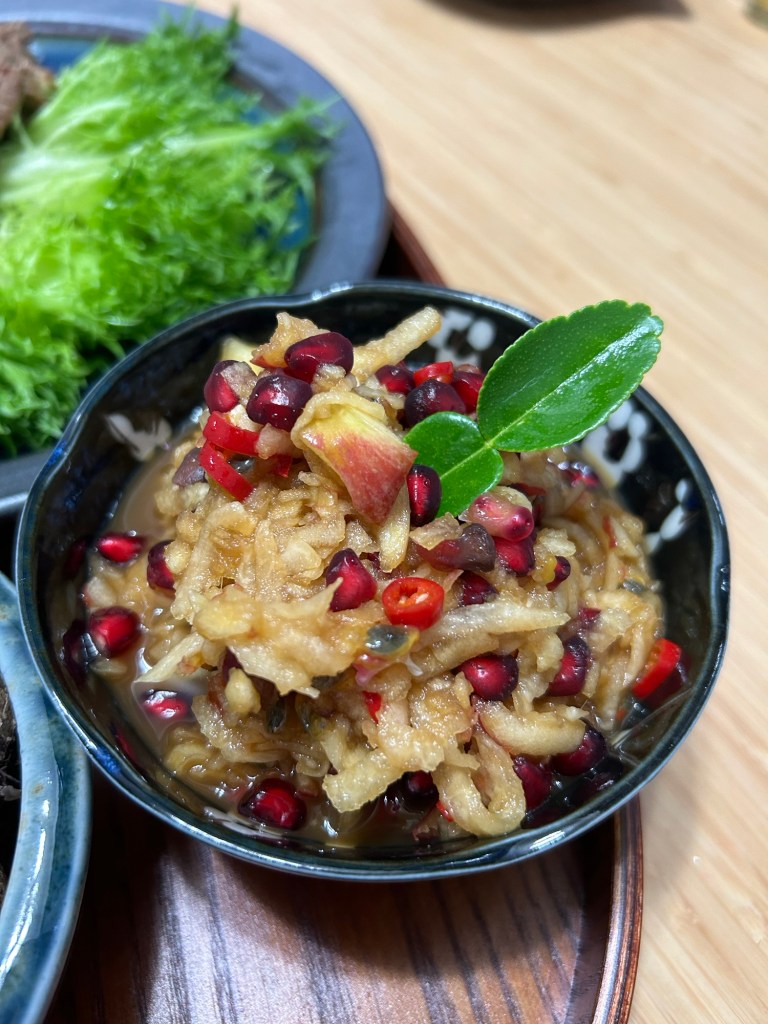
it is very refreshing, i make this rujak every now and then — one big bowl for one week

Back to Batik Delimo….

There are three elements in this batik that deserve attention: the pomegranate, the pomegranate flowers and the birds (pigeons).

The pomegranate is about fertility itself.

The pomegranate flower is about potential of fertilify that are surrounding the fruit as if waiting to continue the cycle.

Birds (pigeons) is those dwellers of pomegranate tree. They are the ones guarding the fertility.

Does it make sense? I will ask Mbak Izzah when I meet her in Jogja. I know she will just smile sweetly, saying nothing. 😂

This time I don’t include number in my intrepretating the batik as I am afraid Mbak Izzah will condemn me too creative. 😁

I know though someone intreprets delima from its linguistic aspect. Delima is transcribed as DALIMA. Dal is the 8th Arabic script (د). Lima is 5 in Javanese and Bahasa Indonesia. 5 “د” (five dals) is connected to a suurah in the Quran that has 5 “د” in its composition which is Al-Ikhlash.

Suurah Al-Ikhlash is about singularity in which human being is surenderring to the single authority in life.

So if people are interested to connect this batik to suurah Al-Ikhlash, it is possible. Yet, the story will not be about the 7th month celebration of a fetus. It might be about a fetus that is ready to worship the One.

😁

I prefer Batik Delima is about fertility. More simple, more straightforward–

Thank you, Mbak Izzah! 💕

Batik Delimo aka Delima

pomegranate fruit, symbol of fertility

flowers of pomegranate, symbol of potential of fertility

pigeons of love, symbol of protectors of fertility

a pair of batik delima from Ibu Tien and her group – matur sembah nuwun, Ibu Tien, Simbah-Simbah and Budhe-Budhe

batik sogan never fails me, even its fragrance is a stress reliever to me

Ciptoning (batik)

A hermit walks in
To a cave in a market.
His night's never dark,
Day's never noisy. He's still
When he moves or talks. Centered--

Today is about another batik prepared by Mbak Izzah for shipment from Jogjakarta to Singapore.

Batik Ciptoning

Ciptoning is a Javanese word composed of two: cipta or cipto and ning.

Cipta or cipto means thought, imagination, creativity.

Also….

It means to create or to manifest.

And….

The ning, ening, bening, wening means clear as of water, clear as of mind, quiet, serene.

So ciptoning can mean clarify the thought and imagination or creativity….

Or creating or manifesting in serenity or in clear mind or in quiet mind.

This batik pattern consists of ceplok (clusters) of geometry patterns formed by series of parang, wayang, gurdha (garuda) or wings pattern, bird and some isen-isen (repeated small dots or checks or lines to fill the space among all primary and secondary patterns).

I did talk about parang, gurdha and isen-isen in previous postings. Hope they still can be looked up, or else they should be googled. 😉

There are two wayang characters in the centers of the ceplok who are Begawan Abiyasa and Arjuna; one is the spiritual teacher, the other is the pupil. This is the scene when Begawan Abiyasa teaches Arjuna on how to complete a retreat. Once Begawan Abiyasa completes his task, he disappears and Arjuna has to start everything by himself. Yes, teacher will vanish when student is ready to jump alone — not needed anymore.

What does Begawan Abiyasa teach Arjuna to do?

A common retreat in Javanese tradition is a semedi or samadhi. The samadhi is usually conducted in a quiet, serene place and it is done by calming the mind, composing the body posture and focusing on nothing but the purpose of the retreat– can be anything including something, everything even nothing. That is what Begawan Abiyasa teaches him to do.

In wayang world a special retreat like this is normally done before a knight goes to a battle against raksasa or gandharwa that are representing evil energy of the world. Arjuna as a famous knight of his ability to survive a long retreat, his nature of complete human quality (including but not limited to naughtiness and ambition) and his high skills of warship; is assigned to spend from time to time for a retreat more often than his siblings; while Begawan Abiyasa is a maestro of spirituality in wayang world and so is trusted to guide a knight to face his impurity.

When doing a retreat, Arjuna uses a different name as he doesn’t want people to know that a royal family member is among the commoners doing a retreat. And that doing a retreat is a secret activity, he doesn’t want to be disturbed by commoners who want to take selfie with him. 😃

He is named Begawan Ciptoning.

Begawan can mean some: hermit, escatic, retreatant, recluse, solitaire, anchoret. In some way it can also mean maestro.

Ciptoning is to describe what Arjuna is doing during that period of hermitage. He is composing himself physically and mentally in serenity in order to achieve purity in his thought, imagination and creativity. He contemplates in silence among the crowd within himself, fighting against all distractions to survive the retreat and to finally get a clarity on how to manifest the everything or something or nothing that becomes his purpose of retreat.

Begawan Ciptoning will only end the retreat when The Undescribable blesses him with what is needed to go back to the “real world”, “to fight against the evil energy”.

When he is done with the retreat the begawan turns its meaning and value from hermit into maestro!

😳

Long story short please, Rike!

Batik Ciptoning is a special batik for those respected spiritually in Javanese early tradition. It was worn by those achieving certain levels of hermitage or having the quality of a spiritual maestro and so can provide guidance to others “lost” in the “search of meaning of life”. Those people shall go through repeated cycles like what Begawan Ciptoning has gone through with the guidance of Begawan Abiyasa.

It is now though worn by anyone who loves the pattern or one who prays that s/he is able to reach an enlightment in her/his own journey of life.

Gosh! My writing is broken pieces. Many to write but my thumbs need a retreat….

💕

my pieces of batik Ciptoning ready for delivery ♥️

A Knight Who Shoots

Who's a knight who shoots?
Archer who knows the bull's eye
And bow and arrow--

Satria manah (satrio manah) is a Javanese phrase formed by two words:

1. Satria or satrio that means a knight,

2. Manah that is derived from the word panah (archery in Javanese). Panah (Noun) is changed to manah (Verb)

As name of batik pattern should be incorporated with wisdom, the interpretation can be built with some exaggeration or maybe slightly drammatical structure. And so, satria manah is not simply a knight who shoots anything but it is intrepreted as a knight who shoots accurately at the heart of a lady.

Life of a wise can be as light as shooting a heart; yet as hard as shooting at the right spot so that it won’t hurt the heart; it even will make the lady fall in love harder with the knight.

Is that even possible?

I don’t know. Not a knight, am not a wise knight. A lady, am the lady whose heart should be shot by a wise knight. 😁

Another fun fact this batik is usually worn by the groom-to-be’s parents when they are officially proposing the bride-to-be in front of her family. The groom-to-be may also wear this batik when he is with his parents during the marriage proposal. Unofficially? the man can propose the woman personally before introducing to each other’s family.

What batik should be worn by the bride-to-be in the marriage proposal? It is batik semen rante. What is that? I will talk about it next year when the semen rante is ready to ship to me by Mbak Izzah. ☺️

This batik has given me a light heart and a good laugh after a long day.

Have a good weekend!

the batik that is ready for delivery

close up of batik Satria Manah

Chair

Some people choose flowers,
Some ice cream,
Some either as the chair is the glazed pleasure,
Not what's before.

there is a chair behind flowers, there is a chair behind ice cream — which chair do you want to sit on?

In Javanese culture chair symbolizes status, authority, power.

The chair can also be compared with someone who gives one’s lap for sitting that symbolizes comfort, indulgence.

Seems like those two are different but both can give the same quality of life either positively or negatively.

When someone gives you comfort as if you are everything, yes you might be everything but that person at the same time is controling your status, your authority, control your power — making you a puppet graciously. Graciously at least, you said.

There is a Javanese adage “wong yen wis dipangku mesthi mati” that can mean “put someone on your lap and s/he will die”.

Pangku or pangkon is one device in Javanese script to “close”, to “kill” a “root consonant” at the end of a word. When an alphabet is followed by a pangkon device, it will turn to a closed consonant, a “dead” end.

pangkon: the Javanese alphabet that provides lap to a root consonant and closes or kills it 😍

e.g.: how “harusa”, “makana”, “minuma”, “bapaka”, “rudala” and “kusuta” are turned to “harus”, “makan”, “minum”, “bapak”, “rudal” and “kusut” by a indulging pangkon

Congratulations. You’ve got a chair. You’ve sat on a comfortable lap. You are the master of a universe. Yet remember, the chair can topple down, the lap is just a part of an individual who has mind– the master mind that governs you. You lose without truthfully winning. 💕

I see just a chair. With flowers. Or with ice cream. Or with both. Or without any. Both sweet through different senses, enticing for comfort. For just a glance. For just a sniff. For just a lick. For just a second. And then blended with a familiar taste name “just now”, a dead end before now.

A chair is a past tense adorned by a hope.

Dear, Life. Thanks much for the endless love. I need no chair except the mountain under the white cloud. I need no lap but breathing this fresh air. And how much ever I want someone or something, I will never take them from their chairs or their laps. Let them be empowered or expelled there — it is their best place. Be peaceful❣️

Let me be with those sitting on no chair but the lap of a naked soul. ❣️

Thank you, dear mother tongue. Even your Phonetics and Phonology bear insight and wisdom.

Thank you, my twisted-cum-twisting mind.

Traded Wisdom

You sell some wisdom
That unwraps with mere breathing
Dimensions and faith.

6 sheets of handmade batik are currently flying to my home; they are wisdom scribed on white cotton by some humble Javanese women who are willingly dedicating life as tradition protectors

matur nuwun 💕

Full

How full are you, Love?
Leave a space where air can move
And water can flow.

It is Ramadhan 1, I started my 30-day fasting.

Fasting is not a new or foreign to my family. My parents consider it a sacred practice in their life. My oldest sister does fast every two days. Intermitten fasting is never a new thing for us. We are Javanese, we fast both as a spiritual sanctuary and mental exercise.

When we talk about fasting in Javanese tradition, it is not always like the Islamic fasting (not eating, not drinking, not smoking, not having sex on the daylight). Fasting or pasa or poso in Javanese is managing what is in and out through all doors of senses in our body. It can be simply by choosing what to eat, when to eat, how to eat.

In old days Javanese did many different types of fasting and so they name those types of fasting differently.

Mutih (derived from the word putih or white in Javanese) is when they only eat rice and drink water. They won’t be consuming anything with tastes: sweet, salty, sour, bitter, gurih, etc.

Ngidang (derived from the word kidang or deer in Javanese) is when they only consume leafy vegetables and water, and no other things.

Ngrowot (derived from the word krowot that means “no rice” in Javanese) in when they will not consume rice and any product of any kind of rice).

Etc….

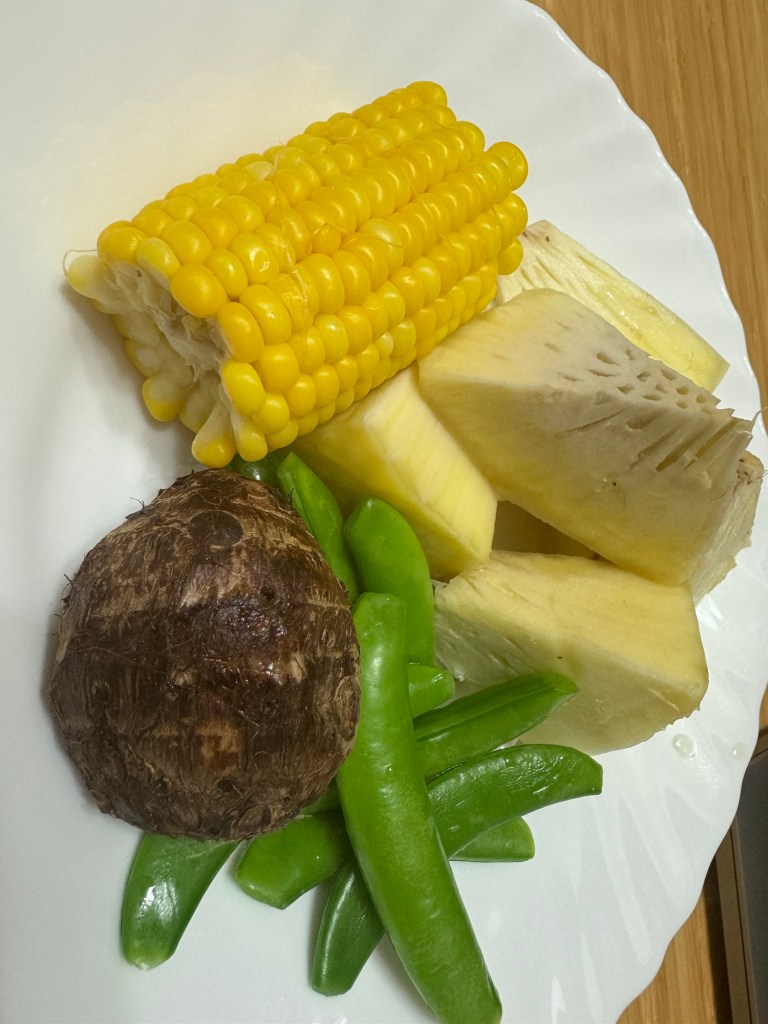
For this Ramadhan I decided to do ngrowot. It means I will not consume any rice and any product of rice crom dawn to dusk, from day 1 until end of Ramadhan. I want to know how good I am pushing myself through “hunger”.

Bismillah!

Yes, I can.

💕

my first day of “Ramadhan Ngrowot” breakfast

😁

Breathing

Living is breathing.
A quest of in and out air
To define meaning

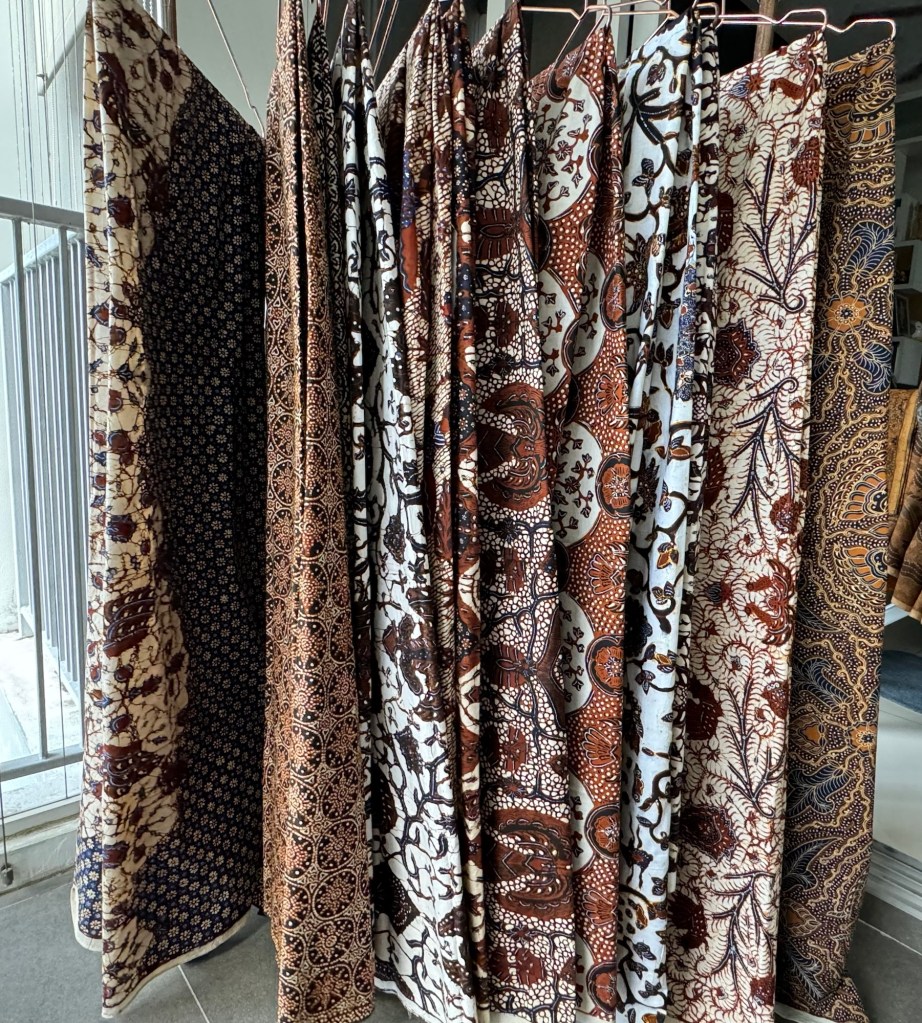
breathing day for some of my beautiful batik, the Javanese exhibition of wisdom

One of treatments to handmade batik is letting them breath or in Javanese language we call it “angin-angin” that is literally “wind-wind” — hanging batik clothes in fresh air, not directly under the sun to let them be in contact with air to decrease the humidity.

Enjoy your breathing.

❣️

Balanced Kites

I am soaring
Like a kite
Finding its balance
Through moving air.
This kite is a rhombus
Proven mathematically,
Tested naturally,
Crafted beautifully.

You are flying
Like a kite
Decorating the sky
With rich hues.
That kite is a bird
Coloured green and white,
Singing sweet and mild,
Shining keen and bright.

batik sido luhur, pethak

Sido Luhur is one of classic series of “batik sido” i.e.: Sido Luhur, Sido Asih, Sido Mukti, Sido Mulyo and Sido Drajat.

Batik Sido Luhur pattern is the closest to the Sido Mukti one.

This pattern was composed by Ki Ageng Henis, the grandfather of Mataram Kingdom founder, Panembahan Senopati.

Batik Sido Luhur is composed of adjacent rhombus with various ornaments in each of the rhombus such as building, temple, butterfly, bird, lar gurdho (one wing of Javanese eagle), flowers and shells.

Batik Sido Luhur can be dyed with white (pethak) black (cemeng) or orangy brown (sogan) as background.

Sido Luhur is literally comprising 2 Javanese words: the word sido that means to be or to become, and luhur that means noble, honor and dignity.

As a norm in Javanese tradition: what you wear (especially in important occasion or function) is an exhibition of wish and pray. Batik Sido Luhur is meant as a wish and pray for those wearing it to be granted honourable heart and good role model for others around.

Batik Sido Luhur batik is often put on the bride in the night of midodareni (one night before wedding ceremony) also as a form of prayer and a hope that she be healthy and become a wife of honor and dignity.

Batik Sido Luhur is also put on the mother-to-be during tingkeban or mitoni ceremony (traditional ceremony when a mother-to-be enters the 7th month of pregnancy).

I just got a pair of Sido Luhur in white and am willing to own one pair in black and one pair in sogan.

I just got a thought of seriously becoming a batik curator. What a sweet dream!

💕

Diagonally

Many shorter distances
To reach a destination,
Diagonally.
Yet I take one of further ways
And so I see
That the longest journey
Is adorned with
The rich jungles,
The clean lakes,
The wide deserts,
The deep seas
Under windy light rain
To reach home
Whose door looking out
To a beautiful scenery.

batik sogan udan liris kupu by Ibu Tien Wartinah

Udan Liris (udan = rain, liris = light; udan liris = light rain or drizzle; Javanese) is a diagonal pattern of traditional Javanese batik. It resembles the light rain that comes down diagonally by the wind.

Kupu is butterfly in Javanese. It symbolises transformation– potential to realization.

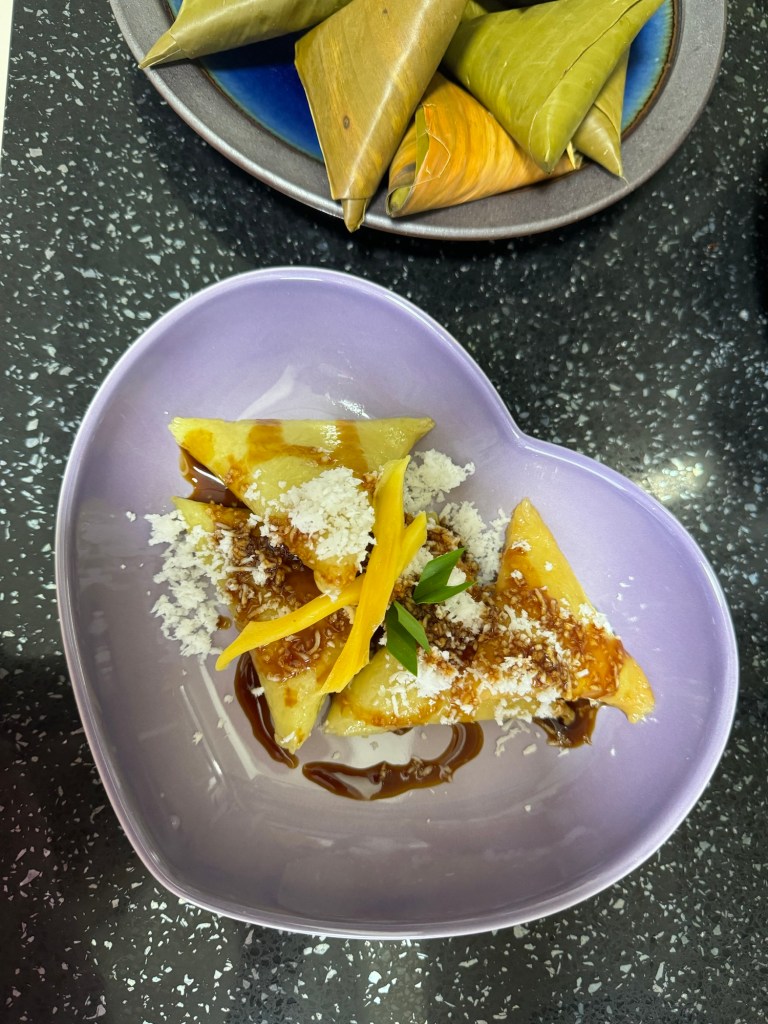
Lupis (Javanese Glutinous Rice Cake)

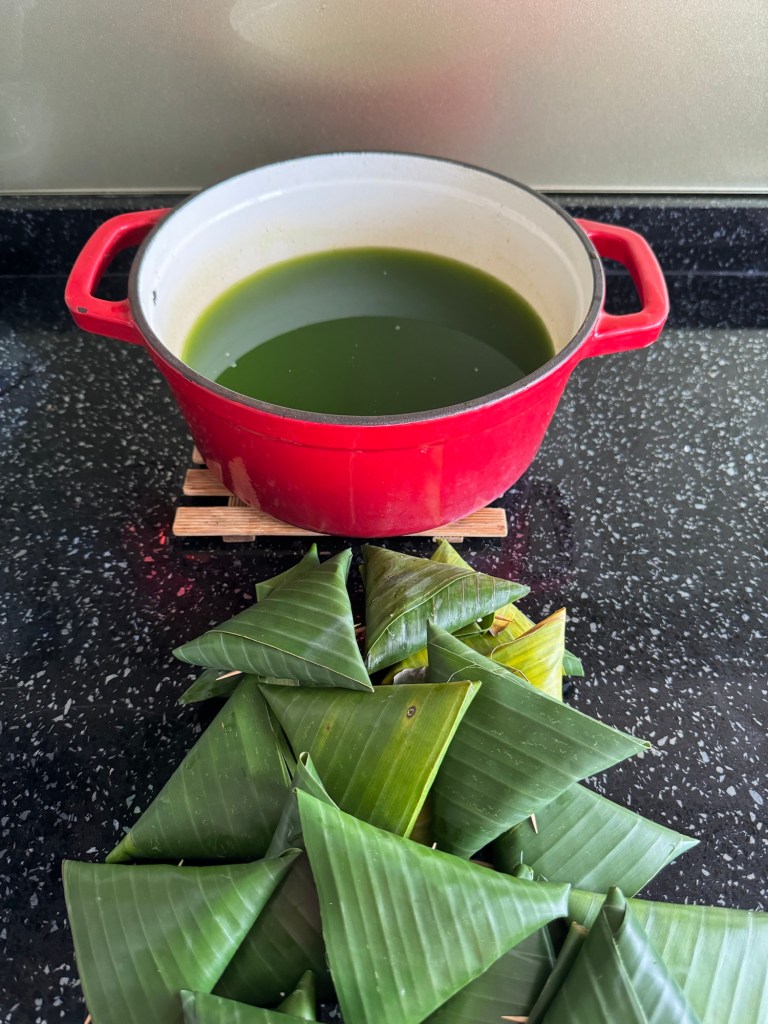
Javanese is rich of philosophy in its daily life. Even food is full of it. Lupis is one of those.

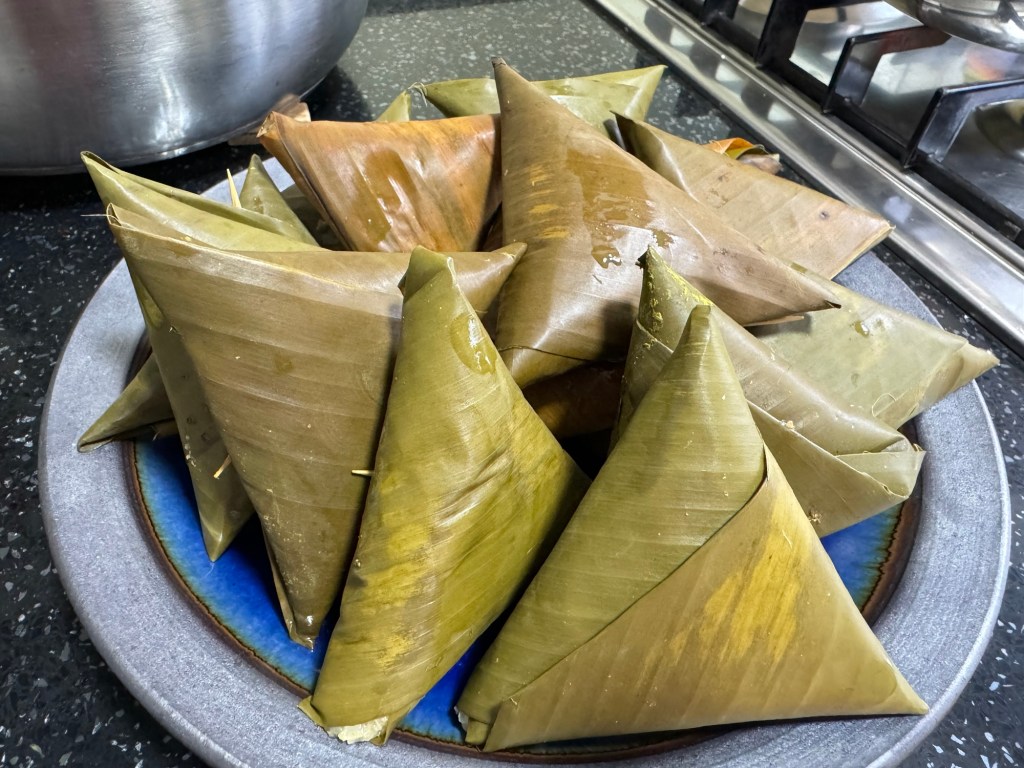
Lupis is a cake of goutinous rice. Its stickiness symbolizes close relationship. Its shape which is triangle represents love triangle among God-Messenger-Human, Divine-Human-Nature, me-you-others.

What a nice cake to enjoy! Physically, emotionally and spiritually!

💕

bon appetit 💕

21 pieces of cake!

bigger pot was needed to contain more water so all could fully drawn in the water

i ground the pandan leaves to get both colour and fragrance

i am proud of myself 😁 to be able to fold the lupis the way it should have been done

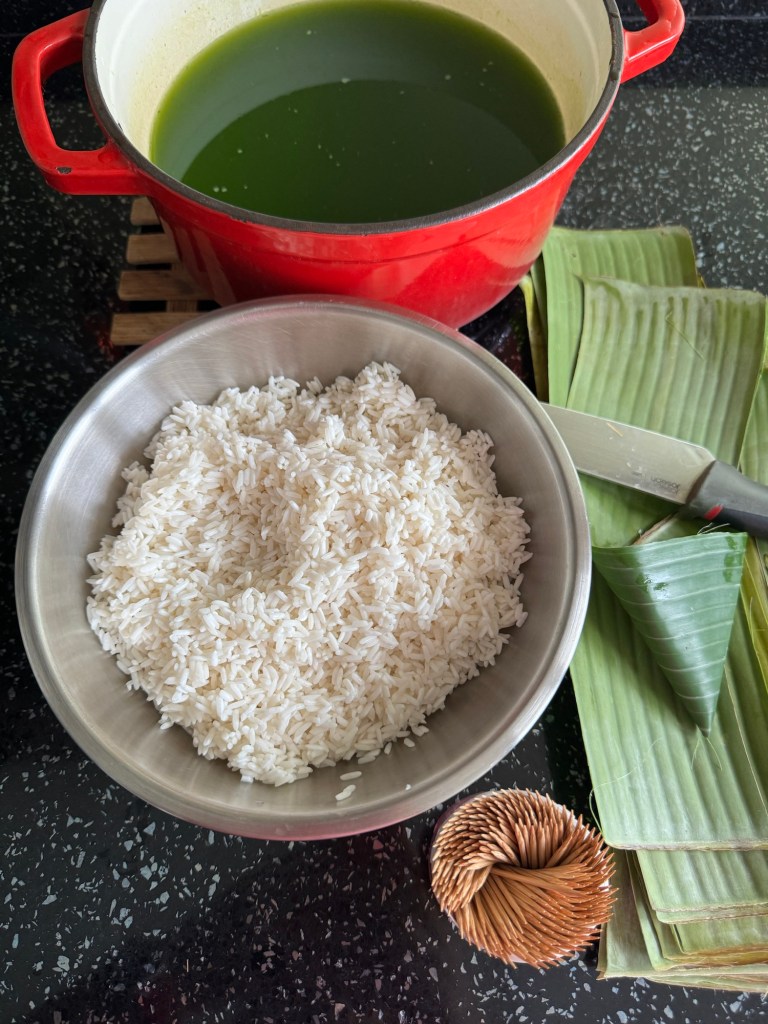
some of the ingredient (glutinous rice that was soaked for 30′, banana leaves to wrap, toothpick to lock the wrapping, pandan water to boil, (not here were the palm sugar, tapioca starch and a bit of salt)

Prophesy

Do you believe in prophesy
Where fog lingers down the hill
Leaving feet walk alone,
No light,
No eyesight,
No pathway seen,
Only heart listening
To the wind rustling
Flying leaves to
The North Star?

——

This artwork by Ichwan Noor is named “Bedhaya Kinjeng Wesi”

Bedhaya: a Javanese sacred dance (usually composed by a king to be) performed by at least 9 female dancers or bigger odd numbers

Kinjeng: Javanese word for dragonfly

Wesi: Javanese word for iron

Kinjeng wesi (iron dragonfly) is a phrase that appeared in one Javanese prophesy telling that the area where Yogyakarta International Airport is now located is the area mentioned to be the nest of iron dragonflies

Do I believe? Not so much. Yet it is always entertaining to talk about what the old days predict about nowadays.

I don’t have so much expectation that Yogyakarta will be a busy tourist spot (I don’t want it to lose more and more genuineness and originality of culture and traditions) — yet I hope at least there will be more flights from and to Singapore in that new airport.

💕

Spiralling (Batik Parang Nogo)

Life spiralling in
Revisiting same axis--
Deep understanding

—-

Javanese dragon (nogo, naga, makara, makoro) is described as a magically strong creature. It is a giant snake. It wears a crown adorned with gemstones and hair. At times Javanese dragon is pictured as wearing jewelry like dangling earrings, necklace, ring at the tail.

Not only Javanese mythology has dragon in its mythology; Chinese and European do, too . Although in general Javanese, Chinese and European dragons are all mythologically the same natural roles and functions, each of those three is unique in itself. Javanese dragon has no feet and wears crown and jewelry. Chinese dragon has four feet and long moustache above its mouth. European dragon is more like a giant long-necked lizard with big wings.

The most dragon in Javanese mythology is Antaboga or Sanghyang Antaboga, a meditating (sleeping) giant snake residing beneath the earth.

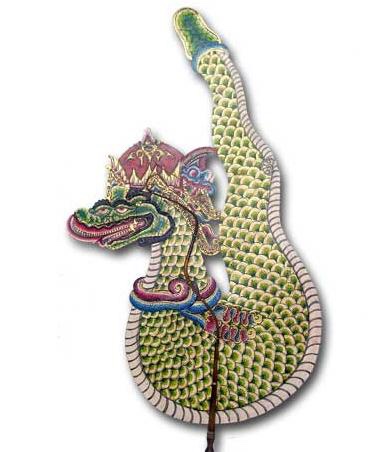
modified Antaboga, the most wellknown dragon in Javanese mythology — the wing is occasionally off

Antaboga (useful link, I prefer to out this one among many because this does not include too much unnecessary foreign culture): https://id.m.wikipedia.org/wiki/Antaboga

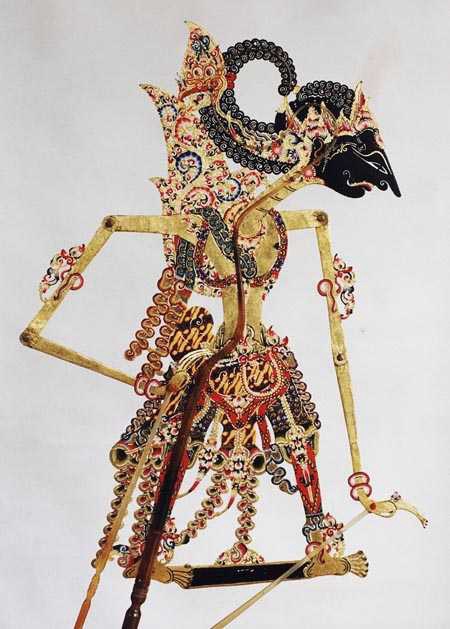
Sanghyang Antaboga, in Javanese leather puppet (wayang) with no wings

In Javanese culture dragon is a symbol or fertility and blessings. It is considered as water creature that is able to optimize the water quality and make the soil fertile. With the fertile soil, agriculture the inland part Java’s most popular life sector has been benefited and blessed with the good quality of water and soil.

Dewi Sri (Javanese goddess of fertility and agriculture) is mythologically alleged to be the incarnation of one of Sanghyang Antaboga’s eggs.

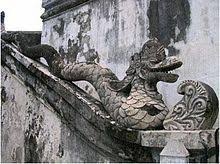
Dragon also signifies protection and patronage. Protection is more about physical security. Patronage is more about mental and spiritual security. Dragon carvings are commonly found at around old building gates, entrances, stair banisters to protect the buildings from those entering.

Sanghyang Antaboga is said to be the protector of the weak and the good. He is crowned as the lord of underworld in Javanese mythology.

dragon in the stairs flight in Candi Kidal

Talking about dragon….

I just received a new batik sheet from Ibu Tien. The pattern is called Parang Nogo. Parang Nogo is a batik pattern combining parang as the background with nogo (Javanese dragon) as “ceplok” or highlighted/clustered pattern.

Parang as recently discussed is about not giving up, sustainability, agility, noble ideals and loyality. Nogo itself as earlier introduced is about protection, patronage, fertility and blessings.

So Parang Nogo is a pattern that is intended to combine the spirit of all those values into one work of art.

Parang as recently discussed is about not giving up, sustainability, agility, noble ideals and loyality. Nogo itself as earlier introduced is about protection, patronage, fertility and blessings.

Sultan Hamengkubuwono X in Parang Nogo (the Yogyakarta Sultanate cum the Governor of DIY Yogyakarta)

As a “batik larangan” (batik with sacred pattern that can be worn only by royal family for certain occasions/function), Parang Nogo was meant to be worn by king and his family as a reminder to hold and practice the values attached in the Parang Nogo. Their behaviour and attitudes could give assurance to the people that the kingdom was managed and protected by trusted human beings. Yogyakarta king still wears batik Parang Nogo in some occasions; probably to assure the people that things are well managed under his governance.

Parang Nogo – handmade, my collection from Ibu Tien

Makara, the sea dragon with a lion in its mouth in Candi Borobudur

How would you greet the dragon within you? The coiling coloured energies sleeping to be awaken–

Salaam.

Diagonally (Batik Parang)

Diagonally
Between axes: x and y.
Dynamic and free—

——

Batik Parang Rusak

As one of the oldest patterns in Java island, “batik parang” is loaded with wisdom of life. Designed by one VVIP in Mataram, Panembahan Senopati, it is not surprising that this pattern is considered special and sacred.

Parang was previously a “larangan” pattern meaning that this pattern was allowed to wear only by royal family in certain occasion/function. Nowadays it is worn by anyone loving it; yet in Java island almost no one will wear it for wedding functions — most Javanese believe that wearing batik parang will bring negative impact and disputes among the family of the bride’s and groom’s and/or bring inharmonious life to the marriage.

The word “parang” was adopted from the word “pereng” that means the slope or the cliff of a mountain/hillside or the steep of a shore so that is why it is diagonally structured. The word “lereng” is also used to name this batik to show the same meaning with “pereng”.

Basic shape of “parang” pattern is an “S” connecting to one another with an angle of 45 degree. This signifies unbroken wavy lines. They are silently moving like waves that are able to move anything at certain level of the ocean surface. The waves will move as long as there are winds. The winds will not stop as long as there are movement of pressures in the air. And the pressures will sustain as long as there are celestial bodies especially the sun interacting with the earth. Forever — until death do us apart.

Some people say “parang” also means “perang” or war in Englihs but I am not into that discussion. Linguistically “parang” should never be “perang” in Javanese. It just happened to be historically told that this “batik parang” was worn by soldiers returning from war (“perang” in Javanese) to show the king that they won. So, it doesn’t suit my logic to call “parang” as “perang”.

Parang Barong handmade, my collection from “Barong Gung”, an original brand from Tulungagung

From all symbols I agree above, I’ve learnt lessons from “batik parang”.

Here it is.

1. Don’t give up

Like waves in the ocean, we should not stop. Just feel the winds and move. FInd your wind and move unstoppably! Live like moving waves, playfully and flexibly responding to the different pressure of air. Push the ships to destination shore. Let the pressure be an activating force, not a demotivating factor.

2. Sustain

Connecting S — it is unbroken S’ surfing on the waves. Good behaviours and attitude generated from objective contemplation and reflection should sustain. It takes a good management system to sustain good practices in an institution including life.

Let’s make a management system more human-based. 🙂

There should be values adopted by a human being — no value, no valuable life.

Values in life (useful link): https://liveboldandbloom.com/11/self-improvement/values-in-life

From the values there is born a boundary. If I value friendship, I will make sure I act as a fair friend to everyone around me. What is fair: take and give (might not be 50/50 but I won’t be happy if it is imbalanced 70/30 and above, and never about material needs sharing).

From the boundary there will be discerning of pros and cons. If I set a boundary, I am listing a do’s and don’ts based on the pros and cons around my boundary. From the do’s and don’ts, there shall be born priorisation of action. You can do this but not that. You can do this first, that later. 

From the prioritation of actions there shall be a materialization of consistent decision to choose preferred actions. And….

… The preferred actions are to be observed and surveilled. Who observes or surveils? And how?

Who: Ourselves, our family, our friends, our community, our environment, angels, god and godess, universe, ultimate creator.

How: through re-evaluation of values — this it tricky as it can be as easy as making immediate decision of the day or as complicated as trial and error the whole life

Then go back to setting boundary, etc, etc…. A cycle of self love 💕

Management system (useful link): https://www.iso.org/management-system-standards.html

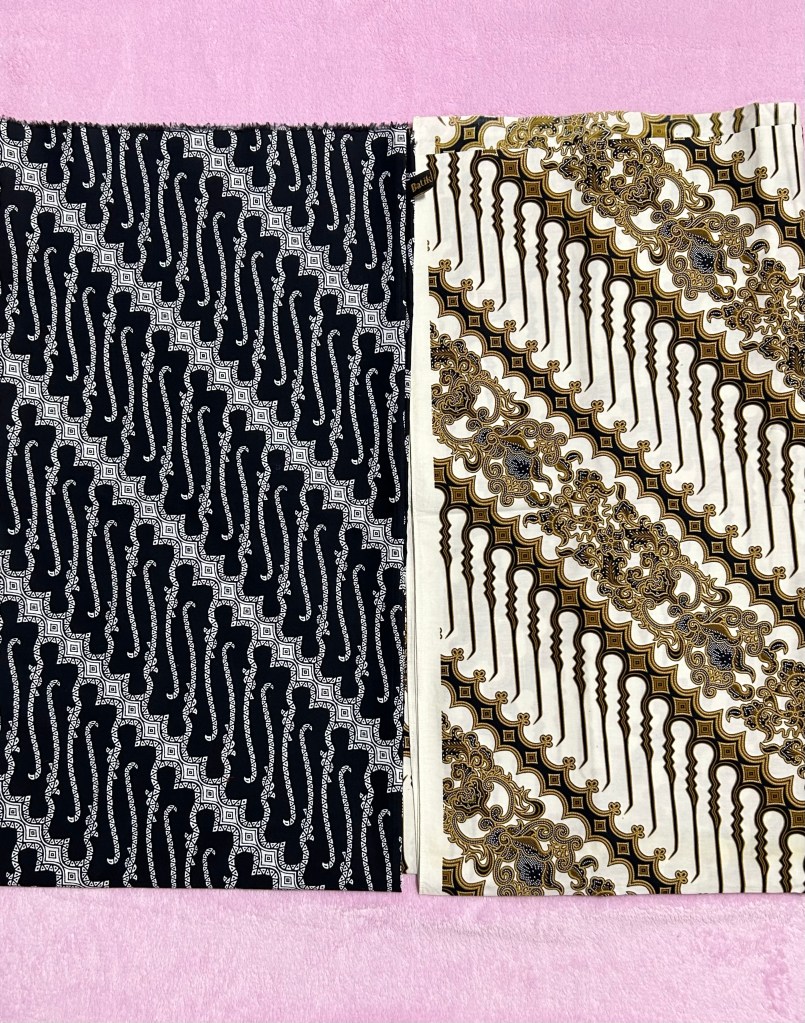
2 pieces of collection from Batik Keris — it is a printed batik, not handmade (black: modern Batik Parang; white: Batik Parang Sekar Jati)

3. Agility, Noble Ideals & Loyality

Agility: Only when I am agile, I can surf the waves of life. My life is not others’ life so the waves are not the same. Your waves might be taller than mine but they might not make you higher quality than me if you don’t develop agility to surf your life; as a result my life seems easier and nicer although I have to deal with more beasts below my wave while you have nothing under yours. And of course vice versa– 💕

Noble Ideals: Only those having values can believe with noble ideals. And having noble ideals make human beings believe that whatever situation life gives them, there are always meanings to deploy. And it is meanings in life that make human beings live with no regret although they know that their role in this vast universe is just a tiny teeny weeny mini (almost unseen) dot.

Loyalty: Only if I am loyal to my values, I can sustain life. The life I run might not be the most dreamt one; yet it is the best-suited one for me with all the pluses and minuses.

my collection of handmade Batik Parang coloured in natural colouring agents from Mbak Izzah, the daughter in law of Ibu Tien the best batik artisan from Imogiri

Care to try wearing “batik parang”? 💕

Salam.

Hidden Gems

Hidden gems
Shan’t be found
By those admiring surface.
Let it be kept undercover,
Shining within
The hearts of
The true lovers.

——

Dewi Larasati (named Rarasati in her childhood) is one of female characters in Javanese wayang whose personality is described as pleasant, patient, understanding and of good self control. She is unpopularly one of female wayang characters with military skill. She is good at handling keris and archery. She is allegedly as skillful as her husband, Arjuna.

Note: Dewi can mean goddess in Javanese. It can also simply mean or indicate that the person given that Javanese name is a female. Dewa is for male.

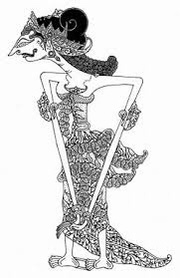
Dewi Larasati in black and white

Dewi Larasati is a humble woman and is so humble that she doesn’t want to announce her military skill until one day she is called by his husband to show her archery skill in from of Srikandi (his other wife). On that day everyone starts to know that Dewi Larasati’s archery expertise is outstanding, much better than Srikandi who is allegedly the best female archer in Javanese wayang and the bravest female heroine of all.

Dewi Larasati is then declared the one having as good skill as Arjuna’s, the best archer in Javanese wayang. Yet she never boasts of being as good as her husband in archery. She chooses to be the queen of the knight of war and mindfulness Arjuna, the beloved mother of her two sons, Bambang Sumitra and Branatalaras, the aunt of Pandawa’s offsprings.

Dewi Larasati facing left direction

While people like to talk about Dewi Larasati from that angle, I like talking about her from different one. To me I prefer to play dictions so disecting the word “Rarasati” and “Larasati” is another option.

Rarasati is a combination of 2 Javanese words: raras and ati.
Raras means feel, feeling, thought, thinking
Ati means heart
So rarasati can mean the feel of a heart or the thought of a heart or a feeling heart or a thinking heart

Larasati is a combination of 2 Javanese words: laras and ati.
Laras means song, singing, chat, chanting, reciting, recitation,
Ati means heart
So larasati can mean the song of a heart or a singing heart.

Dewi Larasati facing right direction

I always think Dewi Larasati’s parents’s naming her “larasati” because of their dream to have children who are willing to use the heart to feel and think the reality and to listen to their own self to balance the power of the loudness of material world.

With my simple utterance about the word “rarasati” and “larasati” I can imagine Dewi Larasati is a hidden gem that needs no disclosure as undercover she is already glowing. With her excellence she accepts to be less well-known than Srikandi, the archery heroine. With humbleness she accepts to be less popular than Sembadra, Arjuna’s second wife, while Dewi Larasati is the first wife of that bloody handsome knight Arjuna. Please note although I admire Arjuna’s high quality of meditation and nationalism, I curse his being a womaniser.

Anyway this is not about Arjuna, it is about Dewi Larasati, a humble intelligent woman whose identity is underrated because of her unpopularity like a hidden gem that is kept low key by those loving and protecting her.

Ahh! Is the above discussion culturally relevant? Or is it just this person who idolises those unpopular gems in life?

It doesn’t matter. This is just a different point of view about an old fact.

💕

Salaam.

Dewi Larasati on a batik scarft designed by Dudung Aliesyahbana, batik maestro from Pekalongan, Central Java

Janma Limpat Seprapat Tamat (ranting)

This Javanese adage means more or less a human being who is able to understand clearly with very little explanation.

Janma or jalma: human being

Limpat: agile, intelligent

Seprapat: one quarter

Tamat: completed, full, comprehensive in oneself, an end

This type of human beings is considered able to see the big picture of certain perceived matters up to to sense what details are needed to solve the questions within the matters. And the people are considered able to do it with very minimum instructions from others. In a nutshell this type is EXCEPTIONALLY talented/gifted.

In Javanese wisdom the comprehensiveness of this agile human being include one’s integrated personality and identity. With only scientific intelligence an agile person is considered not comprehensively addressing an issue; s/he must be spiritually intelligent as well. So sh/e must be a person who has been wised up by life.

There are some characteristics that might attach to this type of human being. I won’t talk about all; one or two probably.

One personality trait attached is low key, humble. It is a norm that this type of person with one outstanding quality will not boast of what one can do. There is only observing what happens around and seeing if any help is requested then one will do what’s needed to achieve the agreed goals.

This type of Javanese will not say to others “I will prove it” or “Yes I did it”. Nope! For one glorified victory is not important as life is not a competition. There is no “Fear Of Missing Out”. Yes, one admits “You Live Only Once”; yet at the time for the kind of soul life is forever. Life is forever — either based on incarnation concept in which karma makes a soul re-incarnate, or based on utilitarianism concept in which human being should die leaving good legacy. For sure one knows life is not a play to win greedily but it is a play to finish wholeheartedly.

Anyways this janma limpat seprapat tamat is rarely found nowadays with loud-boast showy characters becoming one condition of popularity and/or favour in “like-dislike” culture in social media. Human beings gradually leave this old “skill” and grow to become a species that craves for fame and treasure. Unfortunately….

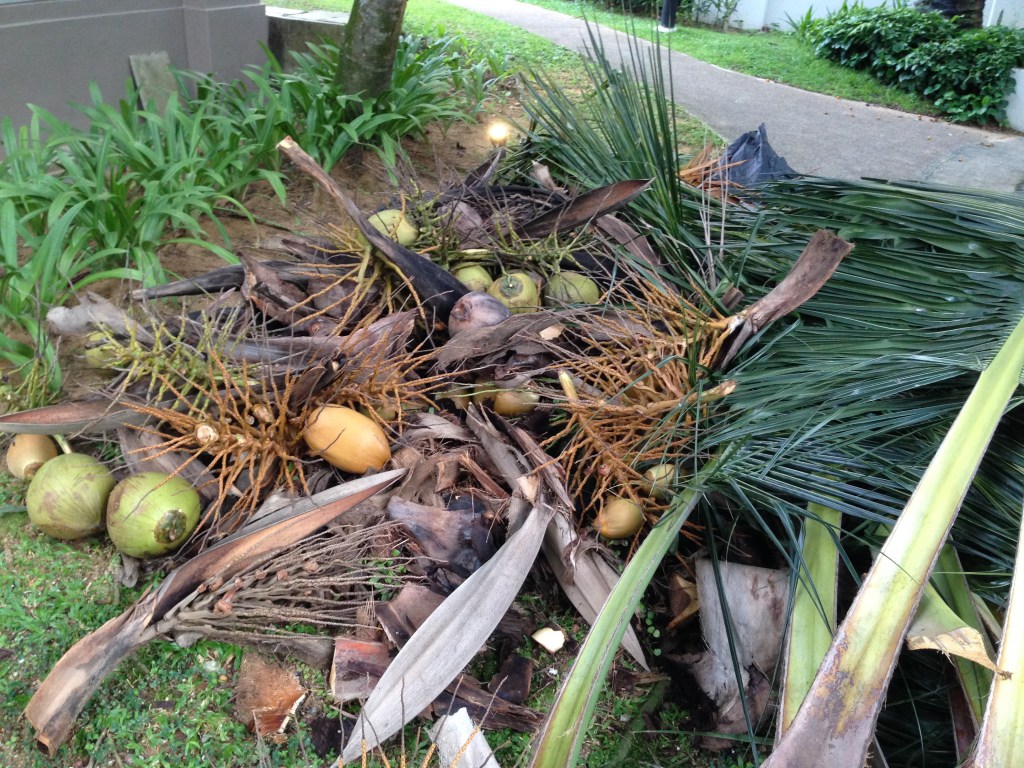
all parts of coconut tree are useful, that’s the life of janma limpat seprapat tamat human being 🙏🏼

I did meet a few senior Javanese men and women of this janma limpat seprapat tamat. One of them was my late uncle. He passed away leaving great legacy — humble loving cousins of mine and beautiful family history of ours. He was born to an affluent family yet he acted social, wise, humble, kind ordinary person. He helped neighbours needing help, supported younger siblings to succeed life and to love family wholeheartedly. He was our story teller of our family unwritten humble history. I am content to know from him that our ancestors were influential yet choosing to take side of the low class people and so decided to live at the edge rather than in the centre.

What can a janma limpat seprapat tamat do?

Most people believe this type knows what will happen before it happens including but not limited to one’s own death time and/or place and/or manner. Although the person one’s self might not think it is important, it is scarily incredible. To this type the most important thing is able to make decision that will make surrounding “not meet danger” rather than “fight against danger”. To this kind of soul life should be flowing rather than flooding.

This type of Javanese human being also does a lot of fasting. One considers fasting as a way of life. One eats very little. One sleeps very little. One enjoys mundane life very little. One looks like ordinary people but one resembles a saint. Humanely normal outside, sacredly extraordinary inside. One one’s self in one’s own self is like lotus growing in the mud, rose blooming among thorns, clean eel living in the muddy pond — living normal beautifully in one’s own high level of humanity.

As a Javanese do I want to reach the quality?

Although to be a janma limpat seprapat tamat is incredible, I don’t want to be at that super level now. I want to be an ordinary Javanese who is able to have rather relaxed life — eating when hungry with occasional fasting, napping when sleepy with occasional overtime, traveling with suitcase although sitting in (premium) economy class for my personal trips. My life should be living in moderation — not as the poor, not as the billionaire. Hey! I also want to die when I’ve let my own self go although I might not know when and where and how.

Salaam.

❣️

Devotion

Orbit of a star
Keeps it moving yet centred.
Devotional fact—

——

Ibu Tien Wartienah is one of the best batik makers whose work of art has spread around the globe; most of her customers are international art curators and prominent people from many countries incl our own country

she started making batik at 8 years old to help her mother who was also a batik maker; in her 66, she is the most sought-after devoted batik maker — her devotion to batik esp Yogyakartan style is second to none – her eyes were sparkling when she was sharing about batik and what she has done with her skill and art

many of my classical batik collection are made by this humble lady — i’m so blessed to keep guard her work of art and to have met her this visit; thank you, Ibu Tien — your life is blessed by many

Ibu Tien’s half done wax-blocking (nyanthing) work “Kembang Manggar” aka “Satria Manah”

i tried one batik yesterday in Ibu Tien’s home in Imogiri — trust me it is a challenging task 🤓

batik working tools

Maleman (Ramadhan’s odd nights celebration)

Dear oh dear, it’s time to slide the curtain and see your face.

Crescent moon is here.
It illuminates my sky,
Showing your perfect beauty.

Dear oh dear, your love has perfectly wrapped my imperfect reality.

This dusk
To dawn
I pray.

—-

Javanese celebrate life through sharing and commemorating ancestors. They will find reasons to call a day sacred and so they can celebrate it with especially family and neighbours through sharing. One of the chosen moments is in the last 10 days of Ramadhan.

Ramadhan is believed to have 3 phases: 1st 10 days as the grace and mercy of the God, 2nd 10 days as forgiveness of the God and 3rd ones as liberation from purgatory. It is believed that one of the nights in the 3rd 10 days is called Lailatul Qadar (literally night of revelation or night of honour) whose value is more than 1000 months so if Muslim spends the night in goodness s/he will be appreciated with 1000 months of good deeds. Many Muslim scholars interpret lailatul qadar differently; I myself believe that it is the night when a human being becomes aware of one’s bearing the quality of humanity as well as divinity. No one knows which night it is but it is believed that the night allegedly falls on odd nights of Ramadhan: 21, 23, 25, 27 or 29.

Javanese think that it would be good to share joy at any of those odd nights. Those who are blessed with abundance will share more, they will invite their neighbours to dine in and make a basket of food to bring home for each of them. The less or under privilege will usually bring 2 baskets of food to a nearest mosque or mushola to share with others; as it is not mandatory, it is ok for them not to bring anything, their neighbours will give more to them.

The odd night celebration in Javanese is called maleman that comes from the word malem (dusk or twilight) and -an (a suffix added to a word that make the word a noun or a noun another noun with different meaning). Maleman means an activity that is conducted at dusk or twilight.

We hope that by doing the maleman we can be blessed with the 1000 months of good deed of food sharing. And isn’t sharing food the simplest thing to do with neighbour? 🙏🏼

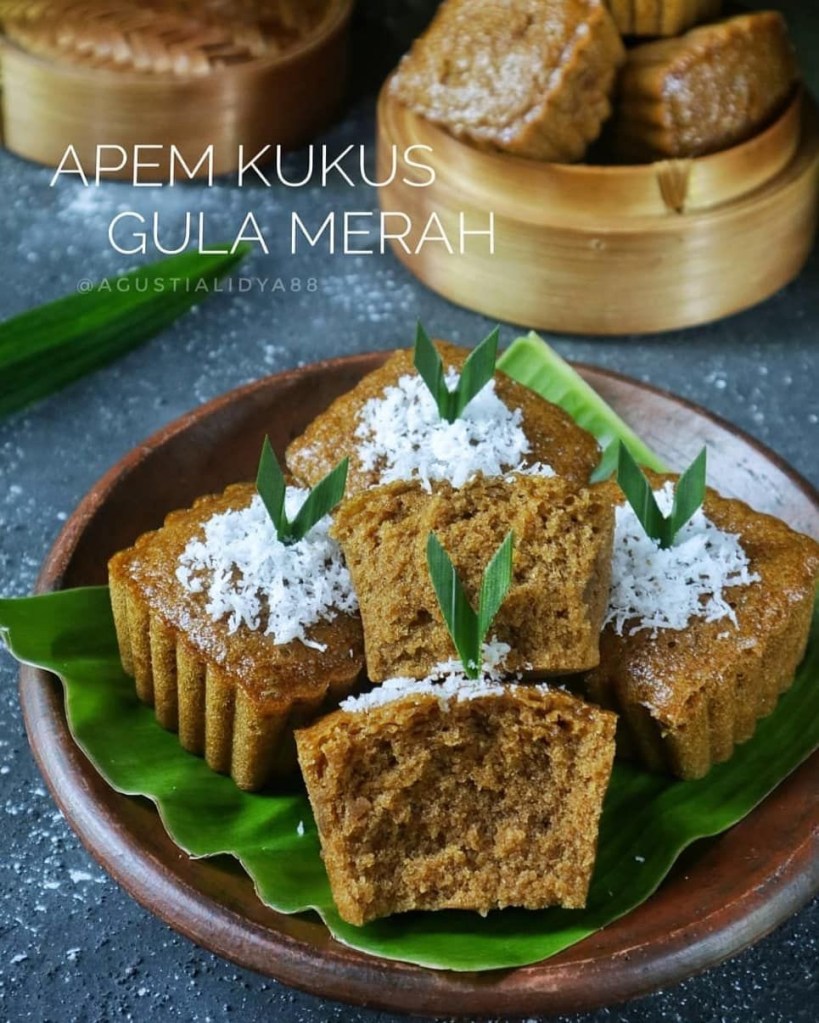
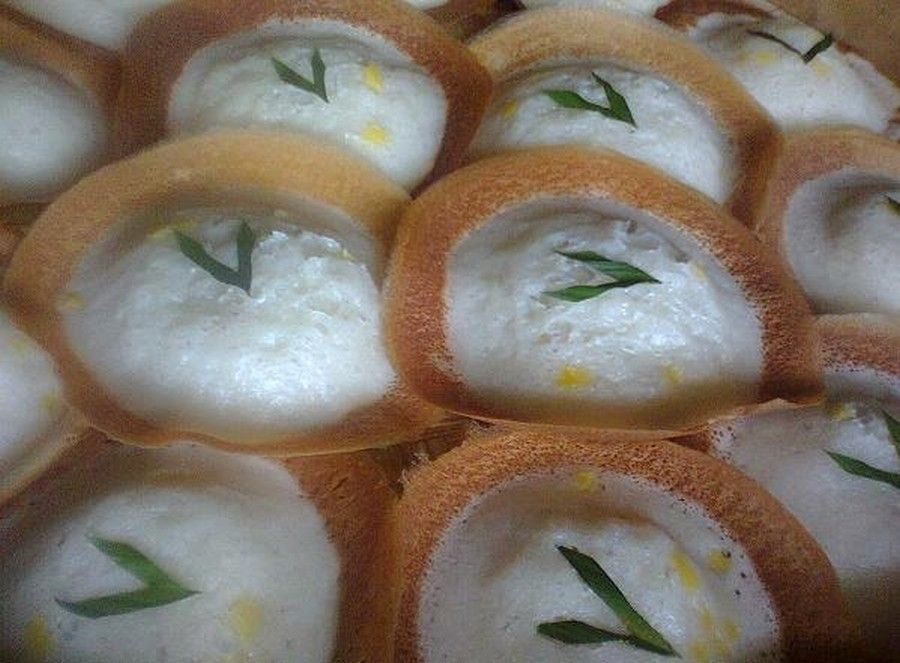
There is one kue (small cake) typically present among all food shared in maleman, it is called apem— a rice cake made with yeast and coconut milk.

Apem is a symbol of forgiveness and asking for forgiveness with each other among the Javanese Muslim. It is derived from an Arabic word “afwun/afuwwun” that means forgiving. This rice cake is a special cake appearing in many Javanese celebration as a symbol of forgiving and forgiveness among people surrounding.

I am glad that the 3rd 10 days of Ramadhan is here. Time to sleep less and pray more for the sake of my happiness and joy.

Salaam.

—-

Nowadays kue apem has been creatively modified. Originally it is steamed; now many also fry it. I love this one of Javanese delicacies! 💝

Have a look of a few of the creations of our amateur cooks. 🙏🏼

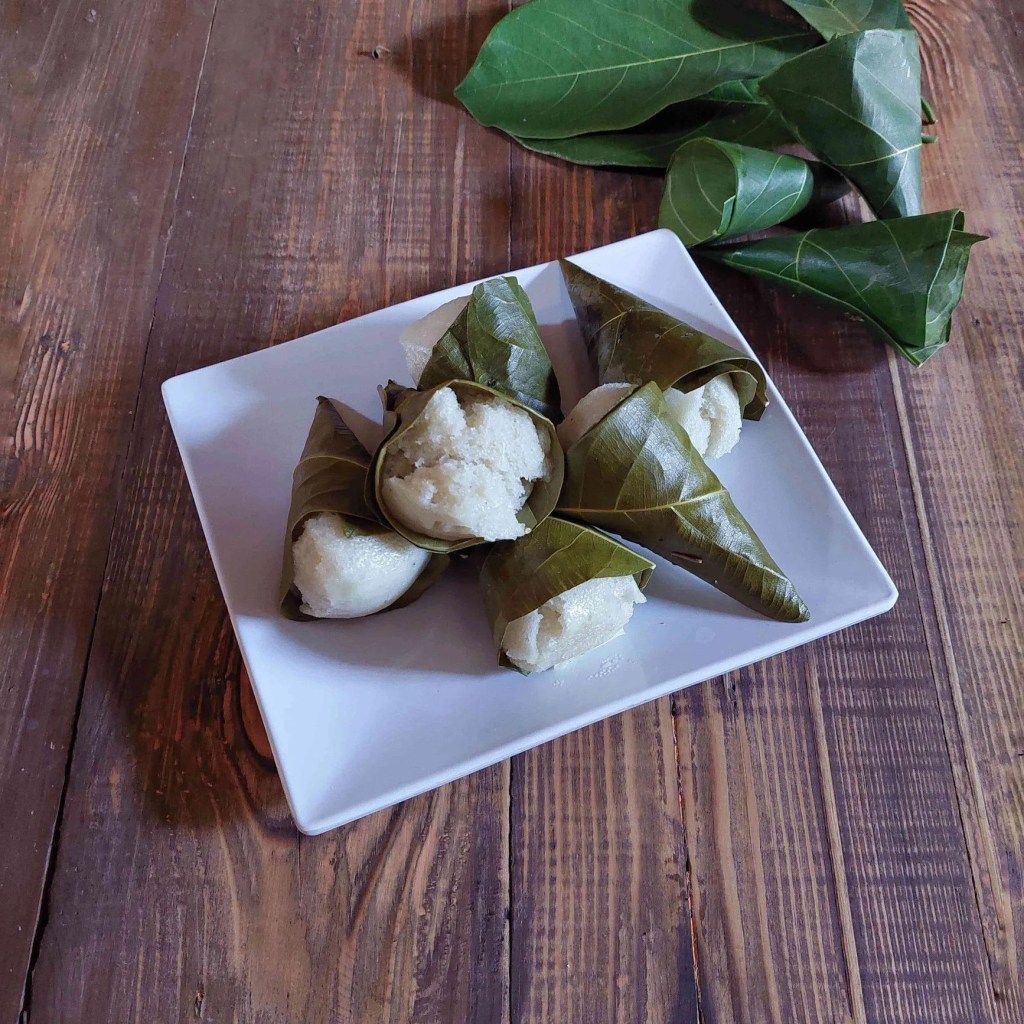
we used to have this “apem conthong” either using jackfruit or banana leaves to both mould and wrap it — not many though make it due to its complicated process

the most common nowadays

this one is fried 😍

simple to cook but take long time to slice when set after cooked

💝

apem with Javanese palm sugar as the flavour — the sweetest one

apem kembang — my favourite 😍

Flowers for The Dead

Red rose on white tomb:
Greeting to another world
That sees but says not—

Nyekar is one tradition that many Javanese still keep until today. Nyekarcomes from the word sekar that means flower. Nyekar is sprinkling flowers on to someone’s tomb as part of a prayer to the loved ones lying under the tomb.

Javanese pin a meaning to the word and activity of nyekar by relating it with the flowers’ fragrance, colours and shapes. The fragrance and beauty of the flowers sprinkled on to the tomb are sent as supplementary to the prayer whispered by those “visiting the dead”. At the same time it is to remind the living that it should be the good deed and memories of the dead to be cherished; bad memories and bad deed should be neutralised through forgiveness — not easy but doable.

Aside from flowers Javanese add boreh as part of the flowers sprinkled. Boreh literally means to spread or to smear cream or paste on to skin. Borehis mixture of ground dlingo (Acorus calamus L) and bengkle or bengle or bangle (Zingiber cassumunar). Dlingo has a kerata basa (acronym) of elingothat means to remember. Bengkle has a kerata basa of becik kelakuane that means good deed. In short, boreh is added to the flowers to emphasize the importance of remembering the good deed of the dead they visit.

What a beautiful visit is made to the dead by those Javanese who understand what they sprinkle on to the tomb of their loved ones.

So, no it is not just beautiful flowers or flowers arrangement; more than that, it is the beautiful meaning that Javanese pinned to the flowers.

Salaam.

the best remembrance is remembrance to the death – I picked one rose from my sister’s garden and put it on my father’s tomb; we don’t miss him as his good deed is always with us

Speed

Deaccelerate,
Accelerate on the road.
Life is not a race.

Fasting is a very familiar way of life to Javanese. Called pasa or poso, fasting in Javanese culture is always related to the effort to self align. Many Javanese like doing fasting with or without meditation (tapa brata or topo broto) depending on their commitment.

While Javanese Muslim do at least one month of fasting per year in Ramadhan, fasting in Javanese culture itself came even much earlier before Islam was introduced. While in Islam fasting is between dawn to dusk and the same restriction is commonly applied to all kinds of fasting, Javanese fasting is more varied both in term of period and restriction.

Fasting helps Javanese slow down the pace in their mind, regulate the speed of their ambitious behaviour upon life goals, train themselves to be patient.

There are several kinds of fasting in Javanese culture that are still practiced by relatively many nowadays.

1. Regular fasting
This fasting is done only from dawn to dusk like the Islamic fasting. This is a common practice, many Javanese parents use this kind of fasting to train their children about how to manage their immediate excessive desires and concentration in under pressure situation. I remember when we were elementary and high schoolers, we were instructed by parents to do fasting on Monday and Thursday during yearly school testing weeks. Yes, I felt more focused on my study as I had to prioritise tasks to save energy. Brilliant!

2. Mutih
Mutih is derived from the word putih (white in Javanese, Indonesian, Malay). During this fasting, a person is restricted to eat other than white rice and fresh water for 24 hours started either at dawn or dusk. Ordinary Javanese can do it for one day, three or seven. Yet more advanced (usually senior) Javanese would extend the period as per commitment.

3. Ngasrep or nganyep
Ngasrep is derived from the word asrep that means cool or cold; while nganyep from the word anyep means tasteless. In this kind of fasting the food and drink should be all cool and tasteless. The person is suggested to eat only boiled vegetable without adding taste (salt, sugar, oil, sauces, etc) and drink fresh water. It is mostly done in three days.

3. Ngrowot
Ngrowot is a word derived from the word krowot that means Javanese common carbo source except rice. The person who does this fasting will only eat carbo non rice like sweet potato, suwek (konjac), gembili, gembolo (English please….), taro, cassava and other tubers.

4. Ngebleng
Ngebleng means staying in; so doing this, a person will do regular fasting but very limited food intake allowed without leaving room or house, not meeting anyone, just doing meditation or doing household chores without distraction from anyone. Someone can do it three and seven days and forty days. Not many are doing this as this is a challenging one: not easy to find a place. This fasting is quite heavy because it does not allow sufficient food intake for a long time.

5. Pati geni (pati: turned off, geni: fire)
It literally means “fire turned off”. This is the highest level of Javanese fasting as the restriction applied really tests the person’s very high commitment: s/he is not allowed to eat, drink, sleep including fall asleep and see any light both artificial and natural. How long? The shortest is 24 hours, maximum unlimited. Note: if s/he sleeps or falls asleep, s/he has to restart the fasting.

There are other kinds of fasting in Javanese culture which were done by very limited people and have been left by many due to the impracticality such as pasa ngidang (from the word kidang or deer) in which a person is only allowed to eat raw foliage like a deer, pasa ngalong (from the word kalong or bat) only eating ripe fruit from the tree, pasa kungkum (bathing up to chin level either in the pool, river or shallow sea) without eating or drinking, etc. There are probably other kinds of fasting as Javanese used to be very creative in “fasting engineering” hahaha….

Javanese believe that with fasting they will connect better to themselves and inevitably with the ultimate power of the universe. They will usually become confident people without showing off. Those fasting committed people —if doing it right and without evil intension— will be a highly spiritual people and voluntarily dedicated to environment and people.

Javanese believe that this type of people bring blessings to the surroundings although blessings are not always tangibly seen. The blessings can be as simple as peaceful daily life with little conflict,

Do we still have many of them? In very silent villages around Java island we might still find a few. They are traditional farmers who feel the need to connect with the ultimate power as only that can help them manage their humble farming that is now severely industrialised and exploited.

Hope we still have them in silence. Amen.

Alfatihah.

“too much” in all kinds: portion, protein, sugar, carb – never mind, it’s good! 🥰 my yesterday’s break fasting

Clear Sky (ranting)

Clear sky, Beloved,
Calm blue where clouds swim, birds fly
Under the warm sun—

Javanese live their life with meaning and that makes them “effortlessly” survive even in the hardest time. They pin meaning to everything they experience. I believe Javanese are naturally philosophers whose communal humble life is richly loaded with wisdom; unfortunately fading away by the time.

Meanings easily recognised by most Javanese are those pinned to batik method and patterns. Historically batik patterns were works of art composed by either scholars from padepokan (ashram in Sanskrit) or the royals (king, queen, prince, princess or royal artists). In fact, there were few batik patterns created by commoners such as batik nitik and batik kawungKawung is one of the oldest original patterns of Javanese batik which has existed since 12th century. Nitik was born younger, approximately in 19th century.

Fun fact about Javanese king: aside from courses of political knowledge, leadership, palace management etc, long time before his coronation a Javanese crown prince must completely compose 3 works of art and publicly present them to the board of senior royals then announced the art pieces to people in the kingdom. Those three are batik pattern whose batik is handmade by him, tembang/kidung (sacred Javanese song) sung by him; and bedhaya dance trained to the dancers by him (a solemn Javanese dance performed by a group of dancers).

While batik nitik was initially created as secret codes by commoners to circulate among them classified information kept hidden from unjust aristocrats at that time or from the enemies (some historians said though this pattern was composed by the royals); kawung was allegedly created by a mother to dress her son who was instructed by the king to join his exclusive team due to his outstanding skill of espionage and balanced state of mind (again the historians said this pattern was composed by the royals). The said mother made a sheet of kawung pattern for him before he left as a prayer that her son could keep his current quality even after he later lived among (socially, politically, professionally) higher rank people.

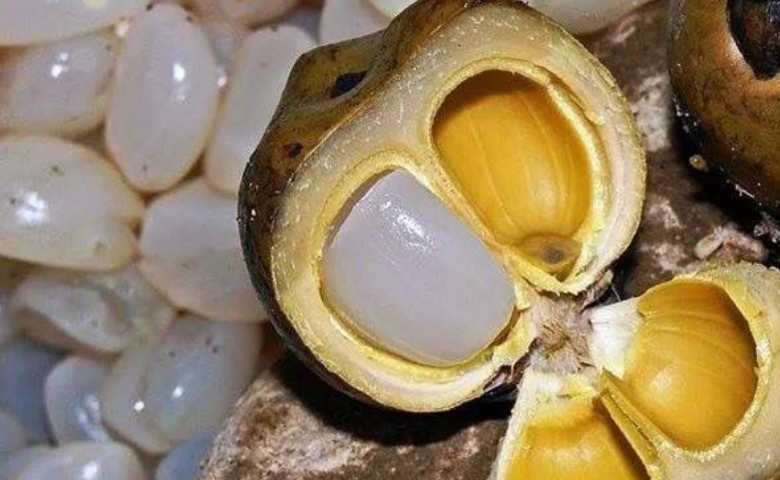
kawung aka kolang-kaling, two seeds, four half-chambers (from Pinterest)

Kawung is the Javanese word of sugar palm (kolang-kaling). The symmetrical four half chambers in a fruit are used to symbolise balanced state among physical, mental, intellectual and spiritual. The clear colour of the seed is borrowed to symbolise clarity: of conscious mind, of conscious decisions, of intension, of purpose and of actions.

People also relate the word kawung to suwung that can mean emptiness: in this matter suwung is more about self alignment, absence of sense-driven wanting. A person in this suwung state in positive interpretation means someone who is already free from his/her craving for worldly interests, s/he is able to calmly and consciously prioritise among physical, mental, intellectual and spiritual proportions with no doubt or confusion. S/he is in high level of awareness of a “perfect” human being.

In Java region that kind of person is not necessarily a saint or a priest or a bikhu(ni) or a nun; s/he might be a farmer, a batik maker, a herbal seller, a taxi driver, an employee, a housewife, a leader etc, just whoever is willing to self align through what they do everyday regardless their professions. Not a few of them were “bad” people hearing the inner calling, deciding to quit their wrong doings and living “new” life.

At younger age, I met more of that type around us in my hometown. Now fewer and fewer people are interested to achieve that level because life pace is now becoming faster with the “tsunami of information” and life needs are “forcing” people to be constantly in alert mode with the high competition to “survive certain life style”. 

Not much I can do this time. I try to breath more slowly, pay attention on shift of emotions through body reaction (my body will never betray me) then acknowledge the emotion whatever it is. Time flies like a wind sometimes like a storm, I choose to ride it, not to get dragged by it. Not easy but doable.

How light this head is after ranting! 

batik kawung beton crafted by Mbak Arifah (25 yo), a mute-deaf female who never goes to school but is able to write and read – thank you, Mbak Arifah
primissima cotton, 250*106cm, two sided
Fun fact about the honourable batik makers:
- Once a batik maker pulls the “canting” filled with hot wax on a sheet of fabric, it will start developing lines or dots as the hot wax gets dry fast and block the fabric. That is why they work very carefully to avoid unplanned error. Correcting unplanned error is more tedious in batik making process compared to drawing the patterns with canting. Zero accident policy applies.
- Batik making is a highly contemplative activity (almost) like meditation. That is what makes many of batik makers especially those senior and/or with high quality artisanal works have good self alignment.
- Some batik makers don’t need to draw the planned pattern with pencil on the fabric. They are the highly skilled, the artist, the master of what they are doing.
- It takes approximately 5 months to complete a piece of two sided hand-made batik of 210-250cm long. Those batik makers also do household chores in between their batik making activities as they mostly don’t earn good money. If you buy hand made batik, please give extra dollars to share some comfort.
- Majority of batik makers are female. Very few of them are young.
at workshop (from Pinterest)
at home (from Pinterest)

Clay But Not A Kendi

Clay art, Beloved,
Hugged by earth, hardened by sun
Livened by heaven—

In Java island clay was commonly used not only to make art work but also as material to make kitchenware, eating utensils, plant pots, etc. Kasongan, Yogyakarta is one of famous villages of clay work industry in which different types of clay art and utensils are mass produced or customised as per buyers’ request.

One clay utensil that I often used in my childhood was kendi, a clay jug used to contain drinking water – it makes drinking water smell subtly earthy and feels cooly fresh. Children would dispense water from the jug to glass to drink; adult would usually just lift the kendi slightly above mouth level and dispense the water directly to their open mouth without touching the tip of the kendi mouth to their mouth — whoa so difficult to explain!

Kendi is not however commonly used as the function is now replaced by plastic containers and refrigerator. It is now mostly used in Javanese traditional ceremony or in some households that still want to keep some traditional way of life. I prepare 5 kendi to compliment the fridge in my Javanese home — 5 kendi are ready before the dining table is ready 😁

kendi – used to contain drinking water at home, outside the gate of Javanese houses (for passers by to drink when thirsty), in the field, almost everywhere

Kendi is actually an acronym (kerata basa in Javanese grammar) of “kendalining diri” (kendalining: control, diri: self) or self control. In Javanese culture kerata basa is used to tie a good teaching to what people is doing. So, practically kendi is not a personal utensil like spoon and fork, anyone can share it. Through the name Javanese know that using kendi, there shall be some self control applied. When someone drinks directly from the clay jug, one should do it carefully to minimise the risk of dropping the kendi and break it; and not greedily gulp all water as other family members or friends also need fresh water in that hot day.

Culturally (at least according to Greek mythology and Quran) human being’s physical is created from clay —like kendi— that is given soul by the Source and so we are breathing. So it is natural that human beings are fundamentally attached to earth. Yet how much ever human beings want to stay as firm, strong, young, beautiful like the clay coming from earth, it is not possible. There is breathing that fans the “fire of life” in the clay body and when it stops “fanning”, the clay body stops functioning.

Can’t live forever, some like to play “forever pretending”. Pretending to be young or beautiful or firm with plastic surgery. Pretending to be happy with some drugs. Pretending to be more precious than others with fake luxury and conspiracy. Pretending this and that.

Ah! That game! That’s fun indeed! Yet it is not doable for me. Being human is not an easy job, pretending makes it even difficult and complicated and unnecessary. So please count me out. 💃🏽

Hey! If some people want to live forever or stay young, firm, strong, beautiful and fully functional; they’d better be a kendi. 😂

Salaam….

we are too clay art work who will someday be bodily back to earth, while some part will “evanesced”, be absorbed back to the source – before the time, I’ll keep this self enhanced to being human in joy and glee humbly and originally 💝

Dandelion

Achene’s a message
Sent to wish more joy and bliss.
Sad no more, dear earth.

Each day new day. It is equivalent with Javanese wisdom “mati sajroning urip” which literally means “dead within life”. It is a very deep wisdom teaching Javanese human beings to let the old self to transform to the new one. It is simply acknowledging that some problems are let go and self is moving on with better understanding about what life is truly is.

If life challenge is considered a seed, it will free the human being, fly away to fall on Mother Earth’s lap somewhere and be part of green woven blanket beautifying and cooling.

Life is just like that.

Salaam.

dandelion (Randa Tapak in Javanese)

Welcome, Month of Exercising (Javanese Muslim Tradition)

Regret and sorry
Not easy to feel and say,
Yet flushing the guilt.
Look! It’s rain water pouring
On the roof, sweeps away dirt.

—————————————————

Ramadhan is starting tomorrow, it’s my 38th year in which I do full fasting. I’m so grateful with this achievement. Achievement? Yes! Imagine for one full month during the day we don’t drink, we don’t eat, we don’t smoke, we don’t sex, we don’t let out uncontrolled emotion, we simply hold whatever we normally let out easily with no delay. We are human beings though, we can do all those at night. Ahem!

As a Javanese Muslim welcoming Ramadhan is as special as the fasting itself. We welcome the Ramadhan with a small celebration called megengan which literally means holding (esp. the breath).

In megengan a Javanese family will deliver a basket of rice with dishes to neighbours and extended family members living separately. While each family can choose what they share, there is one must specialty in this occasional delivery so called “apem” in Javanese or “kue apam” in Bahasa Indonesia or Malay.

Apem is steamed cake whose ingredients are rice flour, coconut milk, coconut water, yeast, sago starch and some sugar.

The word apem is derived from the word “afwun” (an Arabic word) meaning apology. Why apology? In Ramadhan when a Muslim is fasting, s/he is not only holding her/himself from hunger, thirst, lust, uncontrolled anger, and exercising her/his integrity; but s/he is also recommended to contemplate her/his own “action records” for the past one year. It is not easy for one to bear the guilt during the contemplation, so it is recommended for a Muslim before Ramadhan to apologise to their family and friends or to whomever s/he did wrongdoing, to ease the contemplation process. As it might not be easy to say sorry through a naked word, Javanese Muslim will include a symbolic apology in the food called apem when they deliver the whole food package. Everyone knows what it is, what it does— it is up to each person whether or not to accept the apology. And there they go starting the fasting month with a light heart to physically, mentally and spiritually exercise her/himself for one full month.

I used to think that that celebration was a waste of food. For one week I used to see sooooo many plastic and bamboo baskets piled up in our dining table and shelves — all those megengan packages which would be eaten just a bit and end up given to our chickens at the back yard. Fyi, the apem is never wasted though as every family has different taste and ways of how to make their best apem – maybe it’s a symbol that everyone is taking the apology seriously. I used to say to my mom that megengan was more about chickens celebrating than human beings celebrating. However after I understand what is symbolised through those simple deliveries, I highly appreciate the way we Javanese hold the integrity through our humble tradition.

I used to tell my mother to not do it, but now I’ve always been a reminder to her to not forget doing it and done it myself although I’m living around those not familiar with this tradition. I normally cook some simple food for the cleaning ladies and the gardeners who are assigned in the block two days before Ramadhan. Unfortunately minus the apem, simply because I am not confident enough to make my own apem. Tried this year though and failed 🙃

I promise to myself that this year is gonna be a good Ramadhan.

Welcome, month of holding, month of exercising integrity. It might not be always easy but doable.

I’m sending out apology to all the people having felt hurt by me. I’m sorry with my heart and soul in naked words. 🙏🏼

May all beings be happy.

my private megengan in 2022 minus rice, the white one is my own first apem in life – taste good but imperfect texture 🥰

Life Should Be

Blissful, Beloved,
Joyful, gleeful— life should be.
Save the right window.

————————————————————-

‘m praying that I’ll be saved from any danger and threats from any creature. Amen…

Nagasari or Nogosari is rice cake filled with ripe banana, one “snack” included in Javanese praying ceremony. This food symbolises prayer to God for safety and security from any danger and threats from any creature; and so a Javanese’s life can be blissful, joyful and gleeful.

Always sit next to the right window, dear Self. 💝

prayer of safety and security in a piece of ramekin 🥰
modern Nagasari, should be wrapped in banana leaf but today it was steamed in a 💝 instead